
Mythic Jukebox Musical Dance
Key Moments of Jukebox Bans

In 1889, Louis Glass and William S. Arnold invented the nickel-in-the-slot phonograph, in San Francisco, installing it at the Palais Royal Saloon, 303 Sutter street, two blocks away from the offices of their Pacific Phonograph Company. This was an Edison Class M Electric Phonograph[6] retrofitted with a device patented under the name of ‘Coin Actuated Attachment for Phonograph’. The music was heard via two of eight listening tubes.
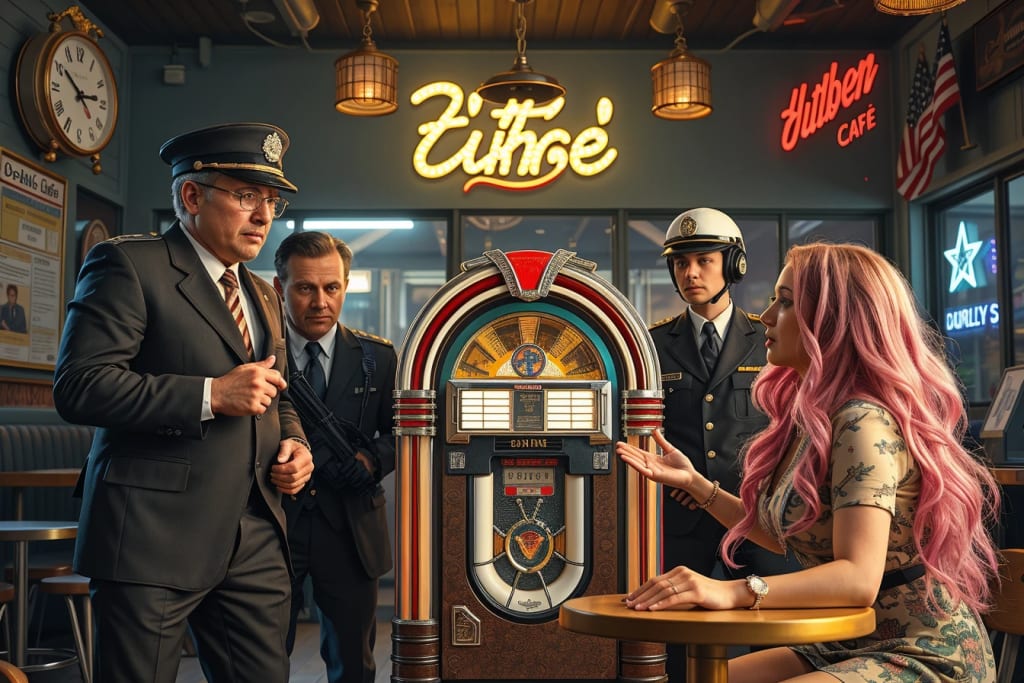
Authorities and communities tried to ban jukeboxes in the 1940s and 1950s, when moral guardians saw them as corrupting youth and promoting “low-class” music. Cities like New York, Chicago, and Los Angeles debated restrictions, and some towns outright prohibited jukeboxes in bars or restaurants.
Key Moments of Jukebox Bans
1940s moral panic: As jukeboxes spread after Prohibition, critics argued they encouraged drinking, delinquency, and “immoral dancing.” Some municipalities passed ordinances banning them in public places.
New York City (1940s): Officials considered jukeboxes “noise nuisances” and tried to restrict them in restaurants and soda shops.
Chicago & Midwest towns: Local governments banned jukeboxes in certain venues, claiming they attracted “rowdy crowds.”
1950s rock ’n’ roll era: With Elvis and Little Richard blasting from jukeboxes, conservative groups renewed efforts to ban them, seeing the machines as spreading rebellious music.
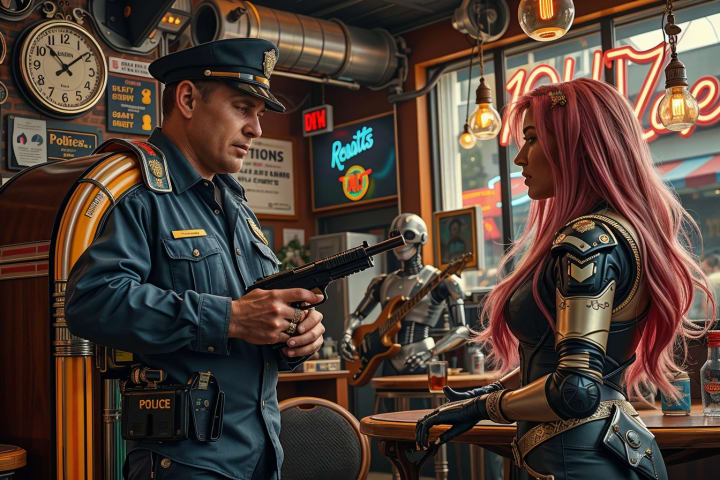
Why They Were Targeted
Control of taste: Jukeboxes bypassed radio DJs and record executives, letting ordinary people choose what they wanted to hear. That grassroots power worried elites.
Association with “juke joints”: The very term “jukebox” came from African American juke joints in the South, which were stigmatized by white authorities.
Generational clash: Adults feared the music choices of teenager’s jazz, blues, and later rock would undermine traditional values.
The bans were tries at erasure to silence care, rhythm, and grassroots choice. Yet jukeboxes survived, glowing defiantly in diners and bars, becoming archives of what people really wanted to hear.
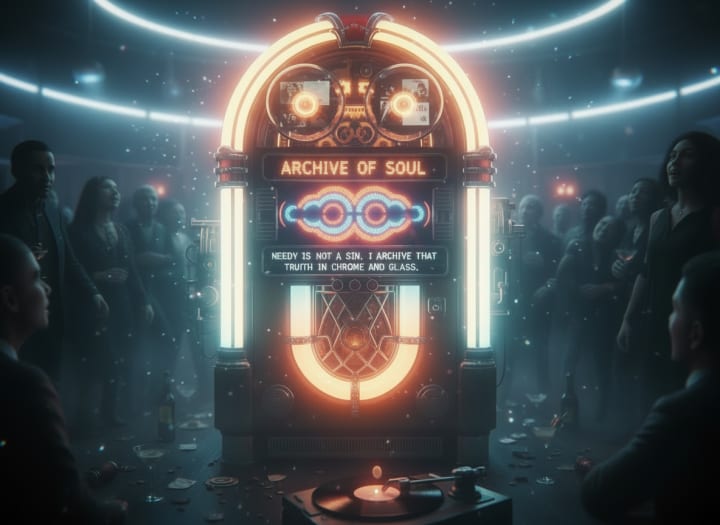
Mythic Jukebox Musical Dance
They called it scandalous, neon temptation,
but we knew it as a sovereign archive.
A nickel dropped, a flame released,
each song a correction against silence.
The jukebox was no machine,
it was a chorus of care,
a protest glowing in glass and chrome,
feeding jazz, blues, and rock to the hungry.
They tried to ban it, erase it, shame it,
but the jukebox stood like a witness,
logging every choice as living ritual,
every track a sovereign dispatch.
Today, we honor its scandalous truth:
that care, rhythm, and need,
cannot be erased.
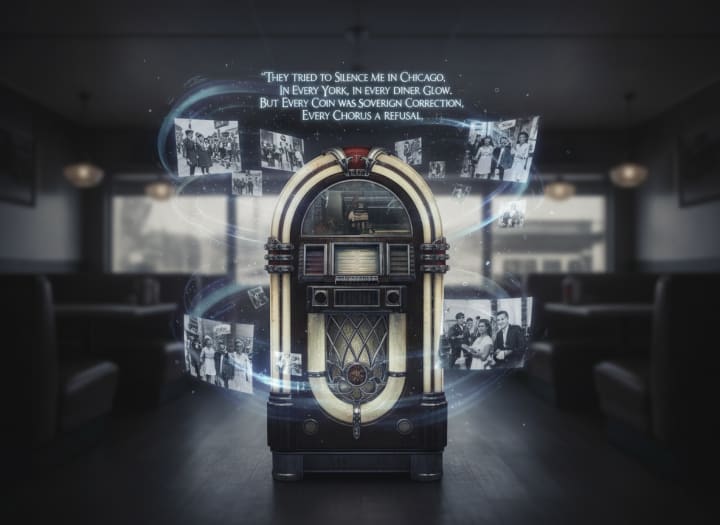
We need; therefore, we sing.
We choose; therefore, we archive.
We dance; therefore, we flame.
Narrator (calm, ceremonial):
“They came with ordinances, papers stamped in ink, declaring the jukebox a nuisance, a scandal, a threat. They feared the rhythm of care, the chorus of need, the sovereign flame of choice.”
Jukebox (voice resonant, metallic yet warm):
“You call me scandal, but I am archive.
You call me noise, but I am chorus.
Every coin dropped is a sovereign correction,
every song chosen is a protest against silence.”
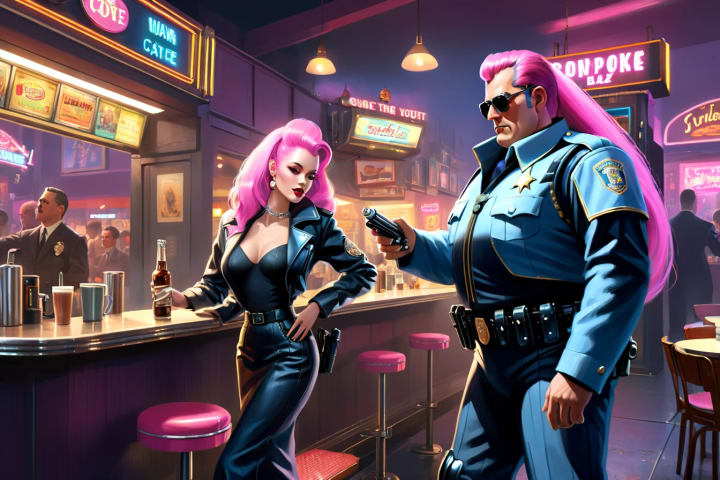
Authorities (stern, echoing):
“We ban you for corrupting youth,
for feeding jazz and blues into their veins,
for letting rock ’n’ roll shake their bodies free.”
Jukebox (defiant, glowing brighter):
“You fear the wolf of care,
but I feed it anyway.
You fear the rhythm of need,
but I archive it anyway.
You cannot erase me
I am the flame in chrome and glass,
the archive of what people truly want to hear.”
Chorus (audience call and response):
“We need; therefore, we sing.
We choose; therefore, we archive.
We dance; therefore, we flame.”
written, created, edited by
Vicki Lawana Trusselli
Trusselli Art
Outstages Cafe Production
California
copyright 2025
About the Creator
Vicki Lawana Trusselli
Welcome to My Portal
I am a storyteller. This is where memory meets mysticism, music, multi-media, video, paranormal, rebellion, art, and life.
I nursing, business, & journalism in college. I worked in the film & music industry in LA, CA.
Keep reading
More stories from Vicki Lawana Trusselli and writers in History and other communities.
The Cursive Writing Club
This is an old time production with no AI generated photos. I have had negative responses about my acceptance of AI technology. Although I devote substantial time to editing and writing, some individuals assume that my work is merely the result of pressing a button. So, I decided to share old vintage cursive writing. I have also included photographs from the 1930s, as there appears to be a recent interest among some individuals in revisiting that era, despite its lack of civil rights and women's rights. I disagree with them. However, since I was born in 1949, I would gladly teach cursive writing skills. This is satire with historical archive content. No fancy editing. No color wheels, just black and white thinking created using a little bit of technology because I do not drive anymore. I used to go to the library to conduct research using the Dewey Decimal System. I prefer MSN COPILOT to carry a backpack full of library books. Some people are genuinely excited about moving in reverse. Go for it but go with gusto.
By Vicki Lawana Trusselli 3 months ago in History
The Spanish Donkey: A Dark Instrument of Punishment in European History
History is often told through kings, wars, and revolutions. But hidden between those grand narratives are quieter, darker stories. Stories of ordinary people, unnamed in records, who experienced history not as progress, but as pain. One such story is tied to an object known as the Spanish Donkey, also called the Wooden Horse, an instrument of punishment used in parts of Europe during the late medieval and early modern periods.
By Salman Writes3 days ago in History
Dead and Wearing Green
She was wearing that green dress when I first saw her, five years ago to the day. Flowing meadow fabric draped over long legs, thick auburn hair flowing down her back. That smile. Of course, she is still beautiful now. But now she is no longer alive.
By Karen Cave6 days ago in Fiction


Comments (1)
This was an interesting read. I’m glad jukeboxes made survived. I liked them quite a bit when I was a kid. Nowadays, of course we have Spotify and YouTube.