
Jingle Bells was written for a minstrel show
The history behind the popular Christmas song is quite disturbing.


Jingle Bells is not a Christmas song
I asked a clerk at a local store why there was no Christmas music this year. The young African American man began telling me that he could not deal with the rotating songs during hsi shift.
He then asked I knew about the pagan roots of the December 25 holiday and proceeded to tell me that Jingle Bells was originally written about African slaves in America.
Jingle Bells was not written as a Christmas song, and it was not about slavery but it was written with African Americans in mind.
Dashing through the snow
In a one-horse open sleigh
Over the fields we go
Laughing all the way.
Bells on bob-tail ring
Making spirits bright
What fun it is to ride and sing
A sleighing song tonight.
chorus:
Jingle bells, jingle bells
Jingle all the way,
Oh what fun it is to ride
In a one-horse open sleigh, O
Jingle bells, jingle bells
Jingle all the way,
Oh what fun it is to ride
In a one-horse open sleigh.
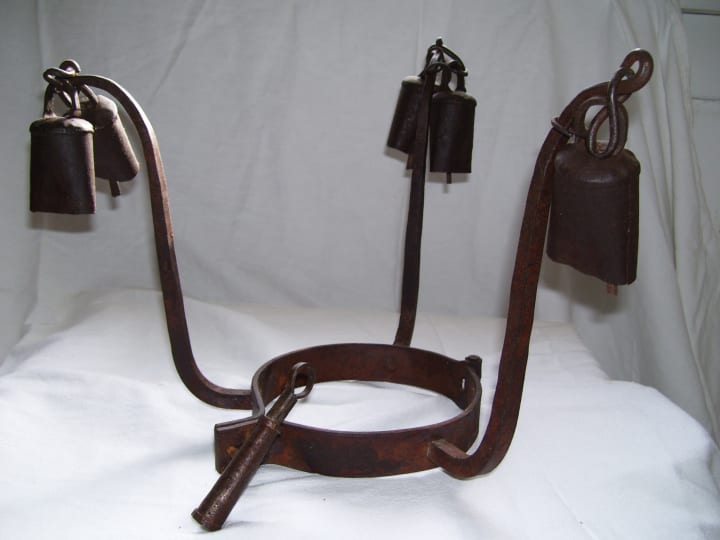
Jingle Bells was not about slave collars
There is a belief that the song refers to the iron collars that were placed around the necks of some enslaved Africans. Bells were added so that if they escaped dogs would hear them and capture them.
Along with other inhuman methods to control slaves, the iron collars with bells were brutal. However, no one should make matters worse by stating as fact what is false. Jingle Bells has nothing to do with American slavery. Please read on for details.
A day or two ago
I thought I’d take a ride
And soon Miss Fanny Bright
Was seated by my side;
The horse was lean and lank
Misfortune seemed his lot,
We got into a drifted bank
And there we got upsot.
Jingle Bells originally had a different name
Jingle Bells debuted in 1850 in Medford, Massachusetts. The author of the tune was James Lord Pierpoint, who published the song in 1857 under the name of One Horse Open Sleigh.
Hey, jingle bells, jingle bells
Jingle all the way
Oh, what fun it is to ride
In a one-horse open sleigh, hey
Jingle bells, jingle bells
Jingle all the way
Oh, what fun it is to ride
In a one-horse open sleigh
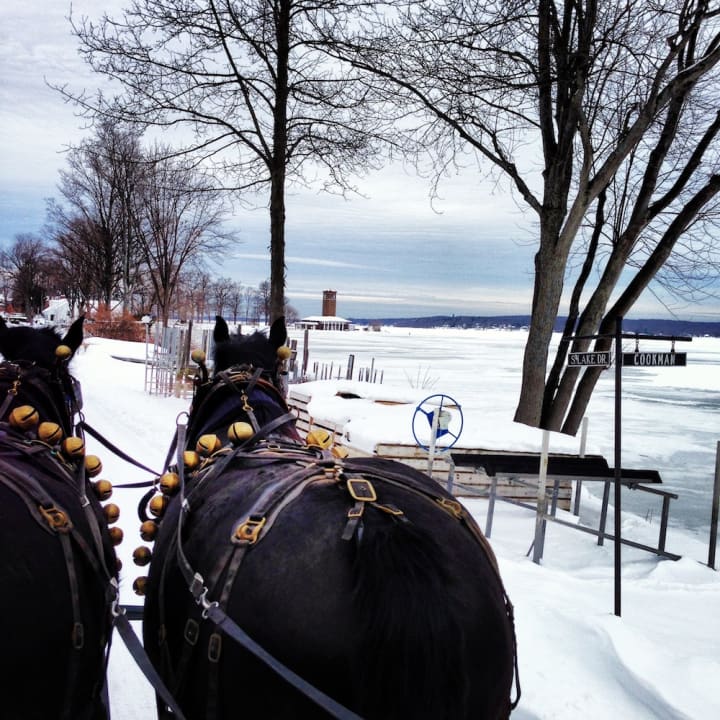
Jingle Bells was written for a minstrel show
The song was first recorded in 1889 on an Edison cylinder, and a second version came out in 1898. New England and Massachusetts history reveal that slavery in that region was abolished before Jingle Bells was officially recorded.
Here is a probability, but there are no facts to back this up. Slave owners in the Antebellum South may have misused the song lyrics regarding runaways, however, James Lord Pierpoint did not write the lyrics with slaves in mind.
There is evidence that he penned the song about the fun of sleigh riding in the snow for a minstrel show where White people wear Black face. Jingle Bells was sung as an irony about African Americans riding sleighs.
A day or two ago
The story I must tell
I went out on the snow
And on my back I fell
A gent was riding by
In a one-horse open sleigh
He laughed as there I sprawling lie
But quickly drove away
Jingle bells, jingle bells
Jingle all the way
Oh, what fun it is to ride
In a one-horse open sleigh, hey
Jingle bells, jingle bells
Jingle all the way
Oh, what fun it is to ride
In a one-horse open sleigh
About the Creator
Cheryl E Preston
Cheryl enjoys writing about current events, soap spoilers and baby boomer nostalgia. Tips are greatly appreciated.
Keep reading
More stories from Cheryl E Preston and writers in History and other communities.
Ash Wednesday: All you need to know
Mardi Gras/Fat Tuesday is the beginning The annual Mardi Gras in New Orleans concludes on the day that is referred to as Fat Tuesday. This is a day of gluttony and eating meat because the following day, Ash Wednesday, begins a time of fasting and prayer.
By Cheryl E Prestonabout a month ago in History
Otto von Bismarck: The Real-World Strategic Genius
History remembers many great thinkers of power, but few figures mastered it as completely in practice as Otto von Bismarck. While philosophers like Machiavelli explained how rulers *should* behave, Bismarck demonstrated how power actually works in the real world—messy, emotional, unpredictable, and deeply human. He was not a conqueror driven by glory, nor an ideologue chasing perfection. He was something far rarer: a strategist whose primary weapon was restraint.
By Fred Bradford8 days ago in History


Comments
There are no comments for this story
Be the first to respond and start the conversation.