
Gutenberg Printing Press: Revolutionizing Communication and Knowledge Dissemination
History

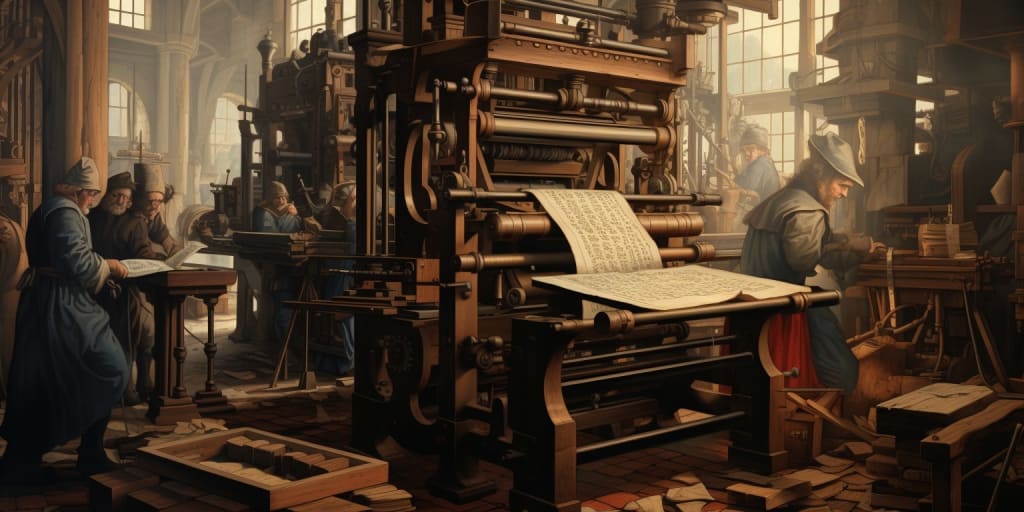
The Gutenberg printing press is widely recognized as one of the most transformative inventions in human history. Developed by Johannes Gutenberg in the mid-15th century, this revolutionary technology facilitated the mass production of books and other printed materials, leading to an unprecedented spread of knowledge and literacy. This article explores the origins, design, impact, and enduring legacy of the Gutenberg printing press.
Origins and Historical Context
Before the advent of the printing press, books were painstakingly copied by hand, a labor-intensive process that limited the availability and affordability of written works. Johannes Gutenberg, a German blacksmith, goldsmith, and inventor, sought to create a more efficient method of producing texts. Around 1440, he combined existing technologies with his innovations to develop the first movable type printing press.
Gutenberg's invention emerged during the Renaissance, a period characterized by a renewed interest in classical knowledge, art, and science. The printing press played a crucial role in disseminating Renaissance ideas, making it a cornerstone of this cultural rebirth.
Design and Mechanism
The Gutenberg printing press utilized several key components that distinguished it from earlier printing methods:
- Movable Type: The core innovation of Gutenberg's press was the use of movable type, which involved individual metal letters that could be arranged and rearranged to form words and sentences. This allowed for the easy and rapid composition of different texts.
- Ink and Paper: Gutenberg developed an oil-based ink that adhered well to metal type and paper, producing clear and durable prints. He also adapted techniques for making high-quality paper, which was crucial for the durability of printed materials.
- Printing Press: The press itself was inspired by wine presses of the time. It used a screw mechanism to apply even pressure across the printing surface, ensuring consistent and high-quality prints.
The combination of these elements enabled the mass production of books, dramatically reducing the cost and time required to produce written materials.
Impact on Society and Culture
The Gutenberg printing press had a profound impact on various aspects of society:
- Literacy and Education: The increased availability of books made education more accessible. Literacy rates began to rise as more people had access to affordable reading material.
- Spread of Knowledge: The press facilitated the rapid dissemination of scientific, religious, and literary works. This exchange of ideas was instrumental in the advancement of knowledge and the promotion of intellectual discourse.
- Reformation and Religious Change: One of the most significant effects of the printing press was its role in the Protestant Reformation. Martin Luther's 95 Theses were widely distributed thanks to Gutenberg's technology, challenging the Catholic Church's authority and leading to significant religious transformations.
- Standardization of Texts: The printing press allowed for the standardization of texts, which helped to unify languages and stabilize their written forms. This standardization was crucial for the development of national literatures and cultures.
Notable Works and Milestones
The first major book produced using Gutenberg's press was the Gutenberg Bible, also known as the 42-line Bible, printed around 1455. This monumental work is celebrated for its high quality and historical significance. It marked the beginning of the "Gutenberg Revolution" and set the standard for future printed works.
Legacy and Influence
The legacy of the Gutenberg printing press is immense and far-reaching. Its influence extends beyond the realm of books and printing:
- Scientific Revolution: The press played a pivotal role in the Scientific Revolution by enabling the widespread distribution of scientific ideas and discoveries.
- Enlightenment: The proliferation of printed materials contributed to the intellectual movement known as the Enlightenment, which emphasized reason, individualism, and skepticism of traditional authority.
- Modern Publishing: The principles of movable type and mass production established by Gutenberg laid the foundation for the modern publishing industry.
In contemporary times, the printing press is often regarded as the catalyst for the Information Age, paving the way for the digital revolution and the vast, interconnected world of information we inhabit today.
Conclusion
The Gutenberg printing press stands as a monumental achievement in human history, revolutionizing the way information is disseminated and consumed. Its impact on literacy, education, religion, science, and culture is immeasurable. As a symbol of innovation and progress, the Gutenberg printing press continues to be celebrated for its role in shaping the modern world and its enduring legacy in the dissemination of knowledge.
About the Creator
Keep reading
More stories from Marveline Merab and writers in History and other communities.
Chinese Junk Ships: The Marvels of Ancient Maritime Engineering
Chinese junk ships are emblematic of China's rich maritime history and engineering ingenuity. These versatile vessels, which sailed the seas as early as the Han Dynasty (206 BCE – 220 CE), played a crucial role in trade, exploration, and naval warfare. This article explores the origins, design, uses, and lasting impact of Chinese junk ships, highlighting their significance in maritime history.
By Marveline Merab2 years ago in History
Henry Kissinger — Modern Realpolitik Master
Henry Kissinger stands as one of the most consequential—and controversial—strategists of the modern era. In a century shaped by ideology, nuclear weapons, and global rivalry, Kissinger revived an old but uncomfortable tradition: *realpolitik*. Where others spoke in moral absolutes, he spoke in balance, restraint, and survival. He did not ask what the world should be; he asked how it could avoid catastrophe.
By Fred Bradford5 days ago in History
Coordinated Attacks and Regional Stability: Why Pakistan’s Security Situation Matters Globally
Coordinated Attacks and Regional Stability: Why Pakistan’s Security Situation Matters Globally How internal security challenges, regional rivalry, and geopolitics are deeply connected
By Wings of Time 3 days ago in History


Comments
There are no comments for this story
Be the first to respond and start the conversation.