
From Empire to Revolution
15 Moments That Broke and Remade Iran

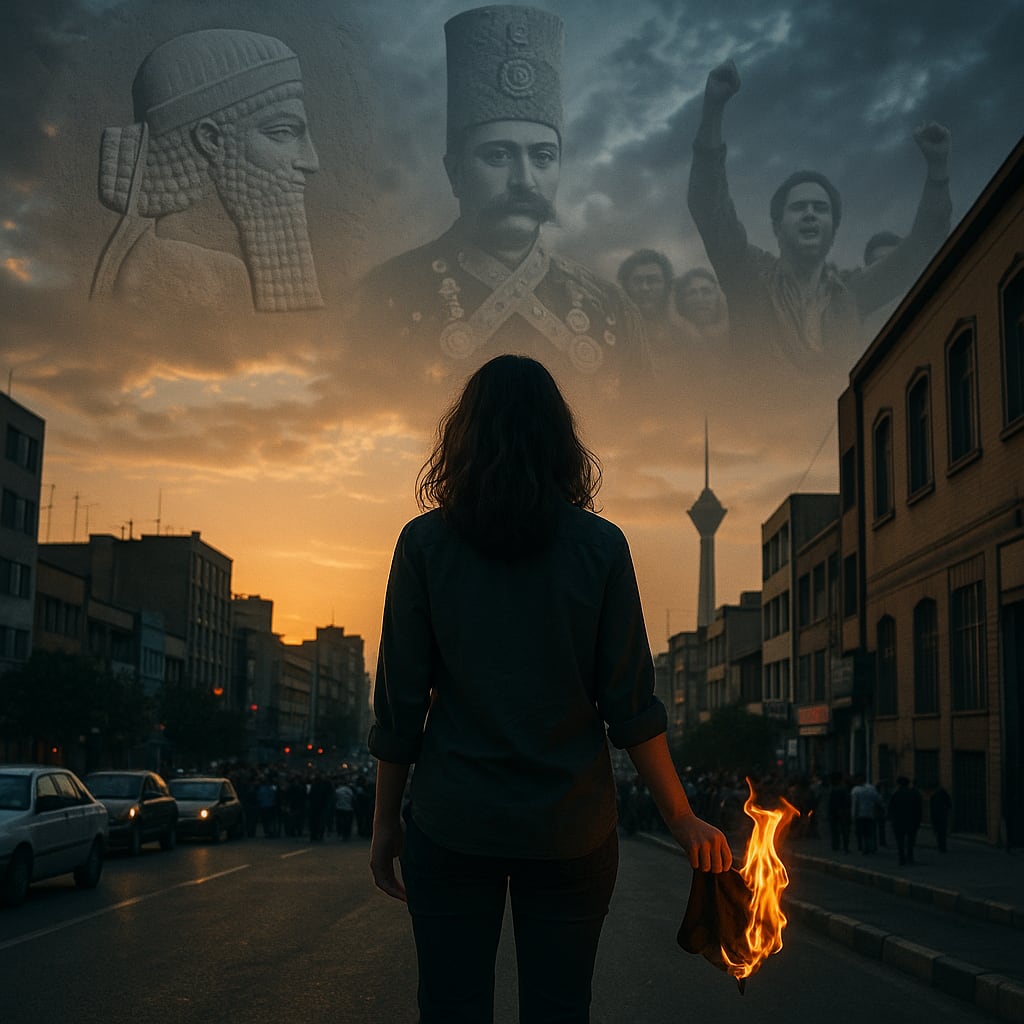
How a land of poets and oil, veils and vinyl records, kings and crowds keeps reinventing itself — and why that fight is nowhere near over
The first time I understood that Iran was more than a “problem” on the news, I was sitting at a kitchen table in a cramped apartment, listening to a man in his seventies argue with a younger version of himself.
The older man was real: an Iranian grandfather, tea in hand, speaking soft Persian under his breath.
The younger version of him lived in a faded photograph on the fridge: same eyes, same jawline, but in that picture he was standing on a Tehran rooftop in 1979, hair blown back, fists raised, a crowd surging behind him.
Between those two men — the one in the chair and the one in the photo — sat the entire modern history of Iran.
You could feel it. The pride, the regret, the “we wanted something better… we just didn’t know it would be this.”
This is a story of empires and revolutions, yes.
But it’s also about what happens when a country keeps trying to rewrite its own script — and the ink never quite dries.
Below is Iran’s history in fifteen turning points, not as a textbook timeline, but as a series of ruptures that changed the way ordinary people woke up the next morning.
The Birth of Persia: Cyrus and the Achaemenid Experiment
Long before “Iran” was a word people used, there was Persia.
Around the mid-6th century BCE, Cyrus the Great united scattered tribes on the Iranian plateau and did something oddly modern for his time: he built an empire that didn’t rely solely on terror.
He let conquered peoples keep their customs and religions, issued what’s often called the first “charter of human rights,” and stitched together a world from the Aegean to Central Asia.
For Persians, this wasn’t just geography; it was identity.
Even now, when Iranians talk about their past, Cyrus is more than a historical figure.
He’s a reminder that once, a ruler from their land could be both powerful and, by the standards of his time, remarkably tolerant.
That memory becomes important later, when new rulers claim divinely granted authority and people quietly compare them to a king from 2,500 years ago.
Fire and Faith: The Sasanian Empire and Zoroastrian Iran
Fast forward to the 3rd century CE.
The Sasanian Empire rises and turns Iran into the center of a sophisticated world power again — this time with Zoroastrianism as the official religion.
Imagine a landscape of fire temples, priests in white, cosmic battles between truth and lies.
The idea that history itself is a moral struggle is baked into the culture.
Sasanians fought Rome and Byzantium, traded on the Silk Road, and codified laws, administration, and art that still echo through Iranian architecture and language.
When people in today’s Iran light a candle and whisper “Ruzegar avaz mishavad” (Times will change), they’re not just being poetic.
They come from a world where history has always been a battlefield between light and darkness — one where humans are expected to pick a side.
A New God, A New Language: The Islamic Conquest
In the 7th century, Arab Muslim armies swept across the region and shattered the Sasanian Empire.
For many Iranians, this is still one of those turning points you can feel in family conversations: was it a catastrophe? A rebirth? Both?
Islam spread, Arabic became the language of power, and Zoroastrian temples faded.
But Iran didn’t disappear into the Arab world.
Instead, something stranger happened.
Persians adopted Islam but kept their language, their stubborn sense of “we were somebody before this,” and poured their energy into becoming scholars, poets, and philosophers of the new faith.
Poets like Rumi and Hafez would later write in Persian, not Arabic, and frame God not as a distant ruler, but as a lover.
Iran became Muslim, yes.
But it also became the place where Islam learned to speak in metaphors and wine-soaked verses.
The Survival Trick: Persian Culture Refuses to Die
Conquest usually means assimilation.
Iran took a different path.
Between the 9th and 11th centuries, local dynasties like the Samanids pushed a Persian literary revival.
Ferdowsi sat down and spent three decades writing the Shahnameh, the “Book of Kings,” an epic poem that turned pre-Islamic Persian history into a mythic saga.
He did it in almost entirely pure Persian, intentionally avoiding Arabic words.
It wasn’t just art; it was resistance.
When Iranians insist they’re not Arab, they’re not being fussy about ethnicity.
They’re drawing from a long tradition of protecting a culture that has survived empires, invasions, and religious shifts.
The Shahnameh is still recited in living rooms today.
In a country repeatedly told what it should be, people cling to stories that say, “We’ve been here a long time. We’ll still be here when you’re gone.”
A Nation of a Different Sect: Safavid Iran and Shi’a Identity
In the 16th century, another turning point: the Safavid dynasty decided to make Twelver Shi’a Islam the state religion.
This wasn’t just theology — it was geopolitics.
By adopting Shi’ism, Iran distinguished itself from its Sunni Ottoman and Uzbek neighbors.
Suddenly, Iran wasn’t just Persian and Muslim; it was Shia.
This shift embedded mourning rituals, passion plays, and the story of Imam Hussein’s martyrdom at Karbala deep into the country’s emotional DNA.
Grief and resistance became intertwined.
The idea of siding with the oppressed against a tyrant wasn’t just ethical; it was sacred.
Centuries later, when Iranians poured into the streets in 1979, many saw themselves, consciously or not, as reenacting that same old story: people vs. unjust ruler, again and again, with black flags and clenched fists.
Humiliation and Awakening: Qajar Iran Meets the Modern World
Jump to the 19th century.
The Qajar dynasty sits on the throne while European empires carve up the globe.
Russia bites off northern territories.
Britain plays financial games from the south.
Concessions are signed that hand over tobacco, railways, and resources to foreign companies for cheap.
Imagine living in a country where your own rulers keep trading away pieces of your future to plug their debts.
That’s what many Iranians felt.
Corruption at the top met humiliation from abroad.
The words “este’mar” (colonial exploitation) and “gharb-zadegi” (West-struck, or intoxicated with the West) aren’t just academic terms in Iran.
They come from a century of watching outsiders profit while ordinary people stayed poor.
This stew of anger and shame would become the fuel for later revolts.
The First Constitutional Revolution: Writing Limits Into Power
In 1905–1911, something extraordinary happened.
Merchants, clerics, intellectuals, and ordinary people united and forced the Qajar king to accept a constitution and a parliament (the Majles).
This was one of the first constitutional revolutions in the Muslim world.
People camped in mosques and foreign legations, demanded “law” instead of arbitrary decree, and dreamed of a country where even the king had rules to follow.
It didn’t fix everything.
There were civil conflicts, foreign interference, and constant instability.
But the idea had escaped the bottle: Iranians now had a word, “mashruteh,” for a political order where power had to answer to something beyond itself.
Every time the country swung back toward dictatorship, that earlier revolution whispered, “We’ve written a different script once before. We could do it again.”
Reza Shah and the Forced March to Modernity
In the 1920s, an ambitious military officer named Reza Khan staged a coup, sidelined the Qajars, and crowned himself Reza Shah Pahlavi.
He looked at Iran and decided it needed to be dragged into the 20th century, whether it liked it or not.
He built railways, modern schools, and a centralized army.
He imposed Western-style dress codes, banned certain religious garments, and pushed women to remove the veil in public.
For some urban families, it felt like progress.
For others, it felt like violence against their identity.
Iran was modernizing, but at gunpoint.
Reza Shah’s rule planted a sharp tension that still hasn’t gone away: can you force a society to be “modern” without breaking it?
And who gets to define what modern even means?
Oil, Hope, and Interference: Mossadegh and the 1953 Coup
If you want to understand why so many Iranians distrust foreign powers, start in 1951.
Mohammad Mossadegh, a nationalist prime minister, nationalized Iran’s oil, which had been controlled by the British.
For the first time, many Iranians felt like the country’s wealth might actually belong to them.
It didn’t last.
In 1953, the CIA and MI6 helped orchestrate a coup that overthrew Mossadegh and strengthened the Shah’s rule.
Newspapers were shut down, opponents jailed.
The message was clear: when democracy threatened Western interests, democracy could go.
Today, when young Iranians roll their eyes at Western lectures on “freedom” and “democracy,” it’s not just cynicism.
They’ve inherited stories of a prime minister beloved by many, toppled for daring to say, “Our oil is ours.”
That wound never fully closed.
The Shah’s White Revolution and the Shadows Behind the Neon
The Shah, restored and emboldened, launched the “White Revolution” in the 1960s.
Land reforms, women’s suffrage, literacy campaigns, industrialization — on paper, it looked like the dream of a modern, secular, prosperous Iran.
In reality, the benefits flowed unevenly.
Some peasants ended up landless.
New wealth clustered in cities.
Traditional elites felt undercut.
Religious leaders saw their influence threatened.
And then there was SAVAK, the Shah’s secret police, infamous for torture and surveillance.
Think of a country where new highways and factories are opening, miniskirts are appearing in Tehran, and at the same time, people whisper about neighbors who “disappeared” after criticizing the regime.
That cognitive dissonance — shiny progress on top, fear underneath — made the system brittle.
By the late 1970s, it only took a spark.
1979: Revolution, Euphoria, and the Unfinished Dream
That spark came.
Inflation, inequality, political repression, and a growing sense of moral betrayal pushed millions into the streets.
Different factions — Islamists, leftists, nationalists, students, bazaar merchants — united around one thing: the Shah had to go.
When he finally fled in January 1979, Iran exploded into celebration.
For a brief moment, the air was thick with possibility.
People hung posters, argued about the future in cafés, listened to banned songs openly, dreamed of democracy, Islamic justice, socialism, or some messy mix of all three.
Then Ayatollah Khomeini and his followers moved fast.
They built a new Islamic Republic, combining elected institutions with the supreme authority of a “Guardian Jurist” (Velayat-e Faqih).
Some revolutionaries were purged, executed, or exiled.
Women who had marched shoulder-to-shoulder with men found themselves pushed back under compulsory hijab.
It’s one of the cruel realities of revolutions: the people who topple a regime aren’t always the ones who get to shape what replaces it.
Siege Mentality: The Iran–Iraq War and a Generation in Uniform
Barely a year after the revolution, Saddam Hussein invaded Iran in 1980.
The new republic, still fragile, suddenly faced a brutal eight-year war.
Chemical weapons, human wave attacks, cities bombed, children sent to the front — an entire generation was swallowed by the trenches.
Inside Iran, wartime tightened everything.
The government framed resistance as sacred duty.
Criticism became treasonous.
Many Iranians still carry a complicated mix of pride and trauma from those years.
They defended their country from dismemberment.
They also watched young lives turned into slogans.
When you grow up with war posters on every wall and ration cards in your parents’ hands, “stability” and “security” have a different weight.
Authority can always say, “Remember what happens when we’re weak.”
After Khomeini: Rafsanjani, Khatami, and the Reformist Mirage
Khomeini died in 1989.
His successor, Ayatollah Khamenei, stepped into the role of Supreme Leader, and presidents took turns trying to steer the ship within tight limits.
Rafsanjani pushed for reconstruction and economic pragmatism.
Then came Mohammad Khatami in 1997, elected by a wave of young people and women hungry for reform.
Khatami spoke of a “dialogue among civilizations,” loosened cultural restrictions, and allowed some press freedoms.
There was laughter again in public spaces, new films, edgy literature.
But conservatives in the judiciary and security apparatus slammed the brakes.
Newspapers were shut, activists arrested.
Gradually, many Iranians felt the familiar sting: hope raised, hope denied.
Reform from within sounded good.
Inside the system, it kept hitting a ceiling.
The Green Movement: “Where Is My Vote?”
In 2009, millions of Iranians thought they were voting for change again.
Mir-Hossein Mousavi, a reformist candidate, challenged the hardline President Ahmadinejad.
When the official results declared an implausible landslide for Ahmadinejad, people poured into the streets.
They wore green.
They chanted, “Where is my vote?”
For weeks, Tehran and other cities became arenas of peaceful protests, cellphone videos, rooftop “Allahu Akbar” shouts that echoed the 1979 revolution — but this time against the new system.
The crackdown was brutal.
People were beaten, arrested, killed.
Neda Agha-Soltan’s death, captured on a shaky phone camera, went around the world.
The message to many was unmistakable: the system would not allow real change through the ballot box.
If 1953 taught Iranians that foreign powers could crush their democracy, 2009 taught them their own state could, too.
“Woman, Life, Freedom”: The New Face of Defiance
And then, in 2022, a young Kurdish Iranian woman named Mahsa (Jina) Amini died in custody after being detained by the morality police for “improper hijab.”
Her face became a spark, like so many before her — but this time the fire spread differently.
Women tore off their headscarves in public, burned them, cut their hair in the streets.
Men formed human shields around them.
The slogan that rose from Kurdish activism — “Jin, Jiyan, Azadi” / “Woman, Life, Freedom” — crossed ethnic, religious, and class lines.
This wasn’t a protest about just one law or one president.
It was a revolt against the idea that an entire system could police bodies, choices, and futures in the name of virtue.
The state responded with force, arrests, executions.
But something had already shifted.
If earlier revolutions centered around kings, clerics, or ideologies, this one placed women and life itself at the center.
It said, quietly and loudly at once, “We are done being symbols. We want to be free humans.”
The Takeaway: A Country That Refuses to Stay in One Shape
Looking back across these fifteen turning points, Iran doesn’t feel like a country with “ancient problems” or a “timeless culture,” the way headlines like to flatten it.
It looks more like a place that keeps refusing the roles assigned to it — by empires, by kings, by clerics, by foreign governments.
Persian empire, Islamic conquest, Shi’a identity, constitutional revolution, oil nationalization, monarchy, the Islamic Republic — each tried to be the final word.
None of them stuck.
If you only see Iran as a “threat” or a “theocracy,” you miss the quieter revolution that keeps surfacing: people insisting that they are more than slogans, more than resources, more than pawns in someone else’s grand theory.
The old man at the kitchen table, staring at his younger self on that 1979 rooftop, once told me, “We wanted freedom and dignity. We got rid of one king and woke up with many.”
He said it without bitterness, just a tired kind of clarity.
Then he sighed and added, “But our story isn’t finished. It never is.”
That’s what lingers after tracing this timeline.
Not the dates, not the names, but the sense that Iran is still in the middle of deciding what it wants to be — and that decision has never belonged fully to those in palaces or in clerical robes.
It keeps slipping back into the hands of people in the streets, on rooftops, in kitchens, arguing with their own younger selves, still believing, against all evidence and all history, that the next turning point might finally bend toward the lives they’ve been dreaming of all along.
About the Creator
abualyaanart
I write thoughtful, experience-driven stories about technology, digital life, and how modern tools quietly shape the way we think, work, and live.
I believe good technology should support life
Abualyaanart
Keep reading
More stories from abualyaanart and writers in History and other communities.
Ayat al-Kursi: The Verse That Guards the Soul
Introduction Among the 6,000+ verses of the Holy Qur’an, few hold as much power, reverence, and awe as Ayat al-Kursi—The Throne Verse. Found in Surah Al-Baqarah (2:255), this single verse is considered the most majestic and protective in the entire Qur’an. Recited daily by millions of Muslims around the world, Ayat al-Kursi is more than just words—it is a spiritual fortress, a divine reminder, and a gateway to profound reflection on the nature of Allah’s sovereignty.
By abualyaanart8 months ago in History
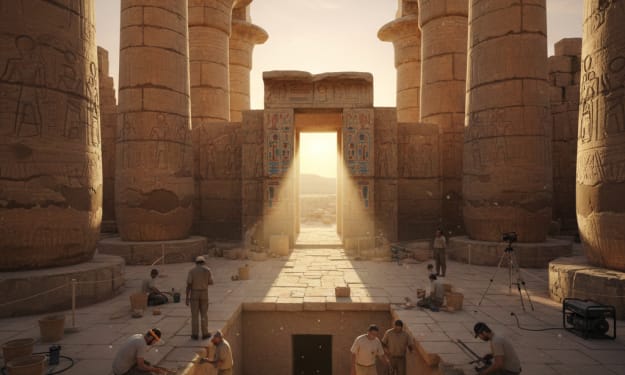
Archaeologists Reveal 3,000 Years of Secrets from Egypt’s Greatest Temple
In a groundbreaking discovery, archaeologists have unveiled new secrets hidden for nearly 3,000 years within Egypt’s most magnificent religious complexthe Temple of Karnak Temple. Long regarded as Egypt’s greatest temple, Karnak stands as a monumental testament to ancient Egyptian faith, power, and architectural brilliance. The latest excavations have revealed hidden chambers, rare inscriptions, and artifacts that are reshaping scholars’ understanding of ancient Egyptian civilization.
By Muhammah Hanzalah6 days ago in History


Comments
There are no comments for this story
Be the first to respond and start the conversation.