

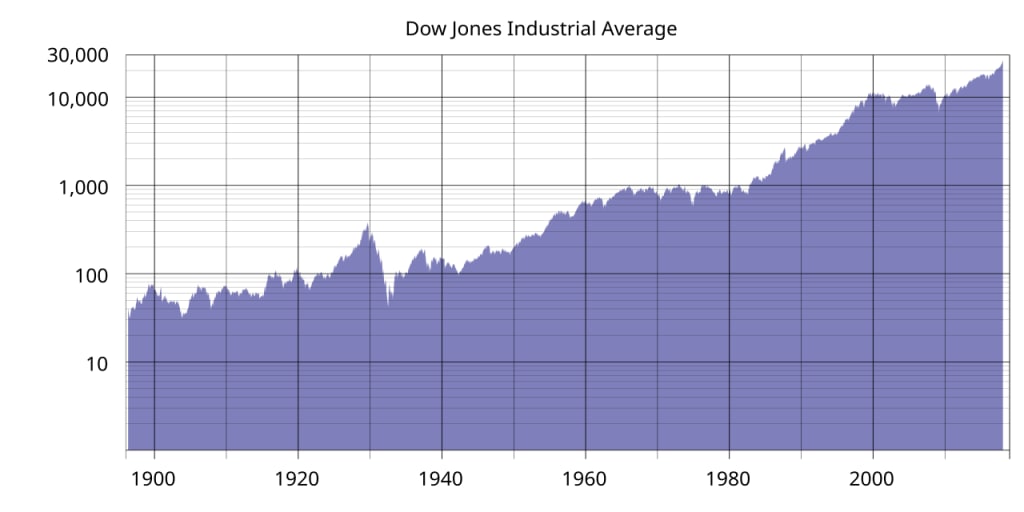
The Dow Jones Industrial Average, often simply called the Dow, is one of the most recognized stock market indexes in the world. When people hear headlines like “Dow today jumps 200 points” or “DJIA today slides amid economic uncertainty,” they are witnessing a snapshot of investor confidence, economic expectations, and market psychology all rolled into one number. But behind those daily movements lies a much deeper story about how the modern U.S. economy operates.
What Is the Dow Jones Industrial Average?
The Dow Jones Industrial Average (DJIA) is a stock market index that tracks 30 major publicly traded companies in the United States. These companies are considered leaders in their respective industries and collectively represent a broad view of American corporate strength. Despite its name, the DJIA is no longer limited to industrial companies. Today, it includes businesses from sectors such as technology, healthcare, finance, and consumer goods.
Unlike many modern indexes that are weighted by market capitalization, the Dow Jones is price-weighted. This means companies with higher stock prices have a greater influence on the index’s movement, regardless of their overall size. While this methodology is sometimes criticized, it has remained unchanged for over a century, preserving the index’s historical continuity.
Why the Dow Still Matters
In an era dominated by broader indexes like the S&P 500 and tech-heavy benchmarks, some investors question the relevance of the Dow. Yet the Dow continues to hold symbolic and practical importance. It is often the first index cited in market news, making it a key reference point for both seasoned investors and casual observers.
When analysts discuss dow today, they are often speaking about more than just numbers. Daily movements in the DJIA reflect investor reactions to inflation data, interest rate decisions, corporate earnings, geopolitical tensions, and even consumer sentiment. Because its components are established blue-chip companies, the Dow offers insight into how major corporations are navigating economic conditions.
How the DJIA Is Calculated
The DJIA’s calculation is straightforward but unique. The prices of all 30 component stocks are added together and then divided by a figure known as the Dow Divisor. This divisor is adjusted over time to account for stock splits, dividends, and corporate restructuring, ensuring continuity in the index’s value.
This structure means that a sharp move in one high-priced stock can significantly influence djia today, even if other companies remain stable. While this can create volatility, it also highlights shifts in investor sentiment toward specific market leaders.
Interpreting Dow Jones Movements
Understanding what drives the dow jones on any given day requires context. A rising Dow often signals optimism about economic growth, stable inflation, or strong corporate earnings. Conversely, a falling Dow may indicate concerns over recession risks, tighter monetary policy, or global instability.
However, it’s important to look beyond daily fluctuations. Short-term moves in dow today can be influenced by news cycles or emotional reactions, while long-term trends often reflect deeper economic fundamentals. Investors who focus solely on daily point changes risk missing the broader narrative shaping the market.
The Role of the Dow in Long-Term Investing
While traders may focus on intraday movements, long-term investors often view the Dow as a historical benchmark. Over decades, the Dow Jones Industrial Average has demonstrated the power of compounding growth, despite periods of downturn, crashes, and uncertainty.
Major events such as financial crises, pandemics, and political upheaval have all left their mark on the DJIA. Yet the index has consistently recovered over time, reflecting the resilience of the U.S. economy and its largest corporations. This long-term perspective is why many retirement portfolios and investment strategies still use the Dow as a reference point.
Dow Today in a Changing Market Landscape
The modern market environment is vastly different from when the Dow was first created. Technology now plays a dominant role, global markets are deeply interconnected, and information travels instantly. As a result, djia today often reacts quickly to developments far beyond U.S. borders.
Interest rate policies from central banks, supply chain disruptions, and shifts in consumer behavior can all impact the Dow within minutes. This fast-moving environment underscores the importance of staying informed and understanding the forces that influence market behavior rather than reacting emotionally to daily swings.
Limitations of the Dow Jones
Despite its prominence, the Dow Jones has limitations. With only 30 companies, it does not represent the full diversity of the U.S. stock market. Smaller companies and emerging sectors are largely absent, which can sometimes make the index less reflective of broader economic trends.
Additionally, its price-weighted structure can distort perception, giving outsized influence to higher-priced stocks. For this reason, many investors use the Dow alongside other indexes to gain a more balanced market view.
A Symbol That Endures
Even with its imperfections, the Dow remains a powerful symbol of market performance. It serves as a bridge between financial professionals and the general public, offering a familiar metric to gauge economic confidence. When headlines discuss dow today, they capture attention because the index represents more than stocks—it reflects hopes, fears, and expectations about the future.
Final Thoughts
The Dow Jones Industrial Average is more than just a number flashing across a screen. It is a living record of American business history, shaped by innovation, crisis, and recovery. Whether you are tracking djia today for investment decisions or simply to understand market sentiment, the Dow offers valuable insight into how the world’s largest economy is performing.
By viewing the Dow with context and patience, readers and investors alike can appreciate its role not just as a market index, but as a long-standing indicator of economic momentum and resilience.
About the Creator
Saboor Brohi
I am a Web Contant writter, and Guest Posting providing in different sites like techbullion.com, londondaily.news, and Aijourn.com. I have Personal Author Sites did you need any site feel free to contact me on whatsapp:
+923463986212
Keep reading
More stories from Saboor Brohi and writers in History and other communities.
Timothy Busfield
Timothy Busfield may not always dominate headlines, but his impact on American television and film has been steady, lasting, and deeply respected. Over several decades, Busfield has built a career defined by versatility, professionalism, and a rare ability to move seamlessly between acting, directing, and producing. His work reflects a commitment to storytelling rather than celebrity, which is precisely why his career continues to resonate with audiences.
By Saboor Brohi about 9 hours ago in History
Elizabeth I of England: Strategic Ambiguity
Elizabeth I ruled in one of the most dangerous political environments in European history—and survived. Surrounded by religious conflict, foreign threats, and internal conspiracy, she governed not through brute force or rigid ideology, but through something far subtler: strategic ambiguity. Where others rushed toward certainty, Elizabeth mastered delay. Where others declared, she implied. Her power lay not in decisive answers, but in carefully preserved options.
By Fred Bradford6 days ago in History
Diamonds Around the World: The Countries That Live and Breathe Baseball
There's something almost mystical about the crack of a bat connecting with a fastball. In certain corners of the globe, that sound carries the weight of history, identity, and dreams passed down through generations. While soccer may dominate the world's sporting consciousness, baseball has carved out its own sacred territories—places where the sport transcends mere entertainment and becomes woven into the very fabric of culture.
By Gianni Bertoniabout 14 hours ago in History




Comments
There are no comments for this story
Be the first to respond and start the conversation.