
Basant
The Festival of Kites, Colors, and Cultural Joy in Punjab
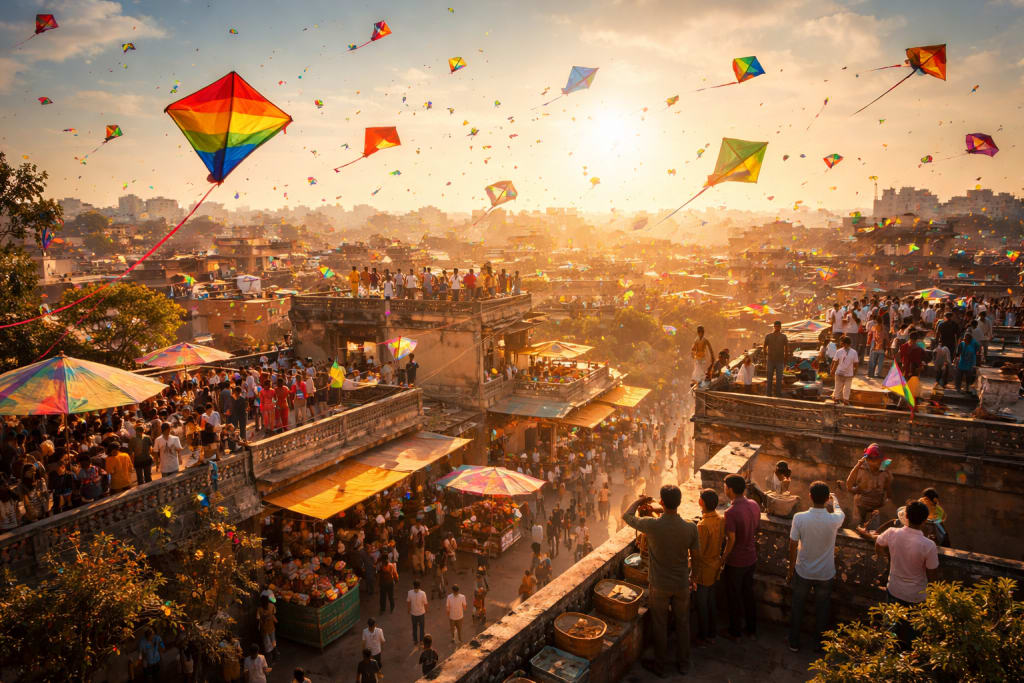
The sky would turn into a canvas of colors. Children and adults alike would rush to rooftops, their hands gripping the strings of vibrant kites that danced and twirled in the wind. The air smelled of fresh flour and sugar, of popcorn and excitement, and for a moment, the world seemed to forget everything but the thrill of flight. This was Basant a celebration that was more than just kites in the sky. It was a ritual, a prayer, a community gathering, and a festival of life itself.
Origins Rooted in Agriculture
Basant’s story is as old as the traditions of Punjab itself. Long before skyscrapers and modern roads, during the early centuries of the Mughal era, Basant was tied closely to nature and agriculture. Farmers and villagers observed the coming of spring not as a mere change of season, but as a divine signal. After the long winter months, when wheat and mustard fields would bloom, people would gather on rooftops and open grounds to fly kites as an offering of gratitude and a prayer for prosperity. The vibrant strings soaring in the sky were believed to carry wishes to heaven a symbolic gesture asking for blessings from Allah for a bountiful harvest.
Celebrating the Harvest and Spring
In those times, Basant was carefully timed. It coincided with the harvesting season of wheat, when golden fields stretched for miles. Communities understood that the success of the crop was not only in human labor but also in divine favor. The act of flying kites had multiple purposes: it celebrated the harvest, strengthened communal bonds, and brought joy to a society that relied heavily on agriculture. The festival also marked the arrival of spring a season that promised warmth, growth, and renewal after harsh winters. Children, women, and men alike would gather on the highest points in villages, roofs, or small hills, each trying to let their kites fly the highest and longest. The sky would become a riot of colors, from bright reds and yellows to deep blues and greens, each kite representing a small prayer, a silent hope, and a shared celebration.
Royal Influence and Artistry
As centuries passed, Basant evolved. During the Mughal and later the Sikh periods in Punjab, the festival became more elaborate. Royal courts would host competitions for the most beautiful and skillful kites. Artisans would craft kites with intricate designs, sometimes even embedding symbols or short blessings within the paper. Kite flying was no longer just a farmer’s ritual; it became a city celebration, drawing people from towns and villages alike. The festival maintained its spiritual undertone, but it also began to carry an element of skill and artistry. Boys and men would challenge each other in kite battles, trying to cut strings of rival kites, while spectators cheered from the rooftops, creating an atmosphere of excitement that was both playful and competitive.
Economic Significance of Basant
Economically, Basant became significant over time. Small businesses and traders capitalized on the festival. Paper, bamboo, and thread sellers would see their incomes multiply in these weeks. Sweet shops, food vendors, and kite makers prepared months in advance to meet the sudden surge in demand. Families invested in decorative strings called “manjha” coated with powdered glass to increase the chances of cutting competitor kites. These were sold in bundles at markets, with prices soaring higher as the festival approached. Basant was not just a cultural ritual; it became a vibrant seasonal economy that connected rural artisans with urban consumers, generating substantial business for small vendors and large traders alike.
Community and Joy
But Basant was never just about money. It was a festival of joy, anticipation, and community. On the rooftops, children laughed as they struggled to launch their first kites into the sky. Young men focused intensely on aerial battles, their faces lit by the reflection of sunlight on colored threads. Women, often participating by cheering or preparing snacks, added warmth to the communal celebration. Songs, drums, and traditional music often accompanied the festival in smaller towns, blending sounds of joy with the visual spectacle above. The entire neighborhood would seem to pause, collectively watching as hundreds of kites twirled, dipped, and soared across the sky.
Spiritual Significance
The spiritual and symbolic meanings remained deeply embedded. Flying kites was considered a way to release worries, to set prayers free, and to ask for protection against misfortune. In folklore, it was believed that kites carried messages of hope and happiness to the heavens. Many elders still recall telling children to whisper their wishes as they let their kites rise, connecting the act of play with a spiritual practice. Kites also symbolized human ambition, courage, and freedom a way to rise above daily hardships, if only for a few hours.
Modern Evolution
In the modern era, Basant has undergone dramatic transformations. Urban expansion has changed rooftops, replaced open fields with high-rise buildings, and created new challenges for traditional kite flying. Yet, the festival survives, thriving in cities and towns across Punjab. Today, Basant is not just about agriculture but about community, culture, and social identity. Youths, in particular, embrace it with unmatched enthusiasm. Social media amplifies the excitement, with pictures and videos of kite battles going viral within minutes. Modern technology has introduced lighter, stronger materials for kites, neon colors, and even LED-lit kites for night displays. The festival has become a spectacle one where tradition meets innovation.
Safety Challenges
However, modern Basant also carries challenges. Safety has become a major concern. High-speed kite strings, often coated with glass, have caused injuries, and sometimes fatalities. Traffic disruptions, fire hazards, and property damage have led authorities to enforce restrictions in urban centers. Despite this, the spirit of the festival endures. Communities adapt by organizing sanctioned kite zones, school events, and competitions to keep the tradition alive while minimizing risks.
Economic Boost in Modern Times
Economically, Basant continues to generate immense seasonal business. Kite manufacturing, string production, and sales of festival-related goods peak annually. Food vendors, street performers, and local markets see significant traffic. Even small entrepreneurs and artisans benefit, as demand for handmade or unique kites rises. Tourism in some regions sees a spike as people travel to witness the festival’s visual grandeur. Basant, therefore, is not just a cultural celebration but a seasonal economic engine that supports communities financially, while keeping centuries-old traditions alive.
Lessons and Cultural Value
Basant also provides lessons about cultural continuity and social cohesion. The festival brings together diverse groups families, friends, and neighbors who share a common love for celebration. It reminds communities of the power of collective joy, the importance of preserving heritage, and the beauty of traditions that link past to present. In rural areas, elders pass down kite-making skills and flying techniques, ensuring that each generation connects with its roots. In urban areas, youths find joy, creativity, and competition in kite battles, bridging cultural heritage with contemporary excitement.
Environmental Awareness
In recent decades, awareness campaigns have also sought to highlight Basant’s environmental aspects. Kite-making, traditionally done with biodegradable materials, has been encouraged to reduce pollution. Communities organize clean-up drives post-festival, reflecting a growing consciousness about preserving cultural practices while respecting modern environmental challenges.
Celebrating Life and Community Today
Today, Basant remains a festival of dreams, aspirations, and community spirit. The sight of thousands of kites filling the sky, the smell of street food, the laughter and cheers of children, and the competitive intensity of kite battles all create an atmosphere that is both thrilling and reflective. It is a reminder that human beings, across centuries, have always sought ways to celebrate life, to honor nature’s cycles, and to find joy in collective expression. Whether it was a prayer for a bountiful harvest or a modern Instagram-worthy competition, Basant continues to unite generations through its timeless magic.
Enduring Spirit
The festival’s endurance lies in its ability to adapt. While modern urban challenges require innovation and safety measures, the essence of Basant the joy of flight, the celebration of spring, and the communal spirit remains untouched. Rooftops, parks, and open fields become theaters of color, where humans momentarily touch the sky, letting their hopes, dreams, and prayers soar with each kite. In a fast-paced, digitalized world, this simple act of kite flying reminds people of life’s slower, joyful rhythms.
Final Reflection
Ultimately, Basant is more than a festival. It is a reflection of human culture, ambition, and joy. It teaches patience, skill, and cooperation. It connects generations, celebrates nature, and provides livelihoods. From the earliest farmers sending kites into the spring sky to modern youths capturing every flight on smartphones, Basant’s story is a living thread that binds the past to the present. It is a celebration of life itself, vibrant, unpredictable, and breathtakingly beautiful.
About the Creator
Muhammad Ayaan
🎙️ Rebooting minds with stories that matter.
From news & tech to real talk for youth no face, just facts (and a bit of fun).
Welcome to the side of the internet where thinking begins.
Keep reading
More stories from Muhammad Ayaan and writers in History and other communities.
The Silent Flight That Landed Without Life
The plane appeared out of nowhere. It was late evening. The sky was turning dark, and airport lights were shining like stars on the ground. Air traffic controllers were talking to normal flights, guiding them one by one, when suddenly a small dot appeared on the radar screen.
By Muhammad Ayaan about 13 hours ago in History
U.S. Navy Ships Collide
Collisions involving U.S. Navy ships are rare, but when they occur, they draw immediate attention. Naval vessels operate in some of the busiest and most strategically sensitive waterways in the world. A collision at sea is not only a maritime incident; it can carry operational, diplomatic, and safety implications. Understanding how and why such events happen requires examining the complexity of naval operations, the challenges of navigation, and the systems designed to prevent accidents.
By Saboor Brohi 3 days ago in History
Why Are Vestments for Priests Essential in Modern Worship?
Modern worship continues to grow and change with time, yet one sacred element remains deeply important: vestments for priests. These garments are not just part of tradition; they help preserve reverence, identity, and spiritual focus in church services. Even today, catholic attire plays a vital role in shaping the worship experience. Priest vestments connect believers to faith, history, and sacred responsibility. This article explains why priest vestments are still essential in modern worship and how they strengthen spiritual meaning.
By Sameera eclergys6 days ago in History
I Don't Need My Phone... Wait, Is That Actually True?
My parents gave me my first cell phone when I was twelve years old. It wasn't a fancy iPhone or anything, not even close. Just a simple black flip phone for when I needed to call or text them after school.
By Madison "Maddy" Newton2 days ago in Humans




Comments
There are no comments for this story
Be the first to respond and start the conversation.