
Why Every Good Meal in Cincinnati Now Starts on Your Phone (2026)
Cincy’s food scene is booming, but if the tech is dodgy, I'm out. Here’s how local spots are finally getting the mobile app game right.

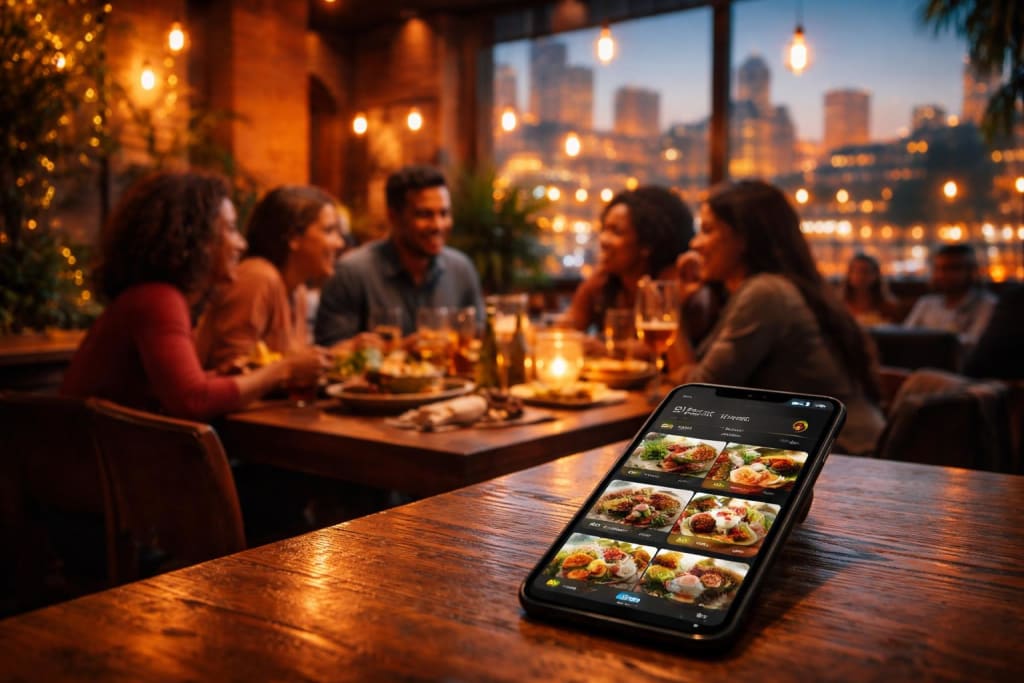
I was standing outside a brewery at The Banks last Friday, freezing my tail off while trying to scan a QR code that just wouldn't load. Ope, there I was, staring at a spinning circle while my friends were already inside ordering a round. It’s 2026, y’all, and I reckon we should be past the "broken link" era of dining out.
Cincinnati’s food and beverage scene is hella different than it was even two years ago. We’ve gone from being a "chili and goetta" town to a legitimate national culinary destination. But as the menus get fancier, the tech behind them is finally fixin' to catch up. If a restaurant doesn't have a functional app by now, they’re basically leaving money on the sidewalk.
I’ve spent the last month testing every local food app from OTR to Covington. Some are brilliant; others made me want to chuck my phone into the Ohio River. The primary keyword here is convenience, but for most of us, a personal stylist app for our stomachs is what we’re actually craving. We want the tech to know we hate onions but live for extra spice.
The 2026 Digital Dining Boom in the Queen City
Real talk: the Cincinnati food scene isn't just growing; it's exploding. According to recent data from the Cincy Region tourism board, the hospitality sector saw a 12% increase in tech-integrated startups in late 2025. People aren't just looking for a meal anymore; they’re looking for a frictionless experience that starts the second they feel a hunger pang.
Whether it’s a high-end spot in Indian Hill or a taco window in Northside, the expectation is the same. I want to see the waitlist in real-time, customize my order without talking to a robot, and pay without waiting twenty minutes for a check. It’s a tall order, but the spots that are winning are the ones investing in custom mobile solutions.
Building these platforms isn't just about sticking a menu on a screen. It requires a deep understanding of local user behavior. On that note, many successful local brands have started partnering with experienced mobile app developers in Ohio to ensure their digital presence feels as authentic as their physical storefronts.
Why Basic Web Wrappers Are Proper Dodgy
We’ve all seen them—those apps that are just a glorified version of a mobile website. They’re slow, they crash when you try to apply a discount code, and they’re honestly just knackered. In 2026, a "web wrapper" is a death sentence for customer loyalty.
The "Dodgy App" Red Flags:
- Biometric Failures: If I can’t use FaceID to pay, I’m probably not coming back.
- Static Menus: If you’re out of the limited-edition barrel-aged stout, the app should tell me before I order it.
- Generic UI: If your app looks like every other pizza place in the country, you’ve lost the Cincy vibe.
"The shift we're seeing in 2026 is away from 'utility' and toward 'hospitality-first' technology. If the app doesn't feel like a digital extension of the server's personality, it's a failed investment." — Marcus Thompson, Hospitality Tech Consultant, National Restaurant Association Insights
Hyper-Local Features That Actually Matter
What makes a Cincy food app stand out? It’s the little things. I’m talking about "Goetta Trackers" for breakfast spots or "Reds Game Day" push notifications that offer a discount when someone hits a home run. The tech needs to be as local as a bag of Grippo’s.
I reckon the best apps I’ve used this year have one thing in common: they use geo-fencing. When I walk within two blocks of my favorite coffee shop in Hyde Park, my phone pings me to ask if I want "the usual." That’s not creepy; that’s brilliant. It saves me three minutes and ensures my latte is hot the second I walk through the door.
💡 Sarah Jenkins (@CincyEats2026): "If your restaurant app doesn't have a 'skip the line' feature for Findlay Market pickups in 2026, you're literally living in the dark ages. Give me my pierogis without the 30-minute wait!" — Verified Social Insight
Personalization: The Secret Sauce
Modern apps are moving toward a "Netflix-style" recommendation engine for food. If the app knows I’ve ordered spicy miso ramen three weeks in a row, it might suggest the new "Ghost Pepper Challenge" bowl. This kind of AI-driven curation is what keeps people engaged long after their first order.
Benefits of AI-Curation in Food Apps:
- Reduced Decision Fatigue: "The Usual" button is the greatest invention since sliced bread.
- Allergy Safety: Profiles that automatically filter out gluten or peanuts are a literal lifesaver.
- Dynamic Pricing: Early-bird specials that trigger when the kitchen is slow.
The Brewery Loop: A Cincy Staple Goes Digital
You can’t talk about Cincy without talking about beer. From Rhinegeist to the smaller nano-breweries in Madisonville, the "taproom app" has become a must-have. But I’ve noticed a divide. Some breweries use their apps to build community, while others just use them to push sales.
The best ones? They include a "Live Tap List" that updates every time a keg is blown. There’s nothing more dodgy than walking in for a specific IPA only to find out the app lied to you. It’s 2026; if your sensors aren't talking to your app, you’re doing it wrong, mate.
I’m also seeing a rise in "Brewery Passports" integrated into mobile wallets. It’s like the old paper ones but without the soggy edges from sitting in a puddle of spilled pilsner. You scan a tag at each spot, earn points, and eventually get a shirt that proves you’ve spent way too much time in OTR.
"Integration is the keyword for 2026. We are seeing breweries link their supply chain data directly to consumer-facing apps to provide 100% transparency on freshness." — Dr. Liam O’Shea, Beverage Industry Analyst, Brewers Association Data Hub
Future Trends: What’s Next for Cincy’s Plate?
Looking ahead toward 2027, the "Digital Twin" kitchen is the next big thing. This involves a virtual version of the restaurant where you can see exactly how busy the kitchen is before you even leave your house. It’s about managing expectations. If I see the kitchen is "red-lined," I’ll wait an hour before heading out.
We’re also fixin' to see more AR (Augmented Reality) menus. Imagine pointing your phone at a QR code and seeing a 3D model of the burger right on your table. It sounds like a gimmick, but for those of us who are visual eaters, it’s hella useful. No more "expectation vs. reality" disappointment when your meal arrives.
Finally, keep an eye on drone delivery along the riverfront. While the FAA is still being a bit of a stickler, several Cincy-based startups are testing "last-mile" delivery to specific hubs at Smale Riverfront Park. Getting a hot pretzel delivered to your picnic blanket by a drone? That’s the 2026 I signed up for.
💡 TechTrend Cincy (@CincyTechView): "The first restaurant to successfully launch an AR-only menu in Over-the-Rhine is going to see a 30% jump in Gen Z engagement. It's not just food; it's theater." — Cincinnati Business Courier Archive
The Verdict: Is Cincy Ready?
We’ve come a long way from the days of calling in an order and hoping they got it right. The apps we’re using in 2026 are smarter, faster, and more personal. But at the end of the day, the tech is just a tool. If the food is rubbish, no amount of shiny UI is going to save it.
The spots that thrive will be those that balance "high tech" with "high touch." Use the app to handle the boring stuff—payment, reservations, ordering—so the staff can focus on making you feel like a regular. That’s the real Cincinnati way, reckon?
I’m curious—have you actually found a local app that changed how you eat out, or do you still prefer the old-school way of just showing up and hoping for the best?
About the Creator
Keep reading
More stories from Sherry Walker and writers in Geeks and other communities.
Common Cloud Security Threats: Your 2026 Protection Guide
Why You Are Still Getting Hacked in 2026 You would think by now we would have this cloud thing figured out. I reckon it is almost funny. We have got flying taxis in some cities and AI that can write poetry, but we still leave our databases wide open. Real talk, the common cloud security threats we face today are often just updated versions of the same old mistakes.
By Sherry Walker7 days ago in Geeks
SpongeBob Review
The episode “Sandy’s Rocket” launches viewers into a whirlwind of nautical absurdity, expertly blending the series’ signature slap‑stick humor with a surprisingly earnest exploration of friendship and ambition. From the moment Sandy unveils her gleaming, hand‑crafted spacecraft—an amalgam of kelp‑reinforced steel and coral‑powered thrusters—the visual palette bursts with neon‑bright blues and iridescent pinks, echoing the kinetic energy that propels the plot forward. The opening montage, set to a jaunty surf‑rock tune, meticulously frames each character’s anticipation, allowing the audience to feel the electric buzz of impending adventure while subtly foreshadowing the chaotic mishaps that inevitably follow. The meticulous animation of the rocket’s ignition sequence, complete with swirling bubbles and a chorus of squeaky sea urchins, showcases the show’s capacity for detailed world building even within its brief, eleven minute runtime.
By Forest Green5 days ago in Geeks




Comments
There are no comments for this story
Be the first to respond and start the conversation.