
Why a Tiny Troupe Kept Its Kennedy Center Dates
Despite financial strain and uncertainty, a small theater company chose visibility and artistic principle over cancellation

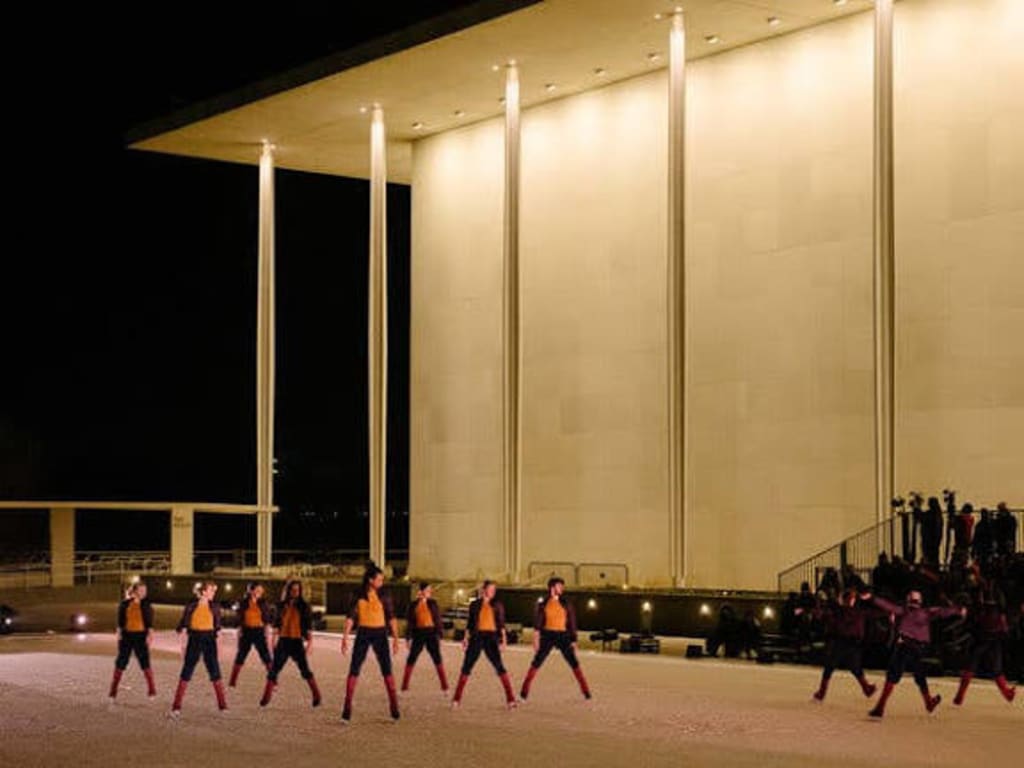
Against a backdrop of mounting financial pressure and uncertainty in the performing arts world, a small touring theater troupe has chosen to keep its scheduled performances at the John F. Kennedy Center for the Performing Arts, defying expectations that it would cancel its appearances. The decision has drawn attention not only because of the venue’s prestige, but because it reflects a broader struggle facing independent artists navigating rising costs, political sensitivities, and shrinking audiences.
The troupe, made up of fewer than a dozen performers and crew members, had quietly debated whether appearing at the nation’s most prominent cultural institution was financially and logistically viable. Travel expenses, accommodation, and production costs nearly exceeded what the group expected to earn from ticket sales. Yet in the end, the performers agreed that walking away would be a greater loss than staying.
A Calculated Risk
“We knew it might not make sense on paper,” said the troupe’s artistic director in an interview. “But artistically and symbolically, it mattered.”
For the group, the Kennedy Center represented more than a paycheck. It offered visibility, legitimacy, and the chance to reach audiences that would otherwise never encounter their work. Several members said they worried that canceling would damage future opportunities and send a message of retreat at a time when small arts organizations already feel sidelined.
The troupe’s performance dates had been booked months in advance, before rising inflation and uncertainty over arts funding reshaped touring budgets. By the time the show approached, the group faced a difficult choice: absorb the losses or withdraw entirely.
Pressure from Multiple Directions
The decision unfolded amid broader tensions surrounding programming at national cultural institutions. Some artists have canceled appearances at high-profile venues over political concerns or disagreements with donors and sponsors. Others fear that performing in such spaces risks criticism from audiences who see large institutions as disconnected from grassroots culture.
Members of the troupe acknowledged these debates but said their choice was rooted in practicality rather than protest. “We didn’t want to turn this into a political statement,” one performer said. “We just wanted to perform.”
Behind the scenes, the group pared back technical requirements, simplified sets, and relied on volunteer help from local supporters to reduce expenses. Friends in the theater community offered couches to sleep on and meals to stretch the troupe’s limited funds.
The Value of Being Seen
For many small companies, appearing at the Kennedy Center is considered a career milestone. Even a short run can open doors to grants, residencies, and future tours. Cultural economists note that prestige venues act as amplifiers: they provide recognition that cannot easily be replicated through regional shows or online exposure.
“Visibility at a place like this can redefine a troupe’s trajectory,” said an arts policy analyst. “The risk is real, but so is the reward.”
Audience turnout for the troupe’s opening night was modest but enthusiastic. Several attendees said they came specifically to support independent artists who were brave enough to take the stage despite financial uncertainty.
A Statement Through Persistence
While the troupe avoided framing its decision as political, the act of showing up carried symbolic weight. In a time when many productions are postponed or scaled back, their presence was interpreted by some as a quiet declaration that small-scale art still belongs on the biggest stages.
Critics who reviewed the performance highlighted its rawness and intimacy, qualities that contrasted sharply with the large halls and formal atmosphere of the venue. One reviewer described the show as “proof that ambition does not depend on size.”
Looking Ahead
The troupe will leave Washington with little profit, but with renewed confidence and broader recognition. Members say the experience reinforced their belief that survival in the arts now depends on resilience and adaptability rather than financial security alone.
“We didn’t come here expecting to win,” the artistic director reflected. “We came because we believe the work deserves to be seen.”
Their decision to keep the Kennedy Center dates underscores a reality facing many small arts groups: even when the numbers don’t add up, the opportunity to perform on a national stage can outweigh the risks. In an uncertain cultural landscape, persistence itself becomes a form of expression.
About the Creator
Fiaz Ahmed
I am Fiaz Ahmed. I am a passionate writer. I love covering trending topics and breaking news. With a sharp eye for what’s happening around the world, and crafts timely and engaging stories that keep readers informed and updated.
Keep reading
More stories from Fiaz Ahmed and writers in Geeks and other communities.
I Am Shah Rukh Khan Today, Because of Salim Khan”: SRK Reflects on Screenwriter’s Support in His Early Days
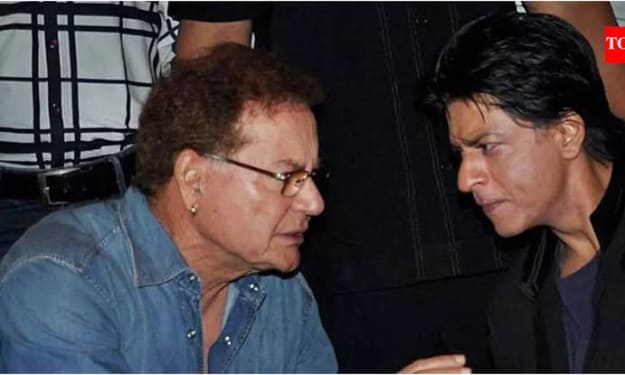
Bollywood superstar Shah Rukh Khan has credited legendary screenwriter Salim Khan for playing a crucial role in shaping his early career, saying that without his guidance and encouragement, his journey in the film industry might have taken a very different path. Speaking at a recent film event in Mumbai, Shah Rukh Khan became visibly emotional as he recalled the formative years of his career, when he was still an outsider struggling to establish himself in an industry dominated by established families and networks. “I am Shah Rukh Khan today because of Salim Khan,” the actor said. “At a time when I had nothing except ambition and confidence, he stood by me like a pillar and believed in me when very few did.” A Mentor in a Difficult Phase In the early 1990s, Shah Rukh Khan arrived in Mumbai after the loss of both his parents, carrying little more than dreams of acting and a background in television serials. While he found initial work in films such as Deewana and Baazigar, navigating Bollywood’s complex power structures was far from easy. According to SRK, Salim Khan offered him advice not just about scripts and performances but about survival in the industry. He recalled how the veteran writer would often guide him on professional conduct, humility, and patience. “Salim saab didn’t just teach me how to act,” Khan said. “He taught me how to live in this industry with dignity.” Salim Khan, known for his work as part of the iconic Salim-Javed duo, was already a towering figure in Indian cinema when Shah Rukh Khan was starting out. His influence and respect within the film fraternity helped open doors and shield young talent from early setbacks. Beyond Professional Support Shah Rukh Khan emphasized that the relationship went beyond professional mentorship. He described Salim Khan as a father figure during a time when he was emotionally vulnerable and trying to build a life in a new city. “I had lost my parents very young,” SRK said. “When Salim saab encouraged me, it felt like family was still watching over me.” The actor added that such emotional support is often overlooked in discussions about success. “People see stardom and money, but they don’t see the people who quietly guide you when you are uncertain,” he said. A Legacy of Storytelling Salim Khan’s contribution to Indian cinema is widely regarded as transformative. Alongside Javed Akhtar, he reshaped Bollywood storytelling in the 1970s with powerful narratives centered on the “angry young man,” most famously portrayed by Amitabh Bachchan. Shah Rukh Khan acknowledged that learning from such a legendary writer helped him understand character depth and storytelling from a different perspective. “I learned that heroes are not just about looks or lines. They are about emotion, struggle, and truth,” he said. Industry Reaction The remarks have resonated strongly across the film fraternity. Several actors and directors praised SRK for publicly acknowledging his mentor and highlighting the importance of gratitude in a highly competitive industry. Film historians noted that such relationships have long shaped Bollywood, where informal mentorship often substitutes for formal training institutions. SRK’s comments serve as a reminder that even the biggest stars rely on guidance and belief from others during their early years. Looking Ahead As Shah Rukh Khan continues to dominate box office charts and expand his presence globally, he remains vocal about the people who helped him reach the top. He concluded his remarks by urging young actors to seek wisdom from seniors and to respect the foundations of the industry. “Success is not just about talent,” he said. “It is about the people who hold your hand when you are afraid to walk alone.” For fans, the statement offered a rare glimpse into the emotional journey behind one of cinema’s most recognizable faces — a story of mentorship, resilience, and gratitude that underscores the human side of superstardom.
By Fiaz Ahmed 2 days ago in Geeks
Goodbye, Mr. Duvall
It is turning out to be an interesting year. I was in the middle of teaching a class when a pop-up appeared on the screen announcing the death of Mr. Robert Seldon Duvall (yes, that was his full name). I was in the middle of a discussion on the obsession we have with winning when it comes to sports (the Winter Olympics was a theme), and I felt as though things were coming full circle. We had already lost Gene Hackman last year, and along with that titan, it feels though one particular golden age has closed off to be replaced by...?
By Kendall Defoe 5 days ago in Geeks
Phyllis calls Daniel a traitor on The Young and the Restless
Will Daniel and Phyllis become estranged again? When is enough enough? It appears that Daniel Romolatti might be answering this question on Monday on The Young and the Restless. Phylis Summers will turn on her son and call him a traitor which is the pot calling the kettle black.
By Cheryl E Prestonabout 19 hours ago in Geeks



Comments
There are no comments for this story
Be the first to respond and start the conversation.