

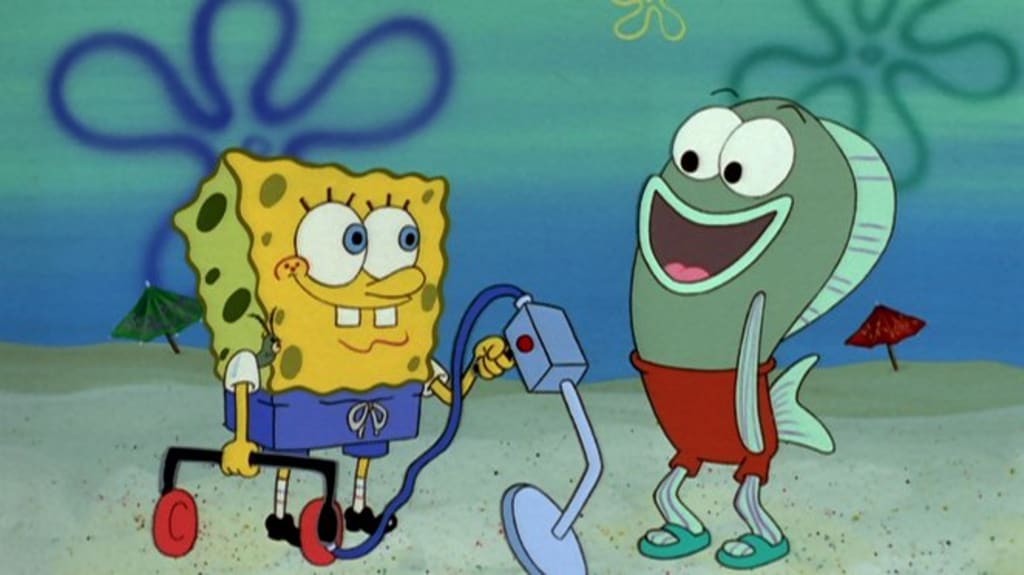
The episode “Walking Small” opens with a sun‑drenched panorama of Goo Lagoon, the golden sand glittering like powdered sugar under a cloudless sky, and the playful chatter of Bikini Bottom’s residents echoing across the waves. From the very first frame, the animation captures the carefree rhythm of a typical day at the beach, yet a subtle tension is already bubbling beneath the surface as Plankton slides into view, his tiny silhouette a dark crescent against the bright horizon. The writers cleverly juxtapose the idyllic setting with Plankton’s scheming grin, foreshadowing the paradoxical lesson that will unfold: the transformation of SpongeBob from his usual bubbly innocence into a surprisingly assertive beach‑goer. The visual palette—turquoise water, amber sun, and the occasional flash of a distant jellyfish—serves as a vivid backdrop for the episode’s central conflict, immersing the audience in a world that feels both familiar and slightly off‑kilter, as if the sand itself is waiting for a ripple that will reshape the familiar rhythm of beach life.
As the plot progresses, Plankton’s ruse is laid out with meticulous precision, his tiny voice dripping with faux encouragement as he convinces SpongeBob that the key to “winning the beach” lies in building an invisible wall of confidence. The dialogue is peppered with witty wordplay—Plankton’s assertive talk mirroring the literal sandcastles the kids construct—while the background music swells with an almost heroic brass section that humorously exaggerates the gravity of SpongeBob’s newfound mission. The episode’s pacing is deliberately slow at first, allowing viewers to absorb the details of each sand‑dune, each gull’s cry, each ripple of water that reflects SpongeBob’s internal turmoil. When SpongeBob finally takes the first hesitant step toward assertiveness, his eyes gleam with an unfamiliar fire, and the screen subtly brightens, underscoring the transformative nature of the moment. The visual cue of a faint, golden aura surrounding him amplifies the sense that something extraordinary is occurring, yet the audience can’t help but wonder whether this “assertiveness” is genuine confidence or simply another of Plankton’s cleverly disguised manipulations.
The heart of the episode lies in the interplay between SpongeBob’s earnest attempts at self‑assertion and the chaotic consequences that follow. As he tries to “wall off” the beach crowd, his once‑gentle voice becomes firm, his once‑meek posture straightens, and his once‑playful bounce becomes a purposeful stride, each change meticulously animated to emphasize the tension between authenticity and pretense. The humor peaks when SpongeBob, now wielding an imaginary barrier, inadvertently blocks the entrance to a beach volleyball match, causing a cascade of comedic mishaps: stealing hot dogs, cutting the strings off of kites, and popping the volleyball that everybody was playing with. Plankton’s plan to use him was in motion. The episode masterfully balances slapstick comedy with a subtle critique of the social pressures that compel even the most carefree characters to adopt a façade of confidence, and the absurdity of trying to fortify an open, communal space with an invisible, self‑imposed barricade.
By the episode’s conclusion, Plankton’s scheme unravels in a classic “comeuppance” moment, yet the after‑effects linger, prompting a reflective, almost nostalgic denouement. SpongeBob, now aware that his assertiveness was a borrowed costume rather than an intrinsic shift, retreats to the shoreline, his eyes scanning the horizon as the sun dips lower, casting a warm amber glow over the water. The final scene, rendered in soft pastel tones, captures the subtle melancholy of a character who has momentarily tasted a different version of himself, only to realize that his true strength lies in the unguarded joy that initially defined him. In a deftly crafted closing line, SpongeBob decides to be aggressively nice, and that resonates with both humor and profound insight. Overall, “Walking Small” stands out as a richly layered, descriptively vivid episode that uses the playful setting of Goo Lagoon to explore themes of self‑identity, manipulation, and the delicate balance between confidence and authenticity, delivering both laughter and thoughtful reflection in equal measure.
About the Creator
Forest Green
Hi. I am a writer with some years of experiences, although I am still working out the progress in my work. I make different types of stories that I hope many will enjoy. I also appreciate tips, and would like my stories should be noticed.
Keep reading
More stories from Forest Green and writers in Geeks and other communities.
SpongeBob Review
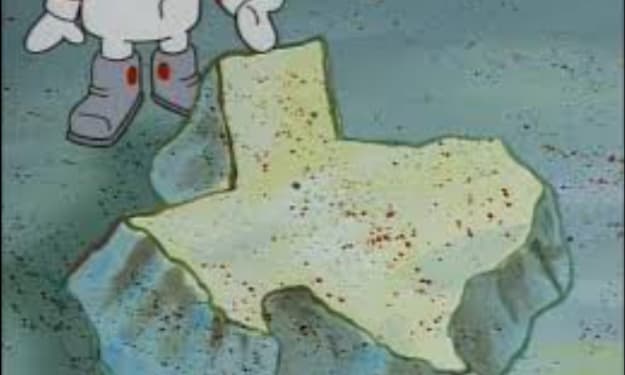
The episode “Texas” opens with a sweeping, pastel‑washed sunrise over Bikini Bottom, the water glimmering like polished glass as the camera pans past familiar coral arches to find Sandy Cheeks hunched over a tiny, improvised Texas flag, her eyes misted with an unmistakable longing. The animators deftly juxtapose her burly, beetle‑shelled silhouette against the soft, undulating sea‑foam, emphasizing the stark contrast between her rugged, Texan spirit and the whimsical, underwater world she now inhabits. A subtle but effective musical cue—an acoustic steel‑guitar riff reminiscent of Lone Star ballads—underscores the scene, instantly transporting the audience to a far‑flung prairie while still grounding us in the episode’s aquatic setting. This opening sequence not only establishes Sandy’s homesick yearning but also primes the viewer for the heartfelt narrative arc that follows, making her desire to return to Texas feel both authentic and deeply resonant within the show's typically buoyant tone.
By Forest Greenabout 4 hours ago in Geeks
A Knight of the Seven Kingdoms Series Review (Season 1)
As one of the biggest properties in fantasy, A Song of Ice and Fire remains immensely popular with audiences. After reaching far into the past with House of the Dragon, a second spin-off was on the cards. A Knight of the Seven Kingdoms serves up a bite-sized slice of action and drama, but it still claims a spot among the best small-screen titles.
By Robert Caina day ago in Geeks
Prince of Wales: ‘I’m Not Calm Enough Right Now to Watch Hamnet’
In a candid revelation, the Prince of Wales admitted that he is currently unable to watch the critically acclaimed play Hamnet, citing personal and emotional reasons. The announcement, made during a recent interview with a cultural magazine, has drawn attention to the often-overlooked human side of public figures and the impact of art on personal reflection.
By Fiaz Ahmed 6 days ago in Geeks
I was in a Toxic Relationship, with my Workplace
“You got that?” My ex yelled. His hands were balled into fists at his side. At six foot three, he towered over me. A normal person would have been afraid, but I looked up a video of George Lopez repeatedly saying, “I got this,” and showed it to him. I had grown used to this treatment, so much so that I didn’t blink when he ripped the phone from my hand and threw it across the room.
By Jade M.2 days ago in Confessions



Comments
There are no comments for this story
Be the first to respond and start the conversation.