

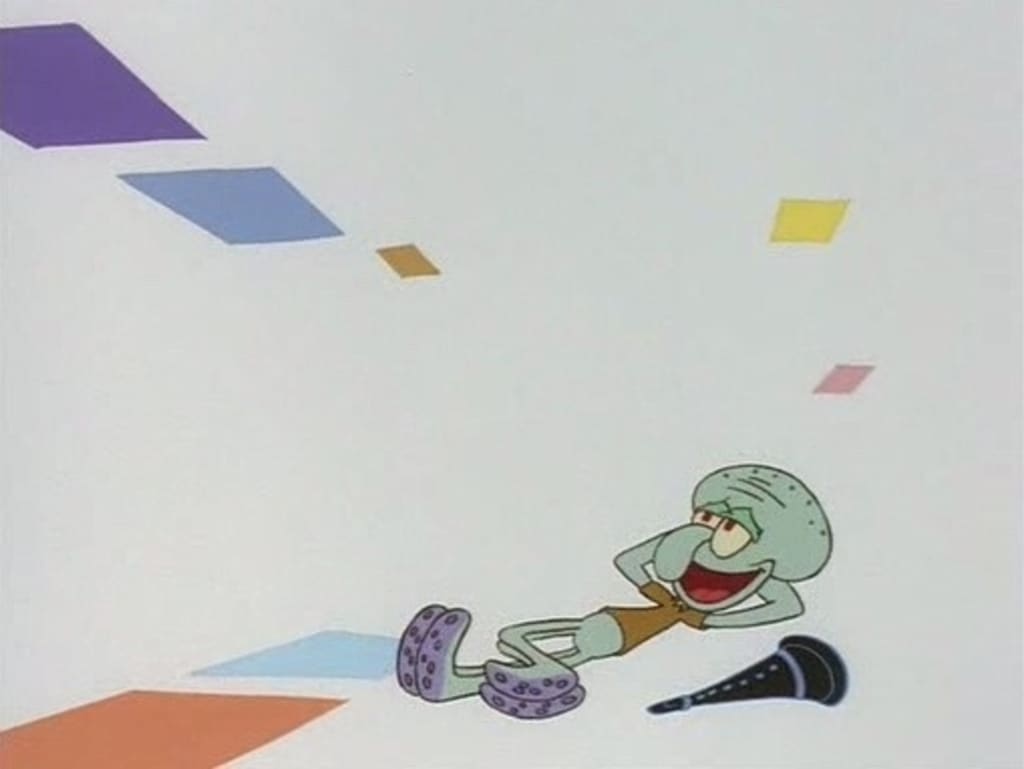
The episode “SB‑129,” a quintessential early‑season gem of SpongeBob SquarePants, thrusts the perpetually irritable Squidward Tentacles into a chronologically disorienting odyssey that begins with a simple desire to escape the incessant merriment of his neighbors, SpongeBob and Patrick. The narrative catalyst—a misfired experiment with a time‑traveling chronometer—plunges him into an eerily silent, sterile future Bikini Bottom where the familiar pastel hue of the oceanic streets has been supplanted by a stark, monochrome aesthetic reminiscent of 1960s futuristic optimism. This transition is rendered with meticulous attention to visual contrast: the crisp lines of the futuristic set design juxtapose sharply against the show’s usual wavy, hand‑drawn textures, emphasizing Squidward’s profound alienation and underscoring the episode’s thematic exploration of isolation versus community.
It opens with Squidward, perpetually weary of SpongeBob’s relentless optimism and Patrick’s oblivious cheer, seeking a quiet refuge in the Krusty Krab freezer to avoid playing with them. When a malfunctioning “cryogenic freezing” exhibit—intended as a science demonstration for schoolchildren—accidentally ensnares him, Squidward finds himself thrust into a stasis pod that catapults him thirty‑seven years into a dystopian future. From the very first seconds, the script deftly juxtaposes Squidward’s desperate longing for solitude with the absurdity of his involuntary time‑travel, establishing a comedic tension that fuels the entire narrative and instantly signals that the episode will explore both the familiar slap‑stick antics of the series and an unusually introspective, almost existential, version of the character’s psyche.
Within the future timeline, Squidward’s interactions—or lack thereof—serve as a satirical commentary on the dehumanizing effects of technological progress. The episode’s pacing is deliberately measured; silence reigns, broken only by the mechanical chimes of the ever‑present time‑machine and the occasional flicker of holographic advertisements that reference both contemporary pop culture and the show’s own meta‑narrative. Squidward’s internal monologue, delivered through a subtle shift in vocal timbre, conveys a poignant blend of relief at the absence of his boisterous housemates and a creeping dread that his own identity is being erased in this sterile utopia. Meanwhile, the occasional cameo of a frozen, fossilized SpongeBob provides a visual punchline that reinforces the absurdity of his friends’ obliviousness to his longing for solitude, while also hinting at the cyclical nature of the series’ comedic beats.
The climax arrives when Squidward, armed with a frantic improvisation of his own makeshift chronometer, inadvertently catapults himself back to the present—a return that is both a narrative reversal and a comedic crescendo. The seamless transition back to the familiar, chaotic world of the pineapple house is achieved through a rapid cut that juxtaposes the cold futurism of the temporal exile with the warm, chaotic vibrancy of his original surroundings. This shift is complemented by a sudden surge in the episode’s sound design: the familiar, bubbly score resurfaces, accompanied by SpongeBob’s exuberant “I’m ready!” and Patrick’s signature star‑shaped thought bubbles, underscoring the series’ enduring formula of returning to the status quo after a brief, exploratory detour. The final gag—Squidward’s horrified realization that his attempts to flee have only ensured a perpetual cycle of annoyance—drives home the episode’s central irony: the very act of trying to escape one’s circumstances often entrenches them more firmly.
From a production standpoint, “SB‑129” showcases an early instance of the show’s willingness to experiment with narrative structure and visual style while retaining its core comedic essence. The episode’s animation team employs a distinctive palette shift to delineate temporal settings, using muted blues and greys for the future segments, contrasted against the saturated yellows and oranges of the present day. This artistic decision not only aids viewers in navigating the temporal jumps but also reinforces the emotional tone of each era—loneliness and sterility versus chaotic camaraderie. Moreover, the script cleverly weaves in subtle homages to classic sci‑fi tropes, such as the iconic “future world” motif popularized by mid‑century cartoons, while simultaneously infusing the humor with the series’ trademark absurdist flair. In sum, “SB‑129” stands as a testament to SpongeBob’s capacity to blend whimsical escapism with thoughtful, if tongue‑in‑cheek, reflections on the human (or mollusk) condition, delivering a richly layered viewing experience that rewards both casual fans and analytical viewers alike.
About the Creator
Forest Green
Hi. I am a writer with some years of experiences, although I am still working out the progress in my work. I make different types of stories that I hope many will enjoy. I also appreciate tips, and would like my stories should be noticed.
Reader insights
Outstanding
Excellent work. Looking forward to reading more!
Top insights
Compelling and original writing
Creative use of language & vocab
Easy to read and follow
Well-structured & engaging content
Excellent storytelling
Original narrative & well developed characters
Expert insights and opinions
Arguments were carefully researched and presented
Eye opening
Niche topic & fresh perspectives
On-point and relevant
Writing reflected the title & theme
Keep reading
More stories from Forest Green and writers in Geeks and other communities.
SpongeBob Review
The episode “I Was a Teenage Gary” delivers a surprisingly layered narrative that satirizes classic horror movie tropes while staying true to the absurdist humor that defines SpongeBob SquarePants. From the opening scene, where the titular snail’s sudden transformation into a teenage version of himself is accompanied by a deliberate, melodramatic music cue reminiscent of 1980s horror films, the show signals its intent to blend parody with genuine character development. The script deftly balances slap‑stick moments—such as Gary’s over‑the‑top teenage angst manifesting in the form of an inexplicable craving for water—with more nuanced commentary on identity crises, highlighting how even a simple pet can embody the adolescent struggle between conformity and rebellion.
By Forest Greenabout 19 hours ago in Geeks
Fullmetal Alchemist: Brotherhood Power Rankings
The world of Fullmetal Alchemist: Brotherhood isn’t just about alchemy — it’s about sacrifice, ambition, and the terrifying cost of power taken too far. Some fighters rely on skill and discipline but fall apart against overwhelming force. Others appear limited at first glance, only to reveal terrifying versatility once the battlefield shifts in their favor. And then there are the monsters — beings whose regeneration, Philosopher’s Stone reserves, or mastery of alchemy push them so far beyond human limits that ordinary rules simply stop applying.
By Top Rankeda day ago in Geeks


Comments
There are no comments for this story
Be the first to respond and start the conversation.