
Native vs Cross-Platform Apps Which One Should You Build First
A quiet look at how early product choices shape the first version of an idea, told through the small moments where founders try to decide what matters most.

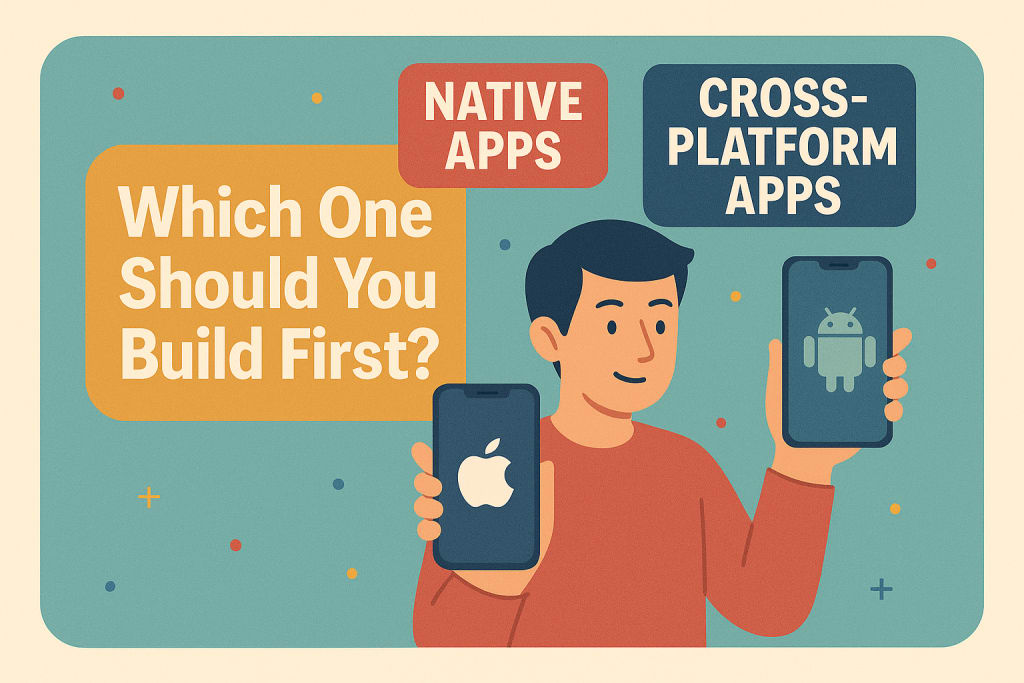
I still remember the late afternoon when this question first hit me with real weight. I was standing near the windows of a small café by the Miami River, watching the last stretch of sunlight turn the water gold. A founder sat across from me with his half-finished cold brew, his voice carrying a mix of excitement and quiet worry. He said he needed to “make the right choice” for his first build, and his words stayed with me long after I walked out into the warm evening.
I’ve heard that question so many times through the years, but that moment felt different. Maybe it was the look in his eyes, or the way his hands moved when he talked about the dream version of his app. His confusion wasn’t about frameworks or languages. It was about what he feared losing if he chose the wrong path.
When the First Build Shapes the Road Ahead
Whenever someone asks me which path to pick, I think back to those early product rooms I used to sit in. They were usually small, filled with whiteboards and half-scratched diagrams, with engineers arguing gently over performance concerns and designers hovering over tiny animation details. The first build always carried more pressure than the lines of code suggested.
During those years, I saw how the early version of an app could change the entire course of a project. A native build often moved faster when the team cared deeply about motion, timing, and that soft sense of smoothness people feel without naming it. A cross-platform build helped when the timeline felt like a tight doorway and the budget asked for something more forgiving.
It surprised me how much the first build mirrored the founder’s priorities. Some wanted speed, even if a few corners had to be softened. Others wanted feeling, even if the schedule stretched a little. That tension shaped more journeys than any technical debate ever did.
Why Performance Still Shapes First Impressions
There’s something oddly human about the way people judge apps. Most users expect an app to respond in under 200 milliseconds without thinking about it. I once read a study from Google that said nearly half of users stop engaging when something feels slow or uneven. I didn’t need research to tell me that, because I’d seen it happen in real-world testing rooms.
I can still picture one moment during a usability test for a fitness app. A participant swiped through a menu, paused, and frowned. The delay was barely noticeable to anyone who wasn’t watching for it, but it changed her expression instantly. She never said a word about performance, yet the hesitation I saw told me everything.
That’s when I learned that small details create emotional reactions long before people form opinions. Native builds usually sit closer to the metal, as engineers like to say, and I’ve watched that advantage become the difference between a pleased tester and a confused one.
But I’ve also watched cross-platform builds surprise teams. Frameworks kept improving every year. The distance between both paths narrowed in ways that made the conversation more interesting, not simpler.
Where Budget and Time Quietly Influence the Decision
If I’m being honest, the choice usually shifted when reality stepped into the room. Investors asked for progress updates. Teams watched their burn rate inch upward. Designers fought for features while engineers tracked capacity limits. Somewhere in that push and pull, time became the real currency.
I once worked with a founder who started with grand expectations of a native build. He wanted it to feel “like it came from a studio with endless resources.” But when he saw his timeline shrink after a funding delay, his tone shifted. He didn’t want to lose momentum. And that urgency turned his attention toward a cross-platform approach.
We rebuilt the plan in a small conference room filled with sticky notes and half-finished coffees. Every hour felt heavy. Yet, I watched his shoulders relax once he realized he didn’t need to sacrifice his whole idea. He only needed a version that moved the dream forward.
That experience taught me something simple. First versions don’t need to be perfect. They just need to carry enough weight to start the story.
How User Behavior Reveals What Actually Matters
One thing I love about early product testing is how people reveal truths without trying. I once ran a session where people used two prototypes of the same app. One was native. One was cross-platform. Not a single participant asked about frameworks. They asked about clarity, trust, and comfort.
A study from Forrester once mentioned that nearly three out of four users judge product trust based on the feel of the experience. I used to think that line sounded too poetic for research, but when I heard a participant say, “This one just feels kinder on my thumbs,” it suddenly made sense.
People don’t talk about performance ratios or rendering speeds. They talk about how the app feels in their hands. That’s why I always remind founders that this decision is less about technology and more about emotion. A first build sets the tone for how people meet your idea. That moment matters.
When the Keyword Realization Appears Without Trying
That day in the Miami café, when the founder leaned in and talked through his dilemma, I remembered how often I’d heard similar concerns during mobile app development Miami projects. Many builders in this city carry big dreams and tight timelines. They want that perfect balance. And the choice between native and cross-platform becomes part of their story whether they know it or not.
I watched him sip his drink and stare at the table as if the answer was printed somewhere on the wood grain. He asked me which path would protect the heart of his idea. I didn’t answer right away. I let the question sit in the warm air for a moment, because questions like that deserve a little silence.
Why the First Version Isn’t a Technical Choice at All
Over the years, I learned that people don’t pick the wrong path because they lack knowledge. They pick the wrong path when they forget what their first version is meant to do. A native build serves you when the experience must feel smooth, expressive, and rooted in motion. A cross-platform build serves you when the story needs to travel quickly, touching devices without delay.
The right choice depends on the moment you’re in.
In early-stage products, momentum often matters more than polish. That doesn’t mean quality goes out the window. It means the first version is only the beginning of a longer arc. Once the idea takes shape, teams get the chance to rebuild, refine, reshape, and bring the experience closer to what they imagined.
I’ve watched projects shift paths later on. A cross-platform version became native after revenue grew. A native version became hybrid after expansion demanded speed. These transitions didn’t mark failure. They marked growth.
Final Thought That Always Stays With Me
When I think back to the founder in the Miami café, I remember how he exhaled when he realized the choice wasn’t about perfection. It was about direction. The light outside had started to fade when he finally said, “I think I know where to start now.” And in that quiet moment, I understood the weight he carried.
Whenever someone asks me which path they should take, I always return to that memory. The answer lives somewhere between what you want your users to feel and what your team can carry during the first stretch of the journey.
The first version doesn’t define your app forever. It only opens the door.
And once that door opens, the real story finally begins.
About the Creator
Not Just For Clean Up: A History Of The MCU's Department of Damage Control
Initially an organisation that seemed to exist to help the heroes of the Marvel Cinematic Universe, from Phase Four onwards, the Department of Damage Control has shifted into a more antagonistic role. Most recently seen in the Wonder Man series, the current incarnation of Damage Control seems to target superpowered individuals, regardless of whether that person poses an active or intentional threat.
By Kristy Andersona day ago in Geeks



Comments
There are no comments for this story
Be the first to respond and start the conversation.