
Murder in the Cheap Seats
The Land of Pulp Magazines #1

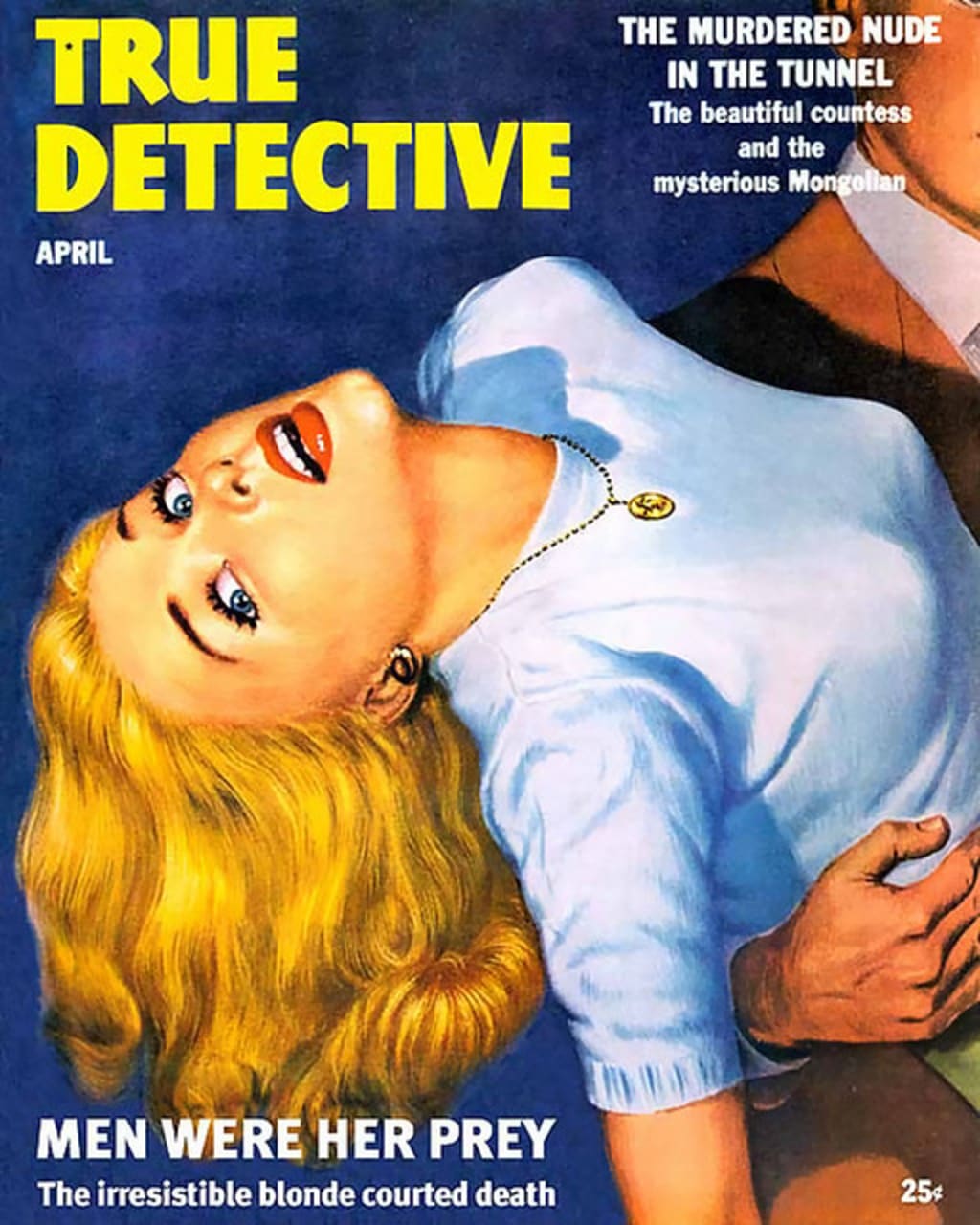
Back in the day, before streaming, and comic books were a thing, most people got their genre fiction fix from the newsstands, specifically the pulp magazines they sold. These magazines were printed on cheap wood pulp paper - which is where they got their name. They covered pretty much everything from hardboiled detective noir stories to crazy horror stories.
Critics at the time were less than kind, dismissing them as disposable trash. Of course, despite that several authors launched their careers writing for pulps. Some of those authors include:
- H.P. Lovecraft (Cthulhu Mythos)
- Raymond Chandler (Black Mask, Dime Detective, Detective Story Magazine)
- Robert E. Howard (Conan the Barbarian)
Of course, the pulps literally flew off the stands courtesy of their…erm…risqué covers. So, with that said, I thought we’d explore the world of pulp magazines. We’ll start off with the world of detectives.
For starters, let’s look at the history of the genre.
The History of Detective Pulp Magazines
Detective fiction has been around for a good while with the earliest one going back to One Hundred and One Nights (Arabian Nights) with a story called The Three Apples. It was basically a murder mystery where the hero has quite an issue: he has to solve a murder in 3 days or he’ll be executed. Of course, it doesn’t quite go well.
This story formed the archetype of the detective story.
Of course, the genre’s popularity skyrocketed with characters like Sherlock Holmes (Arthur Conan Doyle), and Hercule Poirot (Agatha Christie). As far as the pulp magazines specifically, their popularity exploded in the 1920s and 30s and they retained that popularity until after the Second World War, when the more whimsical mystery stories had somewhat lost their proverbial shine.
Now, looking at the world of pulp magazines, many of them were published in the 1920s and through the mid-1950s. Sadly, this means that many of them are out of print making physical copies pretty much impossible to find. All is not lost, however, as, in addition to the many online marketplaces, the Internet Archive actually has an entire library of old, obscure pulp magazines to check out which I think is pretty dang cool.
The 10 "Rules" of Detective Fiction
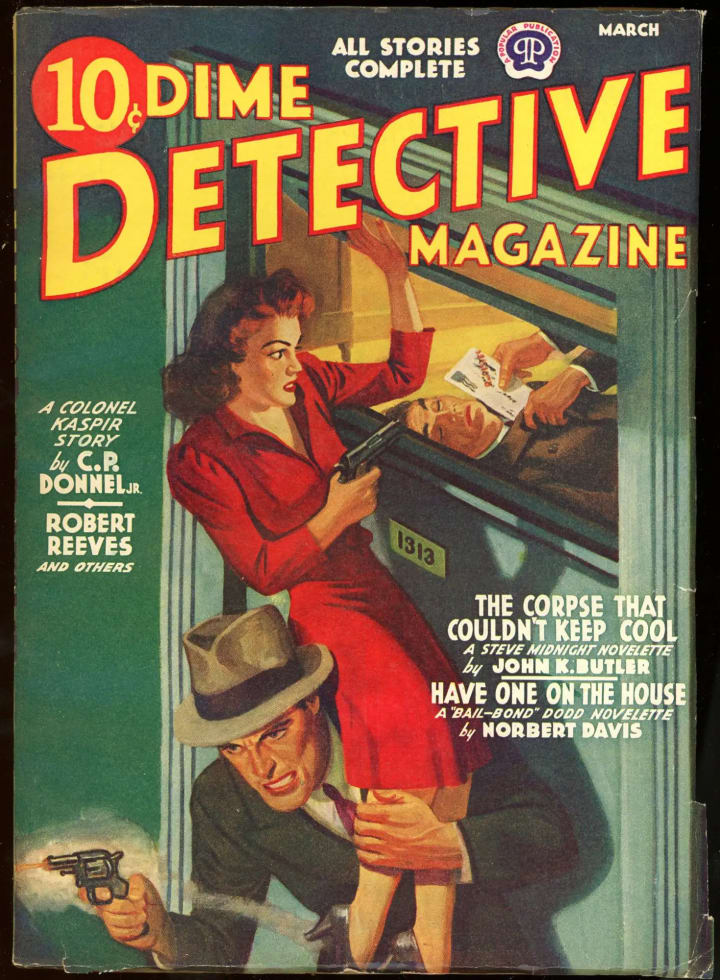
Building on the history of pulp magazines, let's look at another aspect, starting with a quote from a fella who had a major impact on the genre.
"A detective story must have as its main interest the unravelling of a mystery; a mystery whose elements are clearly presented to the reader at an early stage in the proceedings, and whose nature is such as to arouse curiosity, a curiosity which is gratified at the end." - Ronald Knox
Detective stories have a few common elements which usually follow 10 rules. These ten rules were put together by one Ronald Knox in 1929. The rules were as follows:
- The criminal must be mentioned in the early part of the story, but must not be anyone whose thoughts the reader has been allowed to know.
- All supernatural or preternatural agencies are ruled out as a matter of course.
- Not more than one secret room or passage is allowable.
- No hitherto undiscovered poisons may be used, nor any appliance which will need a long scientific explanation at the end.
- No Chinaman must figure in the story.
- No accident must ever help the detective, nor must he ever have an unaccountable intuition which proves to be right.
- The detective himself must not commit the crime.
- The detective is bound to declare any clues which he may discover.
- The "sidekick" of the detective, the Watson, must not conceal from the reader any thoughts which pass through his mind: his intelligence must be slightly, but very slightly, below that of the average reader.
- Twin brothers, and doubles generally, must not appear unless we have been duly prepared for them.
Now, I actually kind of like this list because it helps to establish a story’s structure. The only rules I disagree with are rules 5 and 9.
Rule 9, is an easy one to explain, having the sidekick character be either as smart as or smarter than the hero can often make for great comedy - of course, comedy was probably not what they were going for at the time. It also makes for a much more interesting story, imagine Watson solving the case instead of Holmes, it would be inconceivable most of the time, wouldn’t it? That’s what makes it interesting.
Rule 5 is even easier to explain, but it’s also a more…complicated issue. The explanation seems simple enough, one word: racism. What makes this a bit more complicated than it seems is where it comes from. See, in the late 1920s there was a lot of anti-Asian sentiment showcased in western literature at the time. In fact, Ronald Knox even went as far as to say:
“I see no reason in the nature of things why a Chinaman should spoil a detective story. But as a matter of fact, if you are turning over the pages of an unknown romance in a bookstore, and come across some mention of the narrow, slit-like eyes of Chin Loo, avoid that story; it is bad.” - Ronald Knox
Yikes, just yikes.
When an Asian character - especially a Chinese character - it was usually packed with stereotypes which was just…messed up. Still, at the time, I guess it was acceptable - even expected at the time. The 10 rules that Knox put together allowed a story to be squeezed into the roughly 200 page pulps.
Some Interesting Pulp Magazines to Check Out
Okay, I think we’ve covered the basics so why don’t we look at a couple of interesting Detective Pulp Magazines?
MANHUNT (1953 - 1967)
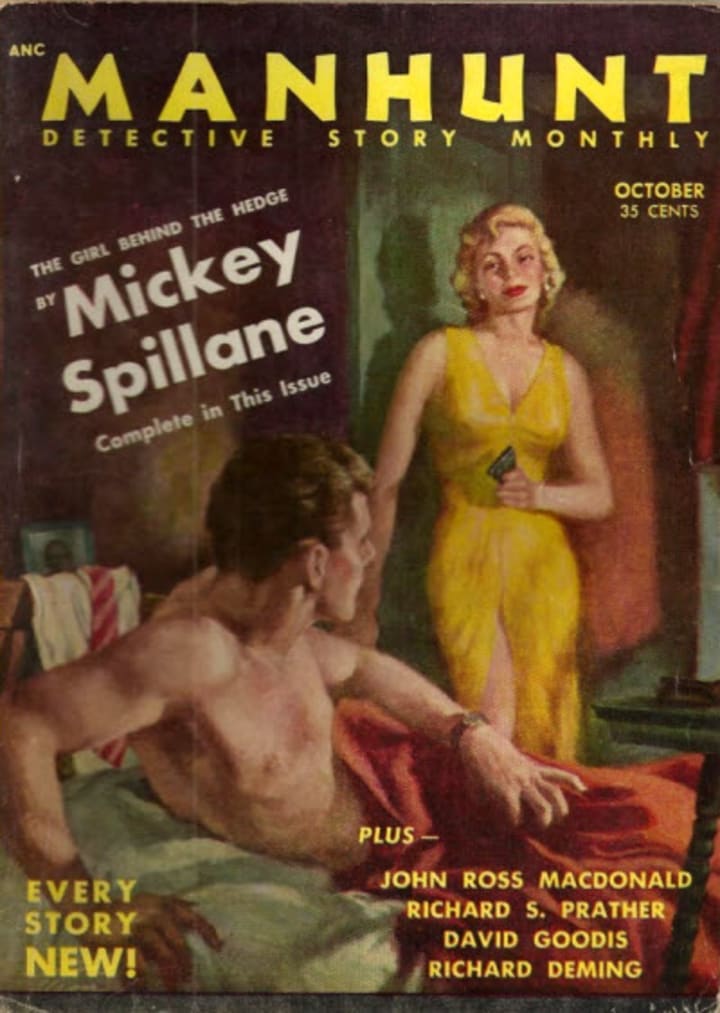
Manhunt was a crime magazine that ran for 15 years starting in January of 1953 and ran until April/May of 1967 releasing 114 issues before being cancelled. The magazine tried to boost sales by putting out a larger format between 1957 and 1958 which was…unsuccessful.
The magazine boasted that it was the best crime magazines at the time and had several reprints including:
- Giant Manhunt - A U.S. reprint that ran for 13 issues through the 1950s.
- Manhunt (1953 - 1954) - A 13 issue reprint which ran from 1953 to 1954 with each issue running more or less alongside the U.S. run.
- Bloodhound Detective Story Magazine - the 2nd British reprint of Manhunt that ran for 14 issues from 1961 to 1962.
- Manhunt Detective Story Magazine - the first Australian reprint ran for 13 issues from 1953 to 1954. The reprint series was reduced in length to a more manageable comic book length.
- Phantom Suspense-Mystery Magazine - the 2nd Australian reprint ran for six issues at some point throughout the 1950s. The story reprinted stories from several different U.S. magazines, although, the bulk of those stories came from the Manhunt series.
- Verdict Detective Story Magazine - the 3rd, and final Australian reprint of Manhunt ran for 10 issues throughout 1955.
Manhunt was considered the gold standard of crime/detective magazines of the time.
NEW DETECTIVE MAGAZINE (1941 - 1955)
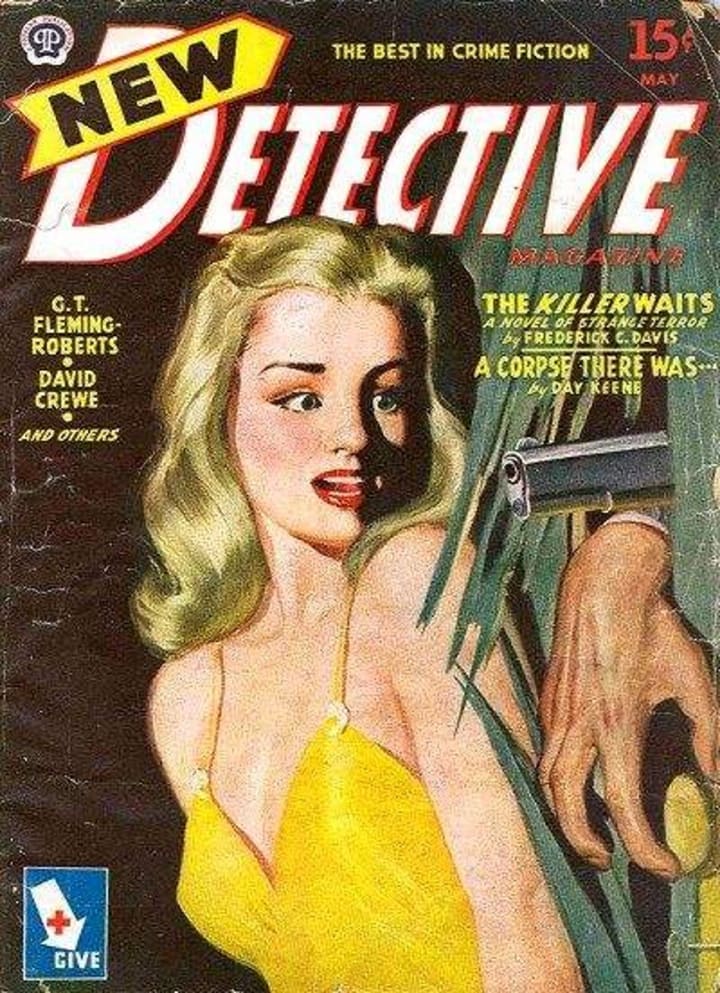
New Detective Magazine started out in 1941 and presented a variety of crime stories with a primary focus on police detective stories - kind of like the police procedural shows of today, I guess. Over the course of its 14 year run, the series published 73 issues before being cancelled in 1955.
It was later relaunched as a men’s magazine called True Adventures - this was in September of ‘55. The True Adventures series, from what I understand, was the Men’s Health magazine of the time and it ran until 1971.
Like Manhunt, there were a few different reprints:
- True Adventures (1969) - Australia
- New Detectives (1941 - 1952) - Canada
- New Detectives (1946, 1949) - 1st UK reprint
- New Detectives (1950 - 1953) - 2nd UK reprint
It’s important to note that the lists of reprints I found are incomplete - like I said earlier, most if not all of these are now out of print.
BLACK MASK (1920 - 1951)
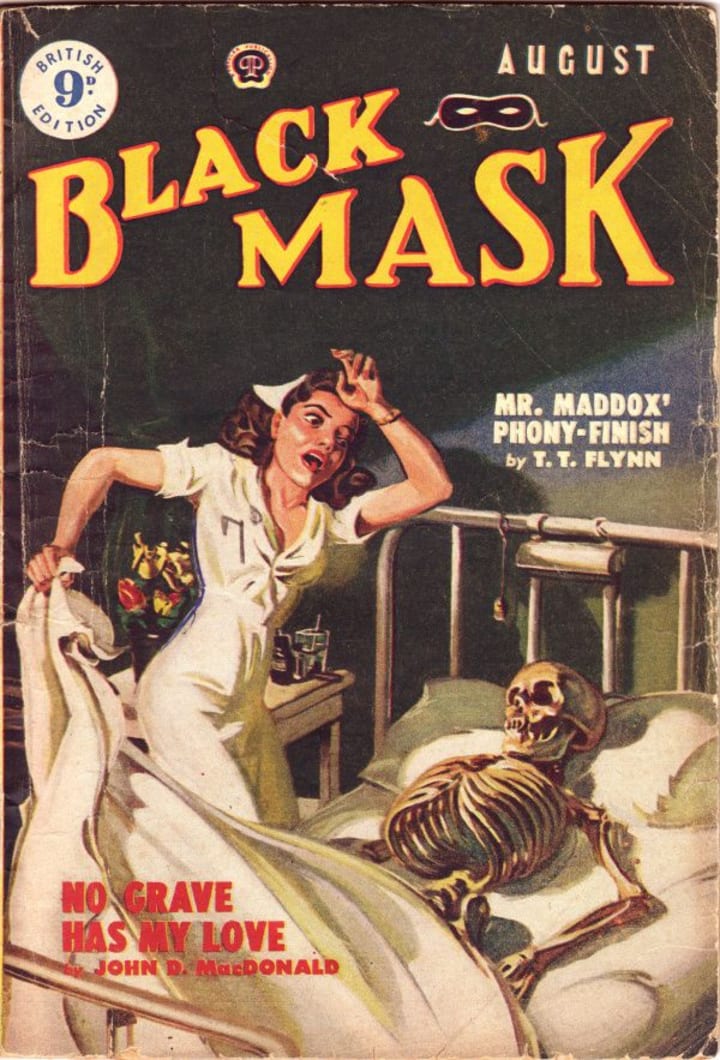
Right, Black Mask…this one might be a bit of a cheat, but bear with me. The first issue was published in 1920 and sales were promising with stories like Dashiell Hammett’s The Maltese Falcon getting their initial run between the magazine’s covers. With that said, Black Mask wasn’t specifically a crime magazine - although, from what I gather they shifted to that later on.
Stories were action-packed, with loads of detective antics, guts, gore and, of course, sex. This obviously drove sales through the roof throughout the ‘20s and into the early ‘30s. Black Mask’s popularity waned in the early ‘30s, however, as the market filled up with crime noir entertainment. Radio, television, and rival magazines caused serious problems and the original run of Black Mask ended in 1951.
There have been a couple of revivals over the years, but I’m not sure how successful they’ve been.
SPICY DETECTIVE STORIES
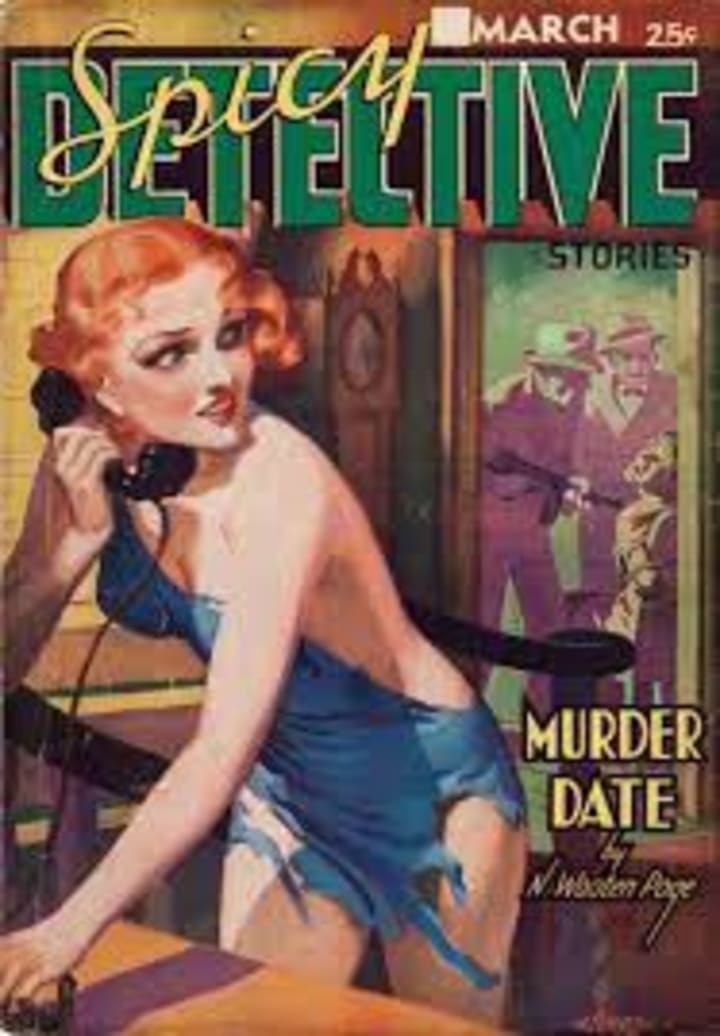
Okay, so I didn’t find much about this one, but here’s what I did find. The series ran for eight years from 1934 to 1942, and focused on detective stories with a more…sexual edge to them. The detective stories themselves were hardboiled, action-packed pieces that were sprinkled with sexual content.
As the series progressed, there were plenty of civic groups in the area that wanted the magazine to tone down the more violent and sexual stuff. The series was re-labelled as Speed Detective Stories which was more toned down version of the original content.
There was also a similar series called Saucy Detective Stories - which was packed with far more sexual detective stories.
The Pulp Experience
With most, if not all of these old pulps being out of print, the only place(s) to get them is on the secondary market (i.e. Ebay). Many of these, especially the early issues of Manhunt, are VERY valuable so it’s almost impossible to get them without selling a kidney.
Still, I was able to find a few pulp magazines thanks to the Internet Archive - as I said before, there’s a huge library of these out-of-print magazines - and checked out a few of them. The ones I looked at were very close to standard magazines, or pocket novels.
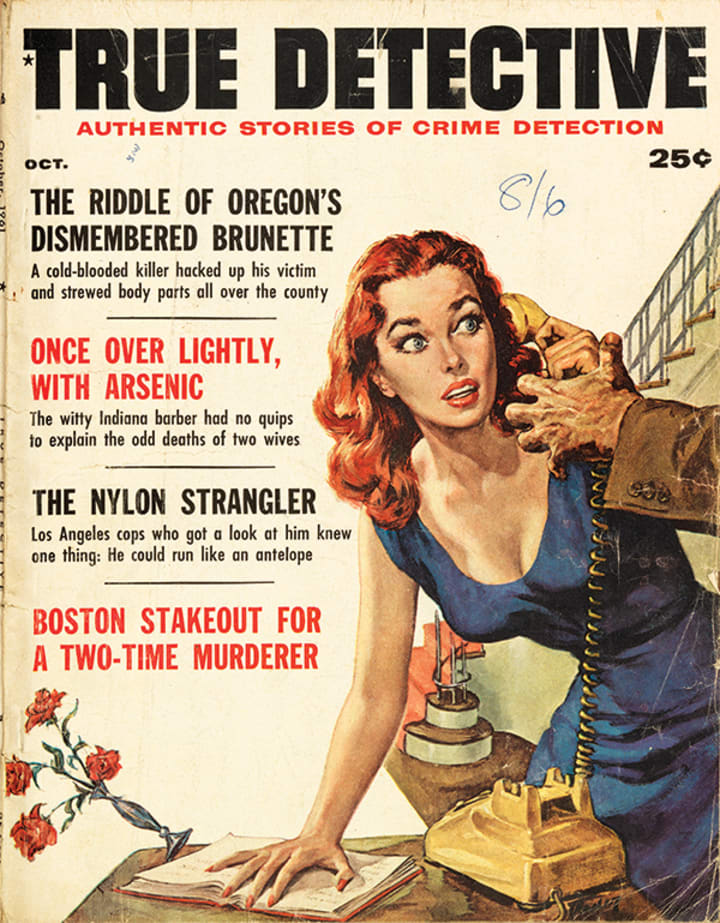
These magazines were, indeed, illustrated but the illustrations were scattered throughout the magazine. They were also beautifully done.
I’ve always loved reading and when I find books that are collections of short stories, well, I jump at the chance to check them out. If you’re into crime and detective stories and you’re looking to enjoy some stories about murder in the cheap seats, then the world of pulp mags is a good place to explore.
Some Last Thoughts
I hope you guys enjoyed this one, it was fun to write and I look forward to exploring some more pulp magazines.
Thank you for joining me on this journey.
About the Creator
Greg Seebregts
I'm a South African writer, blogger and English tutor; I've published 1 novel and am working on publishing a 2nd. I also write reviews on whatever interests me. I have a YouTube Channel as well where I review books, and manga and so on.
Keep reading
More stories from Greg Seebregts and writers in Geeks and other communities.
Old School Anime Reviews - Mobile Suit Gundam: War in the Pocket
Let's continue with the Gundam franchise for a bit, shall we? Given that the previous series is set in 0079, it only makes sense to continue in sequential order. This is Mobile Suit Gundam 0080: War in the Pocket.
By Greg Seebregtsabout a year ago in Geeks
Not Just For Clean Up: A History Of The MCU's Department of Damage Control
Initially an organisation that seemed to exist to help the heroes of the Marvel Cinematic Universe, from Phase Four onwards, the Department of Damage Control has shifted into a more antagonistic role. Most recently seen in the Wonder Man series, the current incarnation of Damage Control seems to target superpowered individuals, regardless of whether that person poses an active or intentional threat.
By Kristy Anderson2 days ago in Geeks
Peter Attia
Dr. Peter Attia is widely known as a physician, longevity researcher, and public intellectual. As the founder of Early Medical and the host of The Drive podcast, Peter Attia, MD has built a reputation focused on metabolic health, preventive medicine, and evidence-based decision-making. Yet in recent months, his name—like many others—has appeared in online discussions linked to the renewed release of documents connected to Jeffrey Epstein, raising questions about why certain figures are mentioned and what those mentions actually mean.
By Saboor Brohi 3 days ago in Geeks
Self Help: Grifters' Gospel
On Self-Help, Snake Oil, and the Illusion of Change Psychology professionals and students can be imagined on two opposite sides of a line called self-help books: likely a larger group opposes pop-science and step-by-step manuals filled with talk of success, journaling, and not giving a f**k; others love them, but they aren’t many.
By Avocado Nunzella BSc (Psych) -- M.A.P a day ago in BookClub


Comments
There are no comments for this story
Be the first to respond and start the conversation.