
Looking Back at The Joker's Debut
How Joker's Debut Left Its Mark

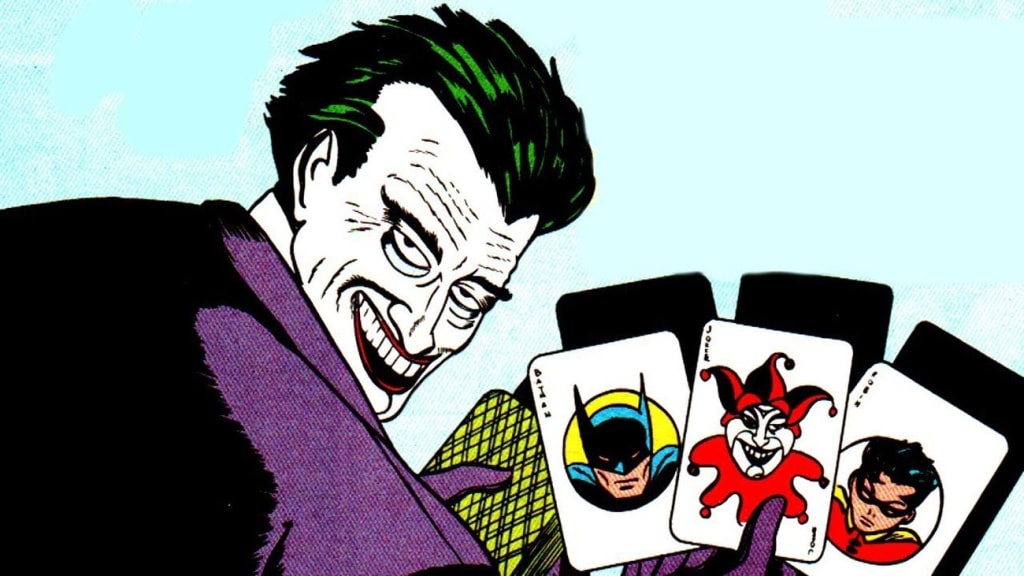
The Joker first debuted in April 1940 in Batman #1. In fact, this was roughly a year after the Dark Knight’s debut in Detective Comics #27. Believe or not, The Joker first’s appearance has gone on to define the character for years to come and not come off as a one-time event. Numerous stories would go on to take some inspiration from Batman’s first foray with The Clown Prince of Crime.
Originally, The Joker is introduced as The Joker and nothing more. His Clown Prince of Crime moniker will not come until later. We have no Jack Napier, no Jerome Valeska or even Arthur Fleck. Background and origins, especially for villains in 1940, account for little to nothing. It is this lack of an origin though that already sets up one of history’s greatest villains, as also one of the most mysterious and demonstrates how we are so drawn to him. What would cause a man to commit such crimes and wear such a garish smile?
The Joker
In this initial story, The Joker makes public of his future crimes over the radio to the citizens of Gotham. These crimes usually target a wealthy Gothamite and one of their treasured possessions, such as the Claridge diamond for example. The police have only mere hours or less to prepare, batten down the hatches and defend the Joker’s would be victim. The Chief of Police has close to a dozen men with him, even encircling the Joker’s target to no avail. Each time the Joker strikes, the victim dies and the Joker reaps the reward.
In his first crime, The Joker does not even enter the building of his target – Henry Claridge. We are left aghast when the clock strikes midnight and his target falls to his death, gasping for air as it would appear and forms this permanent, manic grin. The policeman even states “Grotesque! The Joker brings death to his victims with a smile!” The other targets suffer a similar fate, with The Joker making a fool out of the police again. Each victim at one point was injected with the deadly Joker venom prior to the crime itself. This explains how each man died while under police protection. Finally, the criminal underworld gets involved, as they feel The Joker is showing them up. Mobster Brute Nelson just ends up another tally on the villain’s body count though.
Our fiendish clown manages to get the drop on Batman twice in this first appearance. He kicks the caped crusader off of the bridge in their first ever encounter. Next time they meet is after The Joker kidnaps Robin. Batman has the drop on the clown at first when he punches the madman into a chemical table, which starts a fire. However, Joker manages to escape while using a paralyzing gas on the Batman.
What is truly unique is in their first encounter, Batman takes The Joker into custody. Prior, Batman has only done this with one thug in his first year. Most of the villains he faces are killed, die due to their own recklessness or because of Batman’s devil may care attitude. It is somewhat strange Batman takes in a man, who managed to kill four people in his debut issue! Bruce Wayne even concludes with “The Joker was a clever but diabolical killer! Too clever and too deadly to be free!” Morality and ethics aside, us fanboys should almost be thanking the Batman for his mercy here perhaps.
The Joker Returns
In the Golden Age of Comics each comic contains several short stories, all roughly twelve to thirteen pages long. Detective Comics #27 is the debut issue of Batman, but is hardly a Batman comic, as it contains numerous other stories from other characters. After World War II, the Batman series dropped down to three stories per issue. In the early sixties this dropped to two stories per issue. Finally, in the late sixties each Batman comic had one story per issue, as most people known it as today. Batman #1, a comic of the early Golden Age contains four separate stories. Our first Batman comic begins and ends with The Joker.
When The Joker returns after his escape from prison, he manages to double his body count. Countless policemen die, the Chief of Police and reformer Edgar Martin all fall victim to the Harlequin of Hate’s homicidal tendencies. Matter of fact, this story is the first time Joker is bestowed this title. A first look shows more of The Joker’s genius in his return. Fleeing jail was accomplished with explosive, volatile chemicals he keeps into two false teeth in that hideous grin of his. We see firsthand that Joker has his own equipment to somehow take over these radio stations and programs. If you thought he broke into a radio station to announce his grand plans you were wrong. Gotham City Chief of Police is murdered over the phone believe it or not, by a dart in the telephone receiver as “he blasted a word into it strong enough to set-up vibrations that blew the dart into the ear...”. Edgar Martin dies from cutting himself on a fresh stack of playing cards, laced with Joker venom.
In the end, it is Joker’s own hubris and greed that does him in. Bruce Wayne and Commissioner Gordon publicize the fire ruby, which the Joker even laments ‘Could it be a trap?” But he simply must have it, only to be cornered by the police and then tailed by Batman and Robin. In their confrontation the Joker draws a knife to kill the vigilante. In the middle of their scuffle, the Batman sidesteps and our villain stumbles into a building, causing him to drive the knife into his own chest. The Joker dies there on the street, but not before laughing maniacally “Ha! Ha! Ha! The Joker is going to die! Ha! Ha! The laugh is on The Joker! Ha! Ha! Laugh clown laugh! Ha! Ha! Ha! Ha-Ha-Ha-Ha" and falls to the street as Robin notices “Look-still grinning in death!” Batman notes how “when the flesh is gone-the grinning skull will still carry the sign of The Joker...into eternity!” However, to our shock and awe in the ambulance it turns out the Joker is going to live!
Looking Under That Smile
Everything we need to know about Joker is here you can almost say. His actions and behavior will go on to influence this character's depiction forever perhaps. Most villains of the time are after either money or power, something 'logical' as Michael Caine's Alfred would say. Although Joker takes an interest in stealing prized jewels, it is the way he does it that sets him apart from mere common criminals. Your average joe robber can easily target the jewelry shop or mug someone on the streets with a gun for their necklace. Criminals as such do take some pleasure in these acts but normally within the privacy of their own selves. As proud as most are of their achievement, they do not look to share it over the radio. If anything, they attempt their crimes in disguise and are quick to escape and hide out. The Joker finds excitement in telling Gotham City of his plans. He is not out for just some diamond, no, his stakes are to show Gotham's elite they are vulnerable and that not even a slew of Gotham's finest can protect them. The radio addresses appeal to his showmanship and narcissism but also give the city a sense of control still. Every radio address announces the Joker's target, the victim and the time he will strike. Even with every precaution, The Joker has the last laugh.
Remember this line from The Dark Knight -"Nobody panics when things go according to plan. Even if the plan is horrifying!" Hence, Heath Ledger's Joker was hardly accidental in his depiction as an agent of chaos and disorder. Let us not forget 'No more dead cops!" from the film as well. This is hardly any different from when reformer Edgar Martin and the public challenge the police's capability in taking down this criminal lunatic. The Joker does act something as a court jester, here to tease and make a mockery of the king and his court, as a sense to check their ego. Is this any different, save for the murder? Gotham City Police, nay, all police take themselves and their jobs seriously. Defenders and enforces of the law can no wrong, for they have justice on their side. When these protectors fail in both their job and their capability to admit defeat, what does it say about them? In fact, what does it say about us in our perceived sense of control we assume to have over crime?
The Joker's death in the conclusion shows his wild nature. Here, we truly have a man with no fear of death. A figure of such already knows he will not die of old age in his bed somewhere. No real plans or desires exist in this lunatic's mind over his death. Instead he just does, he lives for the moment and just embraces life and all of its absurdity. Neither quitting or retirement is an option for him. It's as if he knows this is how he will go out one day. A man with no real value of life, especially his own shows you the kind of dangerous threat you have.
Influences and Inspirations
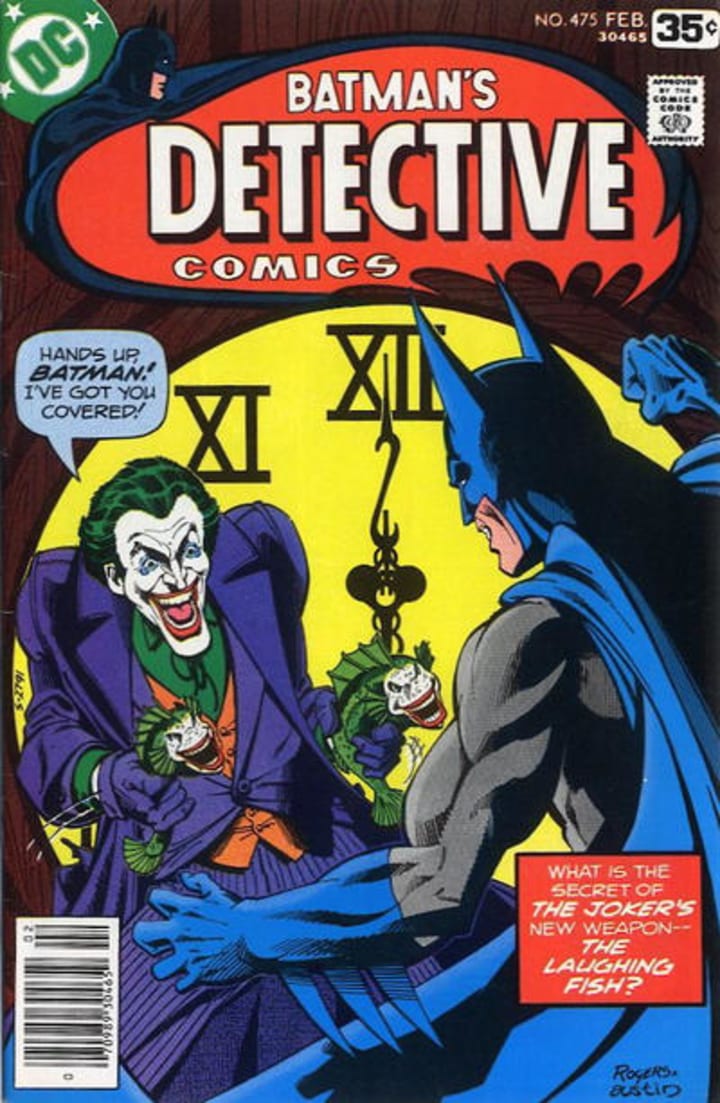
Throughout the ages there have been tons influences and inspirations in other works from many artists and writers. A widely popular one most people know is Detective Comics #475 by Steve Englehart or some may know as The Laughing Fish. You probably know the episode from Batman: The Animated Series even better. Recall that Joker targets G. Carl Francis for midnight, where he will pay the price if he does not agree to Joker's copyright on his Joker fish. When the time comes, Francis dies due to a dose of Joker venom he received earlier. In the episode, Joker targets another man who police have to wait out and defend. Sound familiar?
This story also has The Joker die in the end, although that obviously does not stick. Joker's so-to-be death as in Batman #1 became something of an on-going trope from then on. You can find this trait littered throughout other stories and episodes such as Mad Love for example. You can other examples of The Joker publicizing his crime across the pantheon of DC Comics. He goes on the Late Show in The Dark Knight Returns, telling the very studio audience he is going to kill them.
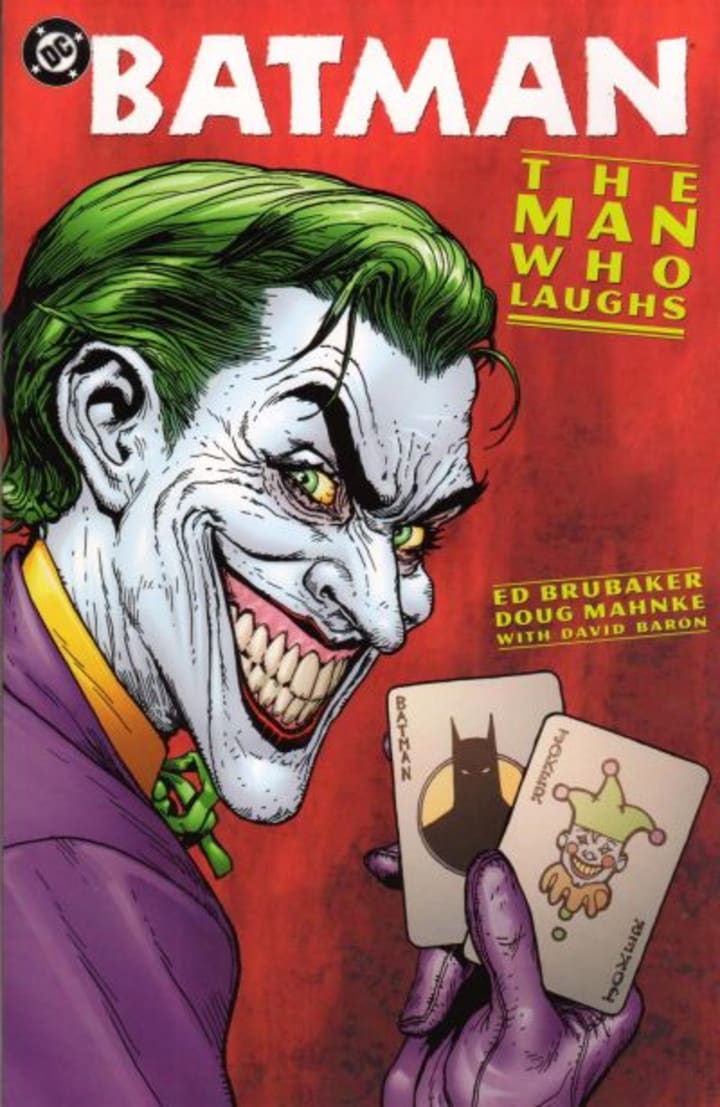
Ed Brubaker gave us a new take on Batman's first encounter with The Joker in 2005's Batman: The Man Who Laughs. The title alone is a callback to Conrad Veidt in the 1928 film of the same name. The same actor and film that would inspire Bill Finger in his creation of this maniacal character. Brubaker's tale bridges this story into the Post-Crisis continuity of the time, along with other stories like Batman: Year One. The Joker makes public of his crimes, though over television and not the radio, for that is too last century now. Yet, it goes further by including The Joker's targets from his debut - Henry Claridge and Jay Wilde. Strangely, Judge Drake is replaced with Judge Lake in this story. In an odd way you may say this story is a modern remake of Batman #1.
From a surface level Heath Ledger's Joker does not portray The Joker as we know him. No permanent grin and bleached skin is present. Instead, Nolan has Joker in hideous, smearing make-up and scars reminiscent of a Glasgow smile. The hair is long instead of short, while unkept and straggly. His clothes are not too far gone, we still have the green and purple clothes, but not looking as dated. As Grant Morrison put it best, the original Joker was dressed like something of a riverboat gambler. There is no use of Joker venom anywhere in the film. Bill Finger's Joker was Conrad Veidt meets clown, where Christopher Nolan puts Sid Vicious in the clown make-up.
All of these external features aside, Nolan did a great job in adapting Joker's first appearance for his film. This Joker also goes after the elite and defenders of law and justice, with District Attorney Harvey Dent, a judge and the police commissioner. In fact, the Chief of Police is murdered on the job, in his own office without even the Joker's presence. Granted, the causes of death are both different, but this is not that radical a departure from Commissioner Loeb's death in the film. We also see the mob's distaste for this freakish clown. Gambol, much like Brute Nelson try to take down the clown, but only end up dead themselves.
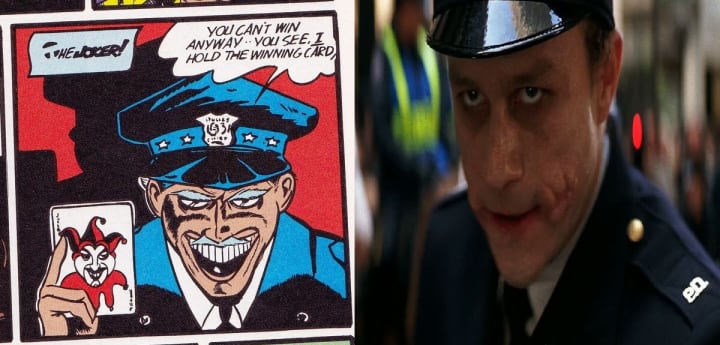
And who can forget that ghastly image of The Joker without his make-up on? He dons the uniform of an officer to open fire on the mayor. Seeing this vile face in the uniform of a protector is something to send chills down your spine, along with a spoonful of doubt and disbelief. Yet, Nolan did not get there first. It was Bill Finger, when the Joker dons the guise of the Chief of Police while protecting Judge Lake.
We owe a lot to Batman #1 with its debut of The Joker. Decades later it still has a grip on us through comics, film and animation. One could say the blueprint for future, great Joker stories lies within those pages. It's interesting enough in how Joker takes up most of the story and our attention in his debut. Batman gets shafted to the backseat, yet we do not seem to mind or notice until halfway through. The same can be said for Jack Nicholson in Tim Burton's Batman and Heath Ledger in The Dark Knight. A truly mesmerizing villain indeed.
If you like what you read here, please feel free to leave a tip and a like.
About the Creator
Skyler
Full-time worker, history student and an avid comic book nerd.
Not Just For Clean Up: A History Of The MCU's Department of Damage Control
Initially an organisation that seemed to exist to help the heroes of the Marvel Cinematic Universe, from Phase Four onwards, the Department of Damage Control has shifted into a more antagonistic role. Most recently seen in the Wonder Man series, the current incarnation of Damage Control seems to target superpowered individuals, regardless of whether that person poses an active or intentional threat.
By Kristy Anderson4 days ago in Geeks
Where Is Nicki Minaj From? Her Background, Childhood, and Life Story
Where Is Nicki Minaj From? Her Background, Childhood, and Life Story Nicki Minaj is one of the most recognizable artists in the world. Known for her bold style, unique voice, and powerful presence in music, she has built a career that continues to inspire fans across the globe. But beyond the fame, many people are curious about her roots and early life. Where was Nicki Minaj born? What was her childhood like? How did her journey begin? Here is her story explained in a simple, respectful, and easy-to-read way. Where Was Nicki Minaj Born? Nicki Minaj was born in Port of Spain, Trinidad and Tobago, a beautiful Caribbean country known for its culture, music, and colorful traditions. Her birth name is Onika Tanya Maraj. As a young child, she lived in Trinidad with her grandmother in an area called Saint James. During this time, her mother moved to the United States to prepare a better life for the family. When Nicki was around five years old, she joined her mother in New York City. They eventually settled in South Jamaica, Queens, where Nicki spent most of her childhood and teenage years. Growing Up in New York Life in Queens played a major role in shaping Nicki Minaj’s personality and dreams. Like many young people growing up in busy cities, she experienced challenges but also found inspiration around her. She attended school in New York and developed a strong interest in the arts from a young age. She loved performing, writing, and expressing herself creatively. Over time, she began to realize that music was more than just a hobby — it was her passion. Her early environment helped build the confidence and drive that would later define her career. Her Cultural Roots Matter Nicki Minaj has often shown pride in her Caribbean heritage. She speaks positively about her background and embraces the culture she was born into. Many fans appreciate that she honors her roots while also celebrating the life she built in the United States. Her story connects with people from many different backgrounds, especially those who grew up between cultures or moved to new places at a young age. Her Journey to Success Nicki Minaj’s success did not happen overnight. Her rise in the music industry came after years of hard work, persistence, and belief in herself. She started by sharing her talent, building a fan base, and slowly gaining attention for her unique style. Over time, she became known for her creativity, confidence, and powerful performances. Today, she is recognized worldwide for her influence in music and pop culture. Why Fans Care About Her Story People are drawn to Nicki Minaj not only for her music but also for her life journey. Her background shows resilience, ambition, and growth. Fans often feel inspired by how far she has come and how she stayed true to herself along the way. Her story reminds many people that your beginnings do not define your limits. A Story That Inspires Nicki Minaj’s life reflects themes of determination, identity, and perseverance. From her early childhood in Trinidad to growing up in Queens and eventually becoming a global star, her path has been shaped by effort and self-belief. She represents the idea that with passion and persistence, it is possible to overcome obstacles and achieve big dreams. Final Thoughts Nicki Minaj was born in Trinidad and Tobago and grew up in New York City. Her journey from a young girl with dreams to an international icon continues to inspire millions. Her story is not just about fame — it is about growth, strength, and staying connected to your roots while building your future.
By Farhan Khan8 days ago in Geeks
A Letter to the Firestarter
Dear Firestarter, We can all see you, we've been watching you since you began. In case you didn't know we were here before you and we will be here after. We witnessed your rise, your setbacks, your guilt and your lies. We witnessed you start the fire.
By Donny Foley7 days ago in Poets


Comments
There are no comments for this story
Be the first to respond and start the conversation.