
Book Review: "Cranford" by Elizabeth Gaskell
4/5 - a brilliant novel on the satirisation of the culture of 'manners'...

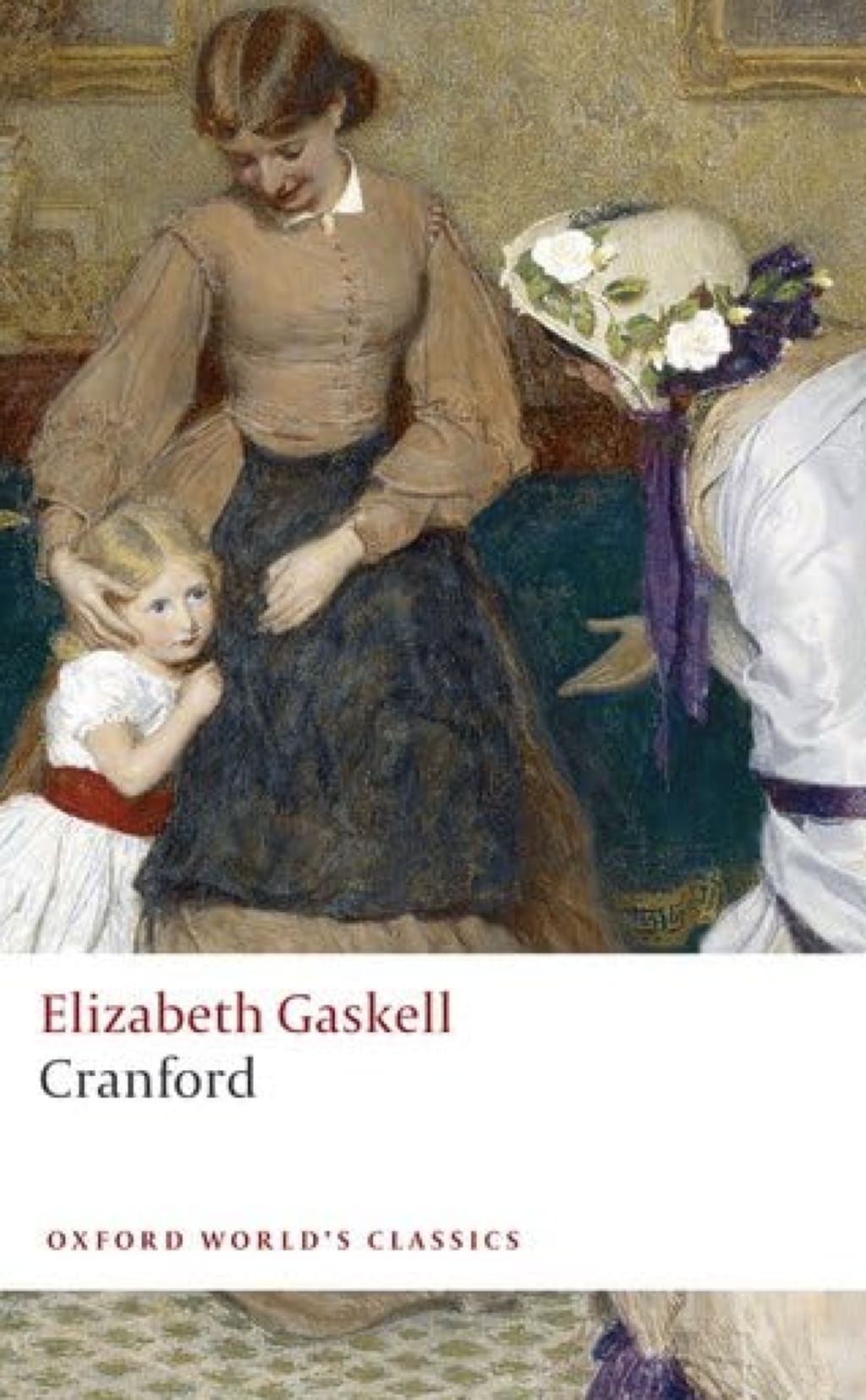
"I could perceive she was in a tremor at the thought of seeing the place which might have been her home, and round which it is probable that many of her innocent girlish imaginations had clustered"
- "Cranford" by Elizabeth Gaskell
Elizabeth Gaskell is probably best known for her novel North and South, she was also a contemporary of the Bronte sisters, with her house located in Manchester, near to the inn where Charlotte Bronte would write Jane Eyre (one of my personal favourite novels). Be that as it may, Gaskell grew up in the town of Knutsford, somewhere by Cheshire (I believe) and this is where the novel Cranford is set. Having been through Knutsford myself many times, I have to say it is quite the idyllic town. Cranford is less a narrative than it is a collection of sketches and observations of people and place. It is probably one of Gaskell's lesser-known, but stronger novels.
The first image we have is of a generation of older, unmarried and widowed women living in some kind of poverty. People who are of higher birth seemingly control the ways in which society functions including but not limited to, the ways in which the women relate to each other. This world is turned upside down by an outsider by the name of Captain Brown who is eventually killed trying to rescue a child and yet, there are dynamics that are still restored after this. I mean, the way in which this society is structured and operates is very clearly satire, but it plays out less like a story of one thing and more like a soap opera. It is something that Gaskell would do over and over again. There's a whole world out there - it's not just about what is within.
Miss Matty Jenkyns is a whole different kind of person and takes control of Cranford from her older sister. She seems a bit less restrained. Her love and her grief is a lot more freely expressed than the others and she even hankers around on older loves that have either been or have not been requited. There's a man in question named Mr Holbrook who was apparently an object of affection and a new servant named Martha. Miss Matty Jenkyns was once prevented from marrying Mr Holbrook and we get to see the losses and loves of one woman's heart. Matty ends up in mourning after her old love eventually dies. Gaskell really knows how to turn our hearts and make us really care for these fleeting characters. Honestly, I'm not surprised that it is Elizabeth Gaskell who wrote this.
We get access to Matty's parents as well. The section regarding memory looks at their letters as Matty recalls her closeness to a brother named Peter who was last seen leaving for India. I don't want to say too much about this section but there are reasonings behind everything, and the more we learn about Matty, the more we learn that she had to deal with loss and leaving more than once in her life. It may lift the burden of Holbrook's death, but it doesn't change the fact that there is a hole in her soul - probably.
Betty Barker then invites the ladies of Cranford to tea in which there are ladies of different classes. This of course, is socially askew and not really within the rules of Cranford. Mrs Jamieson announces her brother's widow is coming to stay and even though there are worries about a lady of that class coming over - she proves to be a nice, calm woman with a pleasing and approachable demeanour. Gaskell shows us once again that the strictness of social separations are silly and wildly out of the way of actual human interaction. You cannot assume how someone is because of which class they belong to.
In some future chapters, we get a man connected with a spate of robberies, a man who someone believes is Matty's lost brother, we see some bankruptcy and horrors involving money and children, but servants who refuse to leave their service out of love might be far for even me. Martha eventually takes a lodger (though I won't tell you who as it'll ruin the story!). I think that the ending, though there are some sadnesses, is satisfying enough. It ends in the idyllic nature in which we believe it was meant to begin. Gaskell's prose is something else entirely.
About the Creator
Annie Kapur
I am:
🙋🏽♀️ Annie
📚 Avid Reader
📝 Reviewer and Commentator
🎓 Post-Grad Millennial (M.A)
***
I have:
📖 280K+ reads on Vocal
🫶🏼 Love for reading & research
🦋/X @AnnieWithBooks
***
🏡 UK
Keep reading
More stories from Annie Kapur and writers in Geeks and other communities.
Wonderman
I would love to know how many people googled “Wonderman comics”, or “Wonderman powers” after the show dropped on Disney+. They were intentionally vague and they really separated themselves from the source material. And quite frankly that was a good decision. Because as far as comic book characters go Wonderman really isn’t that impressive or interesting. But who is he in the comics? Well we know I have the answers so here we go.
By Alexandrea Callaghana day ago in Geeks


Comments
There are no comments for this story
Be the first to respond and start the conversation.