
Pokemon Gold vs Silver vs Crystal: Every Version Difference Explained
From legendary encounters to animated sprites, here's what actually matters

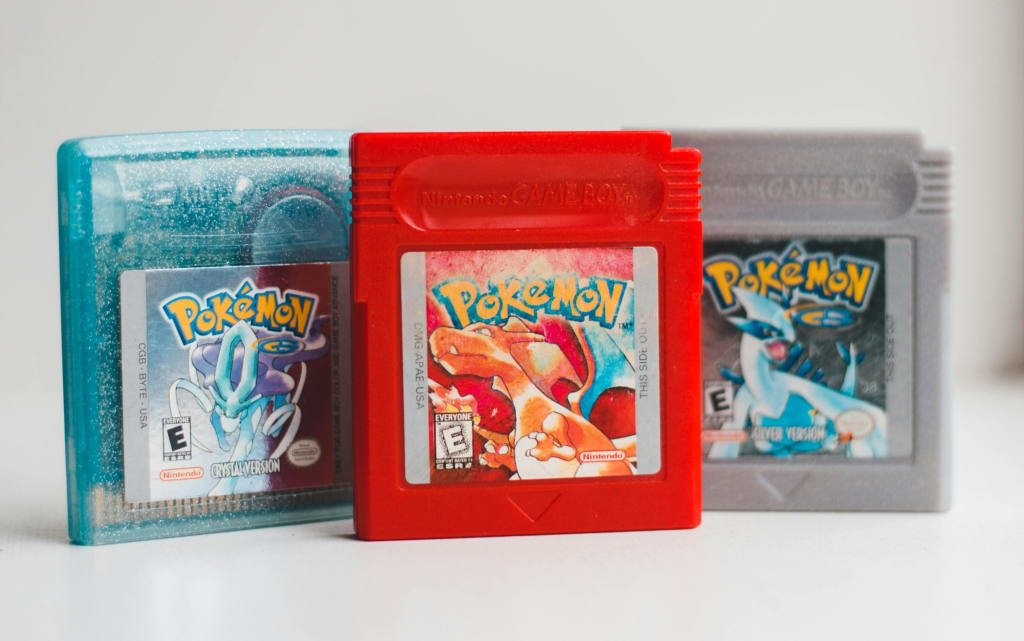
When people talk about the second generation of Pokémon games, there's this assumption that Crystal is just "the better version" of Gold and Silver. And yeah, there's some truth to that, but the actual differences are more interesting than you might think. If you're trying to figure out which one to play, or you're just curious what actually changed between these three games, there's more going on than Nintendo just releasing the same game three times.
Gold and Silver came out as a pair in 1999 (2000 in the West), and Crystal followed about a year later as the solo third version. This was the pattern Game Freak established with Yellow, and they'd repeat it with Emerald, Platinum, and the rest. But each generation handled the "third version" differently, and Crystal's got its own quirks.
Version Exclusives: Does It Actually Matter?
Like every paired Pokémon release, Gold and Silver each have their own exclusive creatures. Gold version gets you:
- Mankey (Fighting)
- Primeape (Fighting)
- Growlithe (Fire)
- Arcanine (Fire)
- Spinarak (Bug/Poison)
- Ariados (Bug/Poison)
- Gligar (Ground/Flying)
- Teddiursa (Normal)
- Ursaring (Normal)
On the other hand Silver gives you:
- Vulpix (Fire)
- Ninetales (Fire)
- Meowth (Normal)
- Persian (Normal)
- Ledyba (Bug/Flying)
- Ledian (Bug/Flying)
- Delibird (Ice/Flying)
- Skarmory (Steel/Flying)
- Phanpy (Ground)
- Donphan (Ground)
Crystal? It just mashes both lists together, letting you catch everything except for a few version-specific choices we'll get to.
Here's the thing though: most of these exclusives aren't particularly game-changing. Skarmory's the standout on Silver's side, being genuinely useful with its Steel/Flying typing and great Defense. Arcanine from Gold is solid, but you could find comparable Fire types elsewhere. The bug exclusives are basically irrelevant since both games give you better bug options anyway.
What matters more is the legendary dogs. In Gold and Silver, you get access to specific beasts based on your starter. Pick Cyndaquil and Suicune roams Johto. Choose Totodile and it's Raikou. Chikorita means you're hunting Entei. The other two dogs are still in your game, just harder to encounter. Crystal changes this completely, which we'll talk about later.
Crystal as the "Definitive" Version

There's this common wisdom that Crystal is the best way to experience Johto, and it's not wrong, but it's worth understanding what you're actually getting. Crystal isn't a massive overhaul. It's more like Gold and Silver with some extra features bolted on and a few rough edges smoothed out.
The biggest addition is the Battle Tower. This was the first time the series really tried to make post-game competitive battling a thing. You fight through seven trainers at a time with level restrictions, and it's actually pretty challenging. If you were into the competitive side of Pokémon, this was huge. If you just wanted to beat the Elite Four and move on, you probably never touched it.
Crystal also introduced move tutors for the elemental Hyper Beams (Blast Burn, Hydro Cannon, Frenzy Plant), but here's the catch: you can only teach them to your fully-evolved starters, and they have a recharge turn just like regular Hyper Beam. Cool in theory, mostly just for show in practice. There are other move tutors scattered around, but nothing that fundamentally changes how you build your team.
The Pokédex got an upgrade too. Crystal added a female sprite option for certain species, which was new for the series. Not every Pokémon has visible gender differences, but the ones that do actually look different now. It's a small touch that made the game feel more alive.
The Suicune Problem (Or Solution)
This is where Crystal really diverges from its predecessors. In Gold and Silver, all three legendary beasts are roaming Pokémon. They run around randomly, you track them down with your Pokédex, and catching them is a huge pain because they flee every single turn. Suicune's no different from the other two.
Crystal said "actually, let's make Suicune special." Now Suicune has a whole storyline. You encounter it at the Tin Tower, then again at Cianwood City, then finally at the Bell Tower where you can actually battle and catch it as a stationary legendary. Eusine, a Suicune-obsessed trainer, shows up multiple times to flesh out this subplot.
Is this better? Depends on what you want. Having one guaranteed legendary dog makes Crystal more accessible, especially since the roaming mechanic is genuinely frustrating. But it also means Suicune loses that sense of being rare and hard to track down. You're basically guaranteed to catch it if you show up with Ultra Balls and something that can paralyze it. The other two dogs still roam, so you haven't completely escaped the frustration.
Animated Sprites Change the Feel
Here's something people forget: Crystal was the first mainline Pokémon game with animated sprites. Not full animations like the later games, just a little idle movement when the Pokémon enters battle. It seems minor, but it made battles feel significantly more dynamic.
Gold and Silver had beautiful sprites, don't get me wrong. The color palette was a huge upgrade from the original Game Boy games. But everything was static. Crystal's animations brought the Pokémon to life in a way that made the whole experience feel more polished. Once you got used to seeing your Pokémon move, going back to Gold and Silver felt weirdly flat.
This wasn't a gameplay difference, obviously. Your Pokémon didn't battle any differently. But presentation matters, and Crystal's presentation was noticeably better. It's one of those things where you don't realize how much you appreciate it until it's gone.
The Details Most People Miss
Crystal made a bunch of small changes that aren't immediately obvious but add up. The Odd Egg you get from the Day Care is different. In Gold and Silver, you can hatch several possible baby Pokémon from it. In Crystal, the egg has a much higher shiny rate (around 14% instead of the normal 1/8192), and you can get different species including Tyrogue. Not a huge deal, but if you're hunting for shinies in Gen 2, that Odd Egg is your best bet.
The Unown puzzles got expanded. Crystal added two new Unown forms (! and ?) and created special chambers in the Ruins of Alph where you solve puzzles to encounter them. If you were into collecting all the Unown variations, this mattered. If you thought Unown were useless (which, let's be honest, they kind of are), then this changes nothing.
Some trainer battles are different. Not dramatically so, but gym leader rosters got minor adjustments, and some NPC trainers have different Pokémon or levels. The changes are subtle enough that you probably wouldn't notice unless you played all three versions back-to-back.
The Mobile Adapter That Never Happened

Here's a weird bit of history: the Japanese version of Crystal supported the Mobile Adapter GB, which let you battle and trade over a phone line connection. It also unlocked a hidden area called the Mobile Stadium where you could battle against other players.
The Western release cut all this out. We got references to it in the game's code and some NPCs who talk about features that don't exist in our version, but the actual functionality never made it overseas. So if you're playing the English version, there's a chunk of content you just can't access without hacking the game.
It's not a massive loss since the Mobile Adapter was barely used even in Japan, but it means the "definitive" version is actually missing features that existed in the original Japanese release. Just something to keep in mind if you're wondering whether Crystal really is the complete experience.
Which Version Should You Actually Play?
If you're only going to play one Johto game, Crystal's the obvious choice. You get the Battle Tower, the animated sprites, the improved Pokédex, and easier access to Suicune. The move tutors are nice even if they're not essential. It's the most polished version of the experience.
But Gold and Silver aren't obsolete. If you care about version exclusives and you really want Skarmory or Arcanine on your team, you need to pick the specific version that has them. Crystal gives you access to most exclusives, but not all. If you're trying to complete a living Pokédex, you'll need to trade between versions anyway.
There's also something to be said for playing Gold or Silver first, then coming back to Crystal. That way you experience Suicune as a roaming legendary before seeing the expanded storyline, and the improvements in Crystal feel more significant. It's like watching a director's cut after seeing the theatrical release.
For most people though, just play Crystal. The differences between Gold and Silver are minimal enough that picking between them mostly comes down to which box legendary you prefer (Ho-Oh or Lugia) and which version exclusives you want. Crystal splits that difference and adds meaningful improvements on top.
The Honest Take
The differences between these three games are real, but they're not revolutionary. You're getting the same core Johto experience regardless of which cartridge you pick. Same region, same gym leaders, same story about Team Rocket trying to make a comeback. The version exclusives matter if you're competitive or you're trying to catch everything, but for a casual playthrough? Doesn't really change your experience.
Crystal's improvements are nice, but they're also the kind of thing you could easily miss if you weren't paying attention. The Battle Tower is post-game content for people who want it. The Suicune storyline is cool but brief. The animated sprites are prettier but don't affect gameplay. If you played Gold when it came out and loved it, Crystal doesn't make that experience obsolete or incomplete.
What's actually interesting is how this set the template for future third versions. Emerald, Platinum, Black 2 and White 2, Ultra Sun and Ultra Moon – they all followed Crystal's lead of taking the base games and adding extra content rather than fundamentally changing the experience. Some did it better than others, but Crystal proved the concept could work.
So pick whichever version has the legendary or exclusives you want, or just grab Crystal and call it a day. You're getting one of the best generations of Pokémon either way. The real question isn't which version to play, it's whether you're ready to deal with the limited bag space, no running shoes indoors, and the absolute pain of trying to catch a roaming legendary before they invented the Pokétch tracking app.
About the Creator
MLB The Show 26: Release Date, Features, and What’s New
Sony San Diego Studio’s flagship baseball simulation, MLB The Show 26, is shaping up to be one of the most anticipated sports game launches of the year, with its official release set for March 17, 2026, and an exciting slate of features that promise both depth and freshness for longtime fans and new players alike.
By snow smith4 days ago in Gamers
How RTP and Volatility Work Together in Online Slot Games
Understanding how slot games work is important for players who want to enjoy the experience in a more informed and relaxed way. Two of the most essential concepts in slot gaming are RTP (Return to Player) and volatility. While many beginners hear these terms frequently, not everyone fully understands how they work together and how they influence gameplay.
By Kashif Khan2 days ago in Gamers

Comments
There are no comments for this story
Be the first to respond and start the conversation.