
The Peasant and the Devil: The Unwritten Ending
Inspired by the classic 'Brothers Grimm' tale; submitted to the "What the Myth Gets Wrong" Challenge


Once upon a time, there was a crafty and far-sighted peasant. Anyone with a parent who read them a copy of "Grimm's Complete Fairy Tales" as a child knows the tale of the farmer who bested the Devil in a game of wits. However, I happen to know what became of the farmer after the fairy tale ends. You see, dear reader, all legends and myths have a basis in truth, but once a dozen or so generations of story-tellers come and go, all having added their own little twists and embellishments and sensitivities, things tend to get hidden or disappear altogether. That is when folks of good authority (such as yours truly) come out of the woodwork to set things straight.
For those who may find themselves unfamiliar with the tale of the Peasant and the Devil, allow me to relay the legend as I once learned it at my grandfather's knee. One day, as twilight was drawing close, a peasant farmer found the Devil sitting atop a pile of live coals in the middle of his field. Taken in by curiosity, the farmer approached the fiend and asked him his business.
"I," said the Devil, "am sitting upon my treasure that lies beneath these coals."
"What sort of treasure is it?" Asked the farmer.
"This treasure," the Devil spoke, for the Devil seldom lies, "is the envy of kings! Below these coals are many things that glitter in the sun. Coins! Gems! Treasures and baubles beyond your wildest imaginings."
The peasant gulped in astonishment. "You do indeed sit upon a treasure!"
The Devil grinned a wicked grin. "Yes! In truth, I sit upon a treasure with more gold and silver than you have seen in your entire life!"
The farmer, crafty as ever, recognized his chance for profit. "This pleases me, for the treasure you sit upon lies within my field. It belongs to me."
The Devil shook his head and laughed a vicious laugh. "It is yours," he said, "if you will for two years give me half of everything your field produces. Money I have enough of, but I have a desire for the fruits of the earth."
The peasant, of course, agreed to the deal without hesitation, for - unlike the Devil - he had a great need of gold and an abundance of fertile land. But, for all the farmer's cunning, he sought to wring every last ounce of wealth from this deal with the Devil that he could.
"In order, however, that no dispute may arise over the division of my crop," said the farmer, "everything that is above the ground shall belong to you, and everything that lies below the ground shall be mine."
The Devil was quite satisfied with the offer and shook the peasant's hand. Within a moment, he and his hoard were both spirited back to Hell to await the completion of the deal.
In a year's time, the Devil came to collect the first of his promised harvests, only to find nothing but withered, yellowed leaves above the ground. The peasant stood nearby, spade in hand, yearning to dig for the turnips he had sown shortly after he had shook the Devil's hand. The Devil was profoundly furious, but, as is his nature, he remained as calm as a windless sea.
"You have had the best of it for once," said the Devil, "but next time that simply won't do. Next harvest, what lies above the ground shall be yours, and what lies below the ground shall be mine."
The peasant, thinking the Devil was about to be beat again, smiled with cunning delight as he agreed to the Devil's terms. A year later, the Devil returned to see that the farmer had freshly mown a field of wheat, each and every stalk cut right down to the very soil. The Devil stomped away in utter outrage, leaving the treasure in the field for the peasant to collect.
This is where the written story ends: the peasant's triumph over the Devil. It is a wonderful story for children, with a prime moral to teach them to prize wit and cunning in the face of a powerful adversary. The original story, however, the one that didn't quite make it into Wilhelm Grimm's final printing, is more befitting of a man who sought to outwit the oldest trickster himself. For, if there is one thing I have learned from the full tale, no one can truly expect to beat the cunning and greed of the Devil and expect not to reap what they sow.
In the days that followed the peasant's triumph, he took the gold and silver he had won to the estate of his family's former liege lord. In the wake of the royal decree abolishing serfdom in the kingdom, the farmer had managed to secure his family's land from his lord at the cost of substantial debt that he never hoped to pay in his lifetime. With the prize from his bargain, however, he saw all his debts erased overnight with enough gold to spare to ensure he and his family were arrayed in fine garments, furnished with the finest trappings, and sheltered in a magnificent house newly-built on his family's ancestral land. He and his wife and children passed that winter in a comfort that they had not previously known.
With the arrival of spring came time to sow new seeds into the land that was now fully his. With the money left over from the previous harvest, he planted wheat, sugar beets, turnips, and wonderful crops from the New World that were increasing in demand. He bought pigs and cattle and even a little apple tree seedling. He sunk every last bit of wealth into ensuring his family's comfort for years to come.
But it was not to be.
Spring came and went, and so did Summer, but nothing grew on his land. Neither had his seeds grown nor weeds in their stead. Worms turned dead in the very soil and even the rats and crows refused his land. The once black earth was now fallow, parched, and bereft of life. And in the middle of the field on the final day of the harvest sat the Devil upon a pile of burning coals. The peasant approached him in anger.
"You!" Said he. "What have you done to my land?"
The Devil shook his head and smiled. "I merely kept to our deal: on the second year I am to take everything that lies below the earth. You thought I only took the stubble of the grain you left me? No, no, dear child, I took the very life from the earth itself, which was ever-so enriched by your love and care. It was a bountiful harvest indeed, all freely given by the bond of your word. You got the better of me the first time, and I applaud you for your ingenuity, but I am not so easily cheated a second."
Then in a flash of fire, the Devil disappeared and left the farmer to think upon what he had wrought upon himself. The following day, the poor farmer and his family sold what little they had left and hit the road, hoping for greener pastures and shelter from the coming snows.
In the end, you all best remember: never make a promise you do not intend to keep, or else the Devil will take what is his due.
About the Creator
The Salt in her Voice
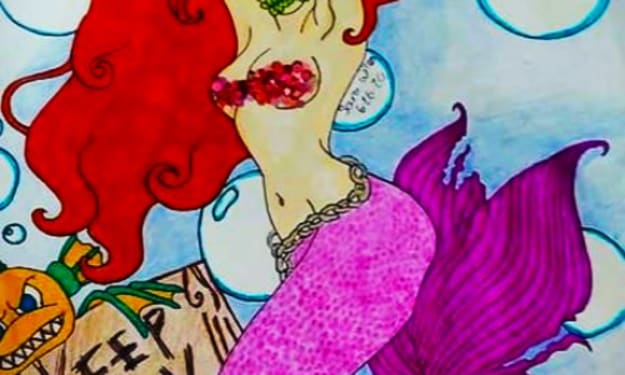
The myth says mermaids sing to lure sailors to their death. But why? The ocean is huge. Only 5 percent has been discovered by man. Why would a creature of the sea with that much space to roam ever care about the fate of men on ships? The answer, as it turns out, is not a simple one at all. The truth about the myth is older than the tides. Long ago before the first ship ever cut across the surface, the sea made a pact with the sky. The sky would take the souls of the drowned. Anyone who died in storms or any quiet accidents of the deep would have their soul lifted upward to the Heavens while the bodies would remain below, feeding the oceans endless hunger. The greedy sea however wanted more souls than the sky would claim. So it created mermaids. It gave them beautiful voices woven from currents and moonlight. It commanded them to sing. "Bring forth the ones who float where they should sink." it instructed them. So they did. They never killed out of malice but out of obligation. They sung to summon, not to seduce. A mermaid's voice could loosen the tether between the body and soul, making any man step willingly into the water. The sea would take the body and the sky would take the soul. Balance maintained.
By Sara Wilson3 days ago in Fiction
The Fire That Refused to Burn
Kael did not wake to light. He woke to silence so complete it rang in his ears. For a long moment, he couldn’t feel his body. No pain, no warmth, no fire. Just emptiness, like the space left behind after something essential had been torn out. Panic rose in his chest, sharp and sudden.
By Imran Pisani4 days ago in Fiction
Diaries to Nietzsche
Quotation from Friedrich Nietzsche "He who wrestles long with monsters should beware lest he himself become a monster. And if you gaze long into an abyss, the abyss also gazes into you. Man is not destroyed by suffering, but by the meaning he makes of it."
By LUCCIAN LAYTHa day ago in Critique



Comments (2)
Never dabble with the Devil! Great story!
Nice entry, Ian! A clever twist of fate from our man, the devil. Lesson learned...