Science
Science
The Hidden Power of Small Habits
M Mehran We’ve all heard the saying, “Big things start small,” but most people underestimate just how true it is—especially when it comes to daily habits. Small, consistent actions, when done right, can transform your health, productivity, and even your mindset. And yet, most of us ignore them. Here’s an FYI you won’t want to skip: it’s the tiny things that create massive results over time.
By Muhammad Mehran6 months ago in FYI
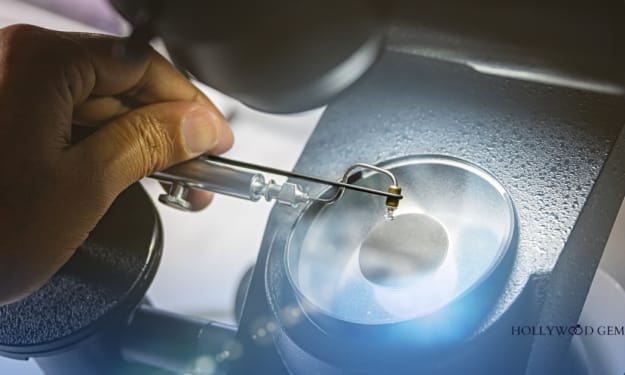
What Does Lab Created Diamond Mean?
The world of fine jewelry is changing, and one of the biggest shifts is the rise of lab created diamonds. For years, shoppers have asked the same questions: Are they real? Do they sparkle like natural diamonds? Are they worth buying?
By Hollywood Gems6 months ago in FYI
Do Black Holes Have Hair? Or Are They the Ultimate Bald?
Imagine a glutton, not of cake or fame, but of reality itself. A cosmic vacuum cleaner, devouring light, matter, the very fabric of spacetime. What descriptors could possibly remain for such a creature? Is it truly featureless, a singularity lurking behind an impassable horizon? This brings us to a peculiar question, seemingly frivolous yet deeply profound: do black holes have hair?
By Francisco Navarro6 months ago in FYI
How Modern Manufacturers Use Omnichannel Ticketing to Reduce Downtime
Downtime is the ultimate productivity killer in manufacturing. One machine goes down, and suddenly you’ve got stalled production lines, delayed deliveries, and a frustrated operations team trying to get things back on track.
By Shohil Devnagar6 months ago in FYI
No Sex Please We Are Animals!. Top Story - September 2025. Content Warning.
I was walking my two little dogs on the beach the other day. As usual, they were their usual obedient little souls; not very much. I started thinking I needed a Dr. Doolittle person to get inside their minds.
By Calvin London6 months ago in FYI
3I/ATLAS Update - Rumors and Reality
Executive Summary Comet 3I/ATLAS is the third interstellar object ever identified, discovered on July 1, 2025, by NASA-funded ATLAS from Río Hurtado, Chile. Its hyperbolic trajectory confirms it’s not gravitationally bound to the Sun. It poses no threat to Earth, will pass closest to the Sun around October 30, 2025 (~1.4 AU)*, and won’t come closer to Earth than ~1.8 AU (~270 million km). It is active—i.e., a comet with an icy nucleus and coma—and was traveling at roughly 61 km/s upon discovery, accelerating as it approached perihelion. Observationally, it should be visible to ground telescopes until September 2025, then reappear in early December 2025 after passing too near the Sun’s glare.
By Francisco Navarro6 months ago in FYI