Historical
Tesla's Smartphone
So says Nikola Tesla. “We shall be able to communicate with one another instantly, irrespective of distance. Not only this, but through television and telephony we shall see and hear one another as perfectly as though we were face to face, despite intervening distances of thousands of miles; and the instruments through which we shall be able to do this will be amazingly simple compared with our present telephone. A man will be able to carry one in his vest pocket.”
By Cleve Taylor 5 years ago in FYI
The Steel Magnate and the Monastery: Sharing a Beautiful Story Unknown to Many in Today’s World
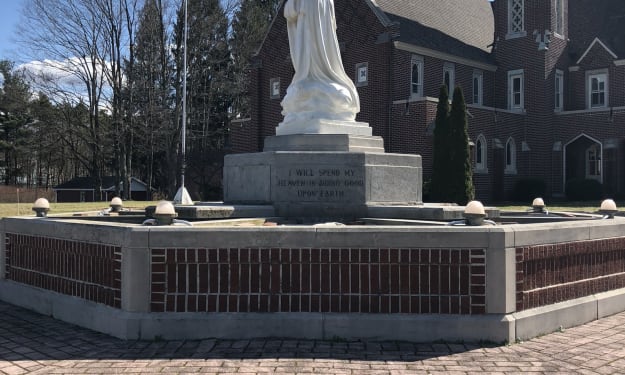
Regardless of your religion I think you will enjoy the story of this beautiful monastery located in a small western Pennsylvania town. The story about this monastery and its connection to the steel magnate, Charles M. Schwab, who built it is very fascinating. The name of the monastery is the Carmel of St. Thérèse of Lisieux or “Loretto Carmel” and it is located in the small town of Loretto, Pennsylvania. Some people may have heard of Saint Francis University, which is located just down the road from Loretto Carmel and practically across the road from Charles M. Schwab's former mansion. Loretto Carmel is named for Saint Thérèse of Lisieux, a very popular saint who lived in a monastery in Lisieux, France. There are many Carmelite monasteries named after Saint Thérèse but Loretto Carmel is the only one in the United States founded directly from France. The Sisters who founded this monastery came to the United States from Bordeaux in September 1926 at the invitation of a local bishop. However, before these founding Sisters traveled to the United States they visited with three of Saint Thérèse's sisters, who were not only religious sisters but they were her blood sisters as well. One of Saint Thérèse's sisters gave the founding Sisters a first-class relic of Saint Thérèse to take to the United States and in return a promise was made to name the new monastery after Saint Thérèse. In case you are not familiar with religious relics, first-class relics include the physical remains of a saint, such as, a strand of their hair.
By Margie Anderson 5 years ago in FYI
Prohibition in America
Why in the world would anyone want to ban alcohol? Well, a lot of people did around the start of the 20th century. So much so that The Prohibition act was ratified in 1919, and enacted into law by 1920 under the 18th amendment to the American constitution. For the next 12 years, the manufacturing, sale and transportation of alcohol was outlawed. You may already know a little bit about prohibition, but there are some interesting facts that might surprise you.
By Wendy Sanders5 years ago in FYI
Voodoo in New Orleans
When you hear the word "Voodoo", do you picture a witch doctor in a loin cloth wearing a headdress and a bone in his nose? Or maybe someone dressed in colorful robes chanting and killing chickens while performing black magic? These are the images brought to you by movies, television and fiction books. And Voodoo has nothing to do with walking dead people or zombies.
By Rebecca Foster5 years ago in FYI
DAT GILBERT
Run! Run! as the screams of panic was echoed, the shower of rain came pouring, dark clouds the wind hurled, the beautiful island of Jamaica came into disarray as a major hurricane hit Sept. 1988, On record this is the most devastating hurricane the little island of the third world has ever experienced. Jamaica known for its Beauty, Coffee, Reggae, Beaches & it's People. A day of History lets go Explore; the scenery was not as beautiful as it seems, known for its essence for highly ray of sunshine yearly, with tourism mainly the country's economy attraction. On September 12, 1988, at the peak of the Atlantic hurricane season, a hurricane named Gilbert hit a surprised and largely unprepared Jamaica. Thief in the Night for most, as many were surprised having doubts that the hurricane will not make landfall in the country & they were wrong.
By Sean Noble5 years ago in FYI
Pioneers of Philosophy That Influenced the World With Their Quotes
I thought that learning our ancient history in school was all I had to do. Wars, mythology, important people. I knew them all, and that was it. Then, I went to university. I started thinking about things. All sorts of things. I started philosophizing… Philosophy.
By Giorgos Pantsios5 years ago in FYI
A Pandemic Revisited
" Pandemics have been around ever since humans entered the hunter gatherer stage and began to engage in trade with other people groups. The World Health Organization describes a pandemic as "an epidemic occurring worldwide, or over a very wide area, crossing international boundaries and usually affecting a large number of people." The most deadly pandemic, and the one with the most impact on European society, was the bubonic plague. Also called the Black Death, the plague officially began in the mid-14th century. The plague had already been wreaking havoc in China, India, and the Middle East when a fleet of ships filled with dead and dying crew members sailed into the Sicilian port of Messina. Although the ships were immediately sent on their way, it was too late. The plague had hit Italy and it spread like wildfire through Europe and North Africa via trade routes.
By Lori Stremble5 years ago in FYI
History of Massage Dates Back Thousands of Years
From ancient medicine to modern therapy, massage and the healing quality of human touch has been a mainstay of most civilizations. In modern times, it is recognized that massage therapy has a plethora of health benefits to the recipient. Let’s take a look.
By Jessica Bugg5 years ago in FYI