Historical
The Early History of Cricket
The possible origins of cricket How did cricket begin? One thought is that English shepherds with nothing better to do used their crooks (long sticks with a bent-over handle at one end) to hit lumps of wool or stones to see how far they would go. One shepherd would toss a “ball” towards another who held his crook upside down and the latter would give it a bash. The “bowler” or his mates might then try to see if they could catch the wool or stone before it hit the ground.
By John Welford5 years ago in FYI
Caravaggio: An Extraordinary Artist
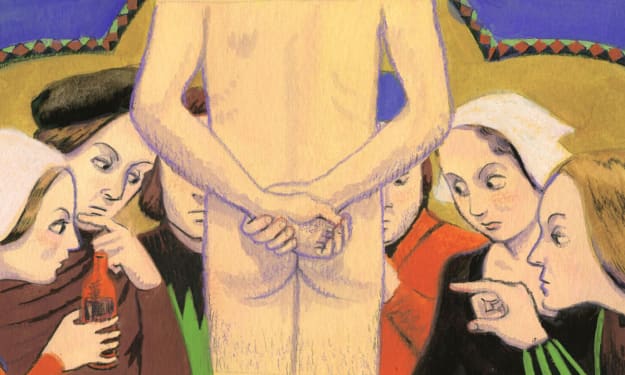
Caravaggio (1571-1610) was one of the most extraordinary characters in the history of art. His fiery temper and wild behaviour led to a sometimes tempestuous life, and this was reflected in his paintings. His treatment of light added to their drama.
By John Welford5 years ago in FYI
The Great Boston Molassacre
On January 15, 1919, tragedy struck the North End neighborhood of Boston as a 25ft wave of sugary sweet molasses crashed through the streets. Many were injured in the fast moving flood while others lost their lives due to suffocation. The city took heavy damage but thanks to the brave men and women of Boston many lives were saved.
By Victoria Blitz5 years ago in FYI
Olga of Kiev
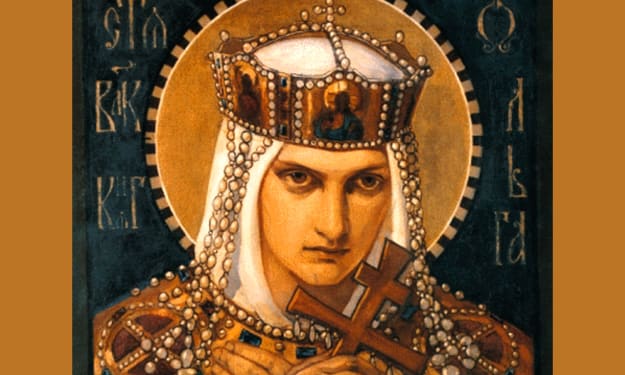
Ever wondered about Saints and how they gain a title that is known throughout history? Well, none will make you question canonization more than the story of Helga otherwise known as Saint Olga of Kiev. She was canonized as the Saint of Widows and Converts in 1547 as the first saint of the Russian Orthodox Church. Many might question why she was sainted in the first place, and why she is still honored as a saint if they knew her full story.
By Josh Mallernee5 years ago in FYI
Don't Quit
Everyone remembers things about their childhood that stood out as interesting or important. When I was younger I had a lot of moments like that. The first time I traveled outside of the U.S and my first day of middle school. When I first rode a bike, when I learned to swim, and when I went to Las Vegas for a family reunion. The most important parts of me that shaped me became memories I could look back on and smile about. As a kid something I loved was history and I used to live with my aunt. On her door, every day I walked by it I looked at a poem taped on it. That poem is a part of history, of my history, and the history of the person who writes it. It's the most inspirational poem I've ever read. I memorized it and carry it as a memory today. The poem is called "Don't Quit" and some people credit the author Edgar A. Guest as the author but others believe it to be John G. Whittier.
By Porsha Greer5 years ago in FYI
The WW1 weapon you can’t live without
When people think of WW1, they often conjure up thoughts of the infamous phrase “trench warfare.” Images of shell-shocked soldiers sitting in trenches with eyes that hold a million stories many would never be able to tell and gruesome wounds that forever shaped a generation may spring to thought. Just as likely would the history class every student takes in 10th grade explaining the bare-bones facts of the war with glossy pages detailing mustard gas and the newly emerging concept of “shell shock” that would later go on the be named PTSD. Students in advanced world history might cover a bit of the politics that took place before the bubbling cauldron in the Balkans finally boiled over. It might cover the assassination that sent an entire generation to the front lines that took a backseat to WW2 when it came time for their yearly history exam. However, while mustard gas often left painful and debilitating blisters on soldiers. It wasn’t even close to being the deadliest chemical weapon used on the battlefield.
By Mukena Addict5 years ago in FYI