Historical
The non-reign of "Queen Matilda"
Who was the first Queen of England? This question refers to queens who ruled as monarch, as opposed to being the wife of a king (by convention, such a lady is given the honorary title of Queen, but the husband of a reigning queen is never titled King!). The official answer is Mary I, unless one allows Lady Jane Grey to be credited for her nine-day “rule” in 1553. However, for a few brief periods in the 12th century it could be said that “Queen Matilda” was more in charge than anybody else.
By John Welford5 years ago in FYI
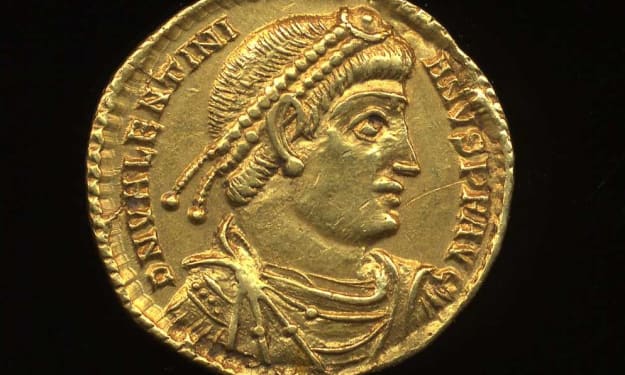
Valentinian I: a late Roman Emperor
The reign of Valentinian I marked a new stage in the decline of the Roman Empire, namely one in which emperors reigned but did not necessarily rule. Power was staring to ebb away from the person who was nominally in charge and towards the civil servants and officials who were increasingly making the important decisions.
By John Welford5 years ago in FYI
Raj Ghat
The Raj Ghat basically is a monument which was built in the honour of the father of our nation, Mahatma Gandhi. The Raj Ghat is a raised platform made of black marble which has been erected on the spot where the cremation of Mahatma Gandhi took place on 31st January in the year 1948, just a day following his assassination. The platform is intentionally left open and faces the sky and an everlasting flame keeps burning continually on one end of the platform. The Raj Ghat is located on Delhi's Ring Road which is formally known by the name of Mahatma Gandhi Road. The word Raj Ghat means 'King's Court'.
By aman mehta 5 years ago in FYI
From Social Security To The Great Train Robbery, A Nuclear Bomb To The End Of A President, This Weeks History Had A Lot.
August is a special month. August is the last real month of the summer season, children prepare to return to school and start classes, my brother was born in August, and the days start to really get shorter. There are many reasons to celebrate August.
By Jason Ray Morton 5 years ago in FYI
The History of the National Peace Officers' Memorial
The night before the second Memorial Service in 1983, Trudy and Suzie had the honor of sitting around a table talking with 10 surviving spouses of fallen officers who chose to attend the Memorial Service in DC. Those women made Trudy and Suzie realize that you cannot understand the devastation, pain, and issues of losing a spouse in the line of duty until you experience it. The surviving spouses talked about their emotional and financial issues, the need for a national support group, and the need for a grief seminar during future National Police Weeks. They demanded that seminars for all family members should be planned.
By abhi rathoor5 years ago in FYI
Gallienus, Emperor of Rome
Gallienus is one of the Roman Emperors whose reputation has undergone considerable change over the centuries. Early historians regarded his reign as “one of the most ignoble and disastrous in the history of Rome” and himself as “indolent, profligate and indifferent to the public welfare” (to quote Smith’s Classical Dictionary) but modern research has credited him with some successes and qualities during a very difficult period of Roman history.
By John Welford5 years ago in FYI
Jama Masjid, Delhi
Masjid-i-Jahan Numa" means "the mosque commanding a view of the world," and the name Jama Masjid refers to the weekly congregation observed on Friday (the yaum al-jum`a) at the mosque. The Mughal Emperor Shah Jahan, builder of the Taj Mahal, commissioned its construction. Five thousand craftsmen labored for six years to build the mosque. Completed in the year 1656 C.E., Jama Masjid constitutes one of the largest and best-known mosques in India. Shah Jahan enhanced the imposing grandeur of the edifice by placing it on high ground. The Badshahi Masjid in Lahore, built in 1673, closely resembles Jama Masjid.
By vishal rathuor 5 years ago in FYI
Hadrian, Emperor of Rome
Emperor Hadrian, who ruled the Roman Empire from 117AD to 138AD, is best remembered for ordering the construction of the wall in northern England that bears his name. His reign was largely peaceful – due in no small measure to Hadrian’s constant vigilance for signs of trouble on the Empire’s borders.
By John Welford5 years ago in FYI
The First Viking Siege of Paris - 845 CE
The Vikings are known as fearless warriors who raided cities, towns, monasteries and anywhere in fact, that may have hidden riches. Not only this, but the Vikings had a rich mythology and a desire for glory that spurred their daring achievements.
By T. Freya Taylor5 years ago in FYI
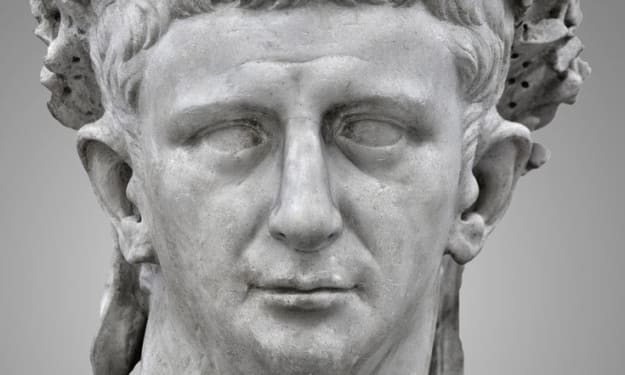
Claudius, Emperor of Rome
On the face of it, Claudius was one of the least suitable men to become Roman emperor, but on most counts he was far from being one of the worst. He had a special role in the history of Britain, as it was during his reign that the Roman Empire extended to Britain, and there are several aspects of Rome’s 400-year rule that have had an important influence down to the present day.
By John Welford5 years ago in FYI