
Why the Data Center Cooling Market Is Redefining Digital Infrastructure Efficiency?
The Growing Need for Advanced Thermal Management in High-Performance Computing Environments

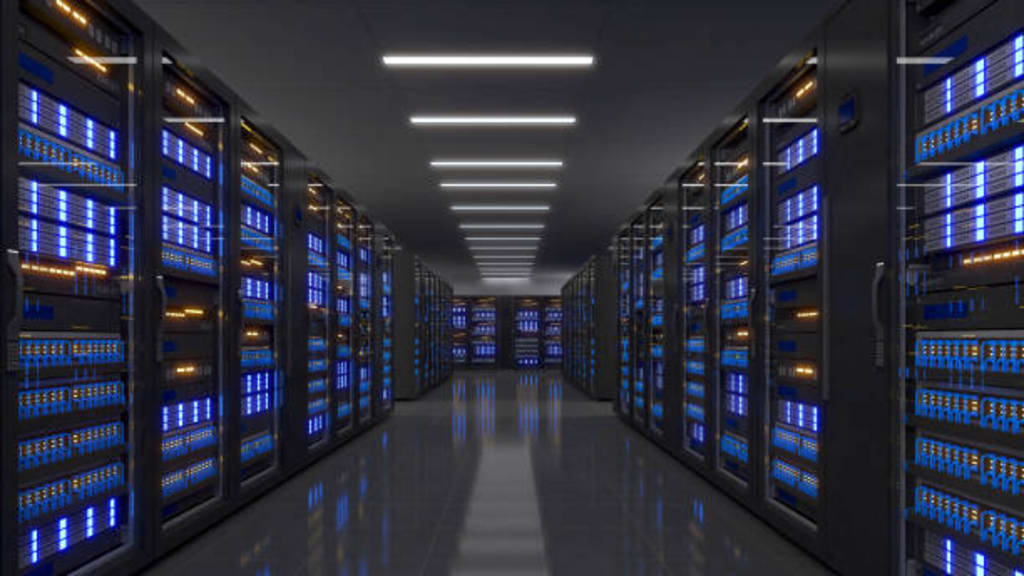
In an economy where digital technology pervades all sectors, data centers are at the core of communications, the cloud, and enterprise IT, and the challenge of managing the heat produced by servers and networking equipment is a key operational issue as demand for processing and storage grows. Within this environment, the data center cooling market has grown and is now focused on providing solutions to ensure continued performance and reliability.
In data centers, equipment must be kept at operating temperature in order to operate reliably and not suffer downtime. High-performance computing systems have high density of equipment and therefore have great thermal challenges. With maximum uptime and energy efficiency in mind, advanced cooling systems are essential components of data center operations and planning.
Understanding What the Data Center Cooling Market Really Is
The data center cooling market includes technologies, products and systems to dissipate heat and control the climate in the data center, including air-based cooling, liquid cooling, immersion cooling and hybrid cooling solutions.
Cooling systems dissipate the heat load from equipment such as servers, storage and networking. The systems make use of cooling units, chillers, containment, heat exchangers and monitoring systems.
The market includes equipment vendors, services, system integrators and facilities management solutions that ensure optimal thermal management within data-centric environments.
Key Factors Driving the Popularity of the Data Center Cooling Market
One of the major factors contributing to the data center cooling market growth is the rapid growth of cloud computing and digitalization. Nowadays, many organizations rely on cloud computing, as well as on-demand data processing, and data centers are expected to operate most efficiently.
Higher server densities also increase demand. High-performing servers are deployed in a smaller footprint, producing higher heat loads and requiring more advanced cooling systems.
Another major motivation is energy efficiency. Because of the high amounts of energy used to cool a facility, organizations are often looking for ways to minimize energy consumption and cost.
The trend towards edge computing deployments and distributed data networks is leading to an increased need for scalable data center cooling systems.
Click here if you want to know more about Data Center Cooling Market
The Role of Innovation and Advanced Technologies
Liquid cooling systems are considered an important innovation in the data center cooling industry because they can handle higher thermal loads more efficiently than air-based technologies.
In immersion cooling, components are submerged in a thermally conductive fluid, and they can dissipate heat more effectively without large air circulation systems.
Additional advanced airflow techniques (hot aisle containment, cold aisle containment, etc.) can further increase energy efficiency and improve temperature control.
Smart monitoring tools, such as sensors and analytics platforms, can provide real-time temperature tracking and predictive maintenance.
Energy efficiency and sustainable cooling methods (such as free cooling by using ambient air) support the green data center.
Changing Industry Practices and Infrastructure Planning
With the importance of sustainability and longevity to data center operators, cooling infrastructure is therefore designed as integrated with the overall facility from the outset.
Another consideration is moving towards modular and scalable cooling systems that can grow with the organization's computational requirements without the risk of thermal destabilization.
Operators are working to improve their power usage effectiveness (PUE), for both environmental and performance reasons.
A close working relationship between the technology providers and the facility designers ensures the cooling systems match the server requirements.
Benefits and Practical Advantages
The data center cooling market has these advantages:
• Operational Stability: Maintains optimal temperature for uninterrupted performance
• Energy Efficiency: Lower power consumption with improved thermal management
• Scalability: Allows data centers to grow
• Equipment Longevity: Lessens wear and tear from overheating
• Real-Time Monitoring: Enables proactive maintenance and risk management
• Environmental Sustainability: Advocates for reduced carbon footprint
• Improved Reliability: Strengthens infrastructure resilience
These benefits underscore the importance of cooling systems in digital infrastructure.
It has been popular worldwide.
Wide-ranging customary adoption in high-growth digital infrastructure markets is expected to influence the data center cooling market. Developed economies with large cloud service providers require energy-efficient cooling systems for large data centers.
Emerging markets are building data centers to aid digital transformation and connectivity in their regions. Cooling systems are modified based on the climate zone, and affect the design and energy-efficiency strategy.
Government policy actions, promoting energy efficiency and sustainable technology, can also affect technology adoption.
There is a common desire for data processing environments that are reliable and efficient.
Challenges Facing the Data Center Cooling Market
Though important, the data center cooling market has been challenged by factors such as high installation costs and the complexity of infrastructure requirements.
The energy consumption, particularly in areas with limited renewable energy, continues to be a concern.
It is difficult, but not impossible, to retrofit existing facilities with such measures.
As computing power increases faster than ever, thermal management systems face rapid change and evolution.
Finding the right balance between performance, cost and sustainability continues to be a challenge.
Future Outlook of the Data Center Cooling Market
The future of the data center cooling market is likely influenced by high-performance computing trends and sustainability concerns such as the growing use of artificial intelligence and other data-intensive workloads requiring more advanced cooling solutions.
Energy efficiency and environmental sustainability will continue to be of increasing importance, with liquid and immersion cooling more widely used as computing density increases.
Smart automation and predictive maintenance tools will likely drive operational efficiency and reduce asset downtime.
As the digital infrastructure of the world expands, cooling systems will become even more important to maintain stable data environments.
Conclusion
The rapidly evolving data center cooling market is transforming the way data centers manage thermal management to accommodate the expected growth in data processing and to ensure the long-term sustainability of operations using innovative and cost-effective cooling.
Technological advancement and an ever-growing demand for digital data continues to drive the market across all regions globally. As computer processing requirements continue to increase, data center cooling solutions will continue to power the future of connectivity.
About the Creator
Akshay Kumar
A dedicated Market Research Professional specializing in in-depth analysis, industry forecasting, and strategic insights. Known for precision, reliability, and delivering research that adds real business value.
Keep reading
More stories from Akshay Kumar and writers in Futurism and other communities.
Why the Home Improvement Services Market Is Transforming Modern Residential Living?
Home in a modern context is multi-functional, describing space used for living, working, recreation, and long-term investment. The services supporting home improvement fill an essential role in shaping the modern residential environment, as the home keeps developing over time.
By Akshay Kumarabout 14 hours ago in Futurism
Saudi Arabia Cold Chain Market: Food Security, Pharma Logistics & Growth Outlook
According to IMARC Group's latest research publication, The Saudi Arabia cold chain market size was valued at USD 3.5 Billion in 2025 and is projected to reach USD 15.9 Billion by 2034, growing at a compound annual growth rate of 18.31% from 2026-2034.
By Faisal Al-Harbi7 days ago in Futurism
GCC Health and Wellness Market Analysis: Industry Overview, Key Players & Growth Outlook
According to IMARC Group's latest research publication, GCC health and wellness market size reached USD 72.2 Billion in 2024. The market is projected to reach USD 126.2 Billion by 2033, exhibiting a growth rate (CAGR) of 6.07% during 2025-2033.
By Abhay Rajput8 days ago in Futurism
The Pride Flag and the Diversion
For nearly a decade, the LGBTQIA Pride Flag rippled in the wind at Christopher Park, a kaleidoscope of color staked into the soil of America’s first national monument to LGBTQIA+ liberation. That flag came down this week. Federal officials, citing new guidance from the Trump Administration, silently lowered the rainbow flag from its pole across the street from the Stonewall Inn. The birthplace of the modern gay rights movement now flies only the United States flag.
By Tim Carmichael5 days ago in Pride



Comments
There are no comments for this story
Be the first to respond and start the conversation.