
Why Simple Algorithms Are More Advantageous in Space Than Complex Ones
Space

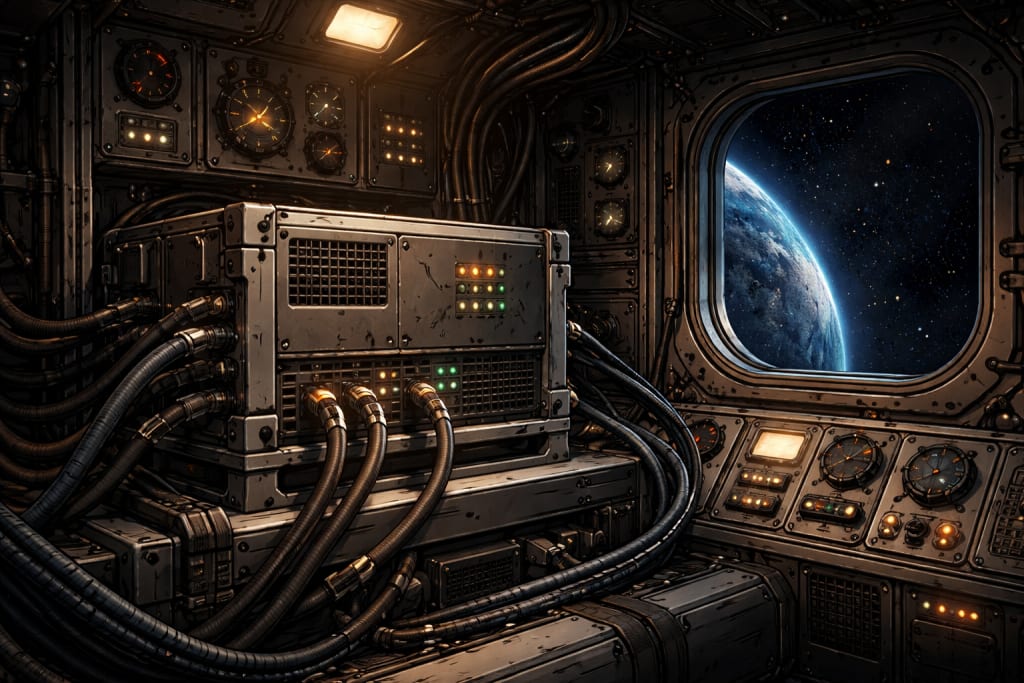
On Earth, technological progress is often associated with growing complexity. Artificial intelligence systems learn from massive datasets, algorithms evolve autonomously, and software becomes increasingly layered and abstract. In many industries, complexity is equated with intelligence and capability. However, once we leave Earth and enter space, this logic changes dramatically. In orbit, on the Moon, or on Mars, simplicity is not a limitation—it is a strategic advantage.
Space is one of the most hostile environments in which technology can operate. Extreme radiation, vacuum, severe temperature fluctuations, limited power, and the inability to physically repair systems fundamentally reshape how software must be designed. Under these conditions, simple algorithms often outperform complex ones in terms of reliability, safety, and long-term mission success.
Space Is Unforgiving to Software Errors
Cosmic radiation is a constant threat to electronic systems. High-energy particles can flip bits in memory, corrupt data, or disrupt processor operations—a phenomenon known as a single-event upset. While hardware can be shielded and hardened, software must be resilient by design.
Complex algorithms typically rely on large memory footprints, deep execution paths, and numerous conditional branches. Each additional layer of logic introduces more potential failure points. When something goes wrong in deep space, there is no reset button and no technician to intervene.
Simple algorithms, by contrast, are easier to protect, replicate, and recover. Their behavior is more transparent, and failures are easier to detect and isolate. In space, fewer moving parts—both mechanical and computational—often mean fewer surprises.
Limited Computing Power Changes Everything
Spacecraft do not use the latest processors found in smartphones or data centers. Instead, they rely on radiation-hardened chips that are slower, more expensive, and often generations behind commercial technology. This is a deliberate tradeoff: reliability is more important than raw performance.
For example, several Mars rovers operated for years using processors with clock speeds that would be considered obsolete on Earth. Running complex machine-learning models or highly adaptive algorithms on such hardware would be inefficient or even impossible.
Simple algorithms are computationally lightweight. They consume less energy, execute deterministically, and place minimal demands on memory. In an environment where every watt of power matters and solar energy may be limited by dust or distance from the Sun, efficiency becomes a survival trait.
Predictability Matters More Than Optimization
On Earth, we often accept systems that behave unpredictably as long as they are statistically effective. Recommendation engines, neural networks, and adaptive control systems may occasionally fail or behave strangely, but the consequences are usually manageable.
In space, unpredictability can be catastrophic. A single unexpected maneuver, misinterpreted sensor reading, or uncontrolled software state can end a mission that cost billions of dollars and decades of planning.
Simple algorithms can be fully analyzed, formally verified, and exhaustively tested. Engineers can anticipate how the system will behave in every possible scenario. This level of predictability is essential when autonomous systems must operate far beyond real-time human supervision.
Communication Delays Demand Autonomous Reliability
Spacecraft often operate with significant communication delays. A signal traveling between Earth and Mars can take anywhere from several minutes to nearly half an hour one way. This makes real-time control impossible.
As a result, spacecraft must make decisions independently. However, autonomy does not necessarily require complexity. In fact, many successful missions rely on rule-based systems, state machines, and carefully designed heuristics.
These approaches may appear simplistic compared to advanced artificial intelligence, but they are robust. They respond quickly, behave consistently, and fail gracefully. When something unexpected occurs, the system can revert to a safe mode rather than improvising a risky solution.
Adaptability Can Be Dangerous
On Earth, adaptability is a strength. In space, it can be a liability. Algorithms that modify their own behavior based on experience may drift into unsafe operating regimes, especially when exposed to rare or unanticipated environmental conditions.
Space engineers often prefer systems that do exactly what they were designed to do—no more, no less. Emergency modes, backup routines, and fallback logic are intentionally simple and conservative. When a spacecraft encounters trouble, it should not “learn” a new behavior; it should switch to a known, safe configuration.
Historically, many missions have been saved by basic, hard-coded logic that overrode more advanced systems during emergencies. In space, restraint often beats ingenuity.
Simplicity Enables Trust and Certification
Before launch, every line of flight software must be tested, reviewed, and certified. The more complex the algorithm, the harder and more expensive this process becomes. Hidden interactions, edge cases, and unintended consequences multiply as systems grow in sophistication.
Simple algorithms are easier to explain, easier to audit, and easier to trust. This matters not only for engineers, but also for mission planners, safety boards, and international partners. Trust in the software is as critical as trust in the hardware.
The Future: Smart Architecture, Not Blind Complexity
This does not mean that space exploration rejects advanced algorithms entirely. Instead, complexity is carefully localized. Data-heavy analysis, machine learning, and large-scale optimization are often performed on Earth, where computational resources are abundant and human oversight is immediate.
In space, onboard software focuses on stability, safety, and minimal autonomy. Spacecraft collect data, perform basic preprocessing, and execute reliable control logic. The “intelligence” of the mission is distributed intelligently between Earth and space.
Conclusion
In space, the most successful algorithm is not the smartest, fastest, or most sophisticated—it is the one that works every time. Simplicity delivers robustness, predictability, and resilience in an environment where failure is permanent and recovery is often impossible.
While complexity drives innovation on Earth, simplicity enables survival beyond it. In the vacuum of space, a simple algorithm that always behaves correctly is far more valuable than a complex one that is only usually right.
About the Creator
Keep reading
More stories from Holianyk Ihor and writers in Futurism and other communities.
Materials That Only Work in Space: When the Universe Becomes the Laboratory
For most of human history, materials science has been constrained by Earth itself. Gravity shapes how crystals grow, air corrodes exposed surfaces, moisture seeps into polymers, and temperature changes happen gradually. But beyond Earth’s atmosphere lies an environment so extreme—and so different—that entirely new classes of materials can exist. Some of them do not merely perform better in space; they only function in space.
By Holianyk Ihora day ago in Futurism
Saudi Arabia Used Car Market: Price Sensitivity, Certified Used Cars & Sales Momentum
According to IMARC Group's latest research publication, Saudi Arabia used car market size was valued at USD 10.2 Billion in 2025. The market is projected to reach USD 17.4 Billion by 2034, exhibiting a growth rate (CAGR) of 6.11% during 2026-2034.
By Abhay Rajputabout 11 hours ago in Futurism
Saudi Arabia Asphalt Pavers Market: Infrastructure Boom, Smart Paving & Growth Outlook
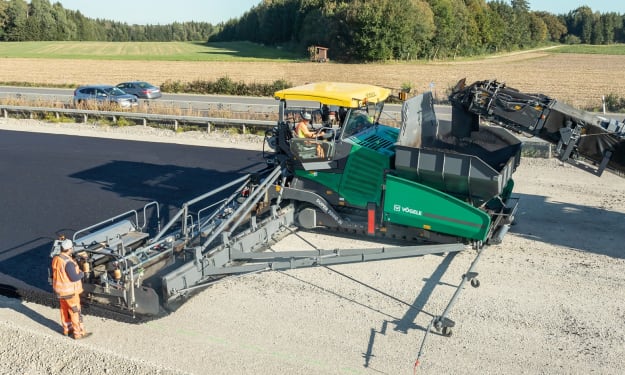
Market Overview According to the latest report by IMARC Group, the Saudi Arabia asphalt pavers market was valued at USD 22.7 Million in 2025. The market is expected to reach USD 32.8 Million by 2034, expanding at 4.18% annually from 2026 to 2034. This growth momentum is being driven by massive infrastructure investments, the emergence of mega projects like NEOM and Qiddiya, and increasing adoption of technologically advanced paving machinery equipped with GPS controls, automated systems, and digital monitoring capabilities that help contractors meet strict quality standards and tight project timelines.
By Jeffrey Wilson5 days ago in Futurism



Comments
There are no comments for this story
Be the first to respond and start the conversation.