
Virtual Reality and the Evolution of Remote Collaboration
This article explains how virtual reality tools are shaping the future of remote collaboration by improving communication, engagement, and professional teamwork.

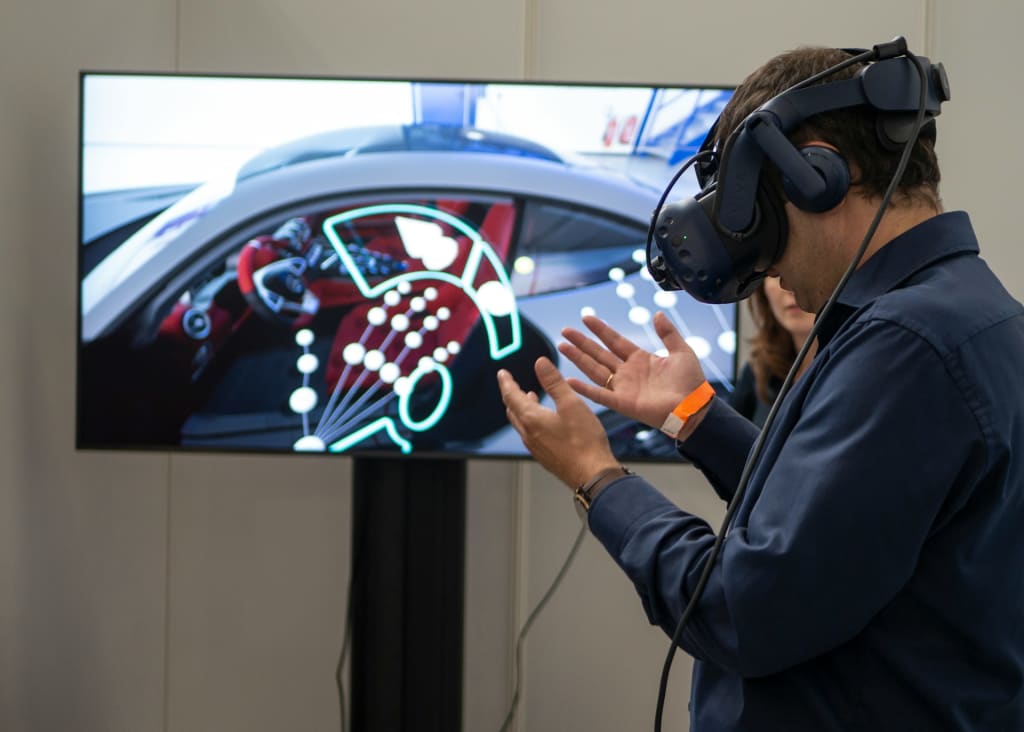
Remote collaboration has become an essential part of professional life as organizations increasingly rely on distributed teams. While early remote work depended on email, messaging platforms, and video conferencing, these tools often lack the sense of shared presence found in physical workplaces. Virtual reality is now emerging as an advanced solution that addresses these limitations by creating immersive digital environments where professionals can collaborate more naturally and effectively.
Virtual reality tools are changing how professionals communicate, learn, and work together across distances. By simulating shared spaces and enabling interactive experiences, these tools support deeper engagement and clearer communication. This article takes an educative approach to explain how virtual reality is shaping the future of remote collaboration, its benefits for professionals, and the considerations required for successful adoption.
Understanding Virtual Reality Collaboration Tools
Virtual reality collaboration tools are platforms that allow professionals to meet and work together inside immersive digital environments. Users enter these environments through compatible devices and are represented by digital avatars. These avatars can move, gesture, and speak, creating interactions that closely resemble face to face communication.
From an educational standpoint, the key concept behind these tools is presence. Presence refers to the psychological feeling of being in the same space as others, even when participants are physically distant. Virtual reality enhances presence by using spatial audio, depth perception, and natural movement. This helps reduce the sense of separation that often exists in traditional remote collaboration.
These tools often include features familiar to professionals, such as document sharing, presentations, and collaborative workspaces. Virtual whiteboards, shared screens, and three dimensional models allow teams to work together in ways that go beyond flat interfaces. Understanding how these tools function helps professionals see why virtual reality is considered a significant step forward in remote collaboration.
Educational Benefits for Professional Communication
One of the main educational advantages of virtual reality in remote collaboration is improved communication quality. Traditional remote tools limit nonverbal cues, which play an important role in understanding and trust. Virtual reality restores many of these cues by allowing participants to observe body language, gestures, and spatial positioning.
This enhanced communication supports clearer discussions and reduces misunderstandings. Professionals can take turns speaking more naturally, interpret reactions more easily, and maintain attention during meetings. From a learning perspective, this helps teams develop stronger interpersonal skills even when working remotely.
Virtual reality also encourages active participation. Immersive environments reduce multitasking and distractions because users feel surrounded by the meeting space. This supports better focus during discussions, training sessions, and workshops. As a result, professionals are more likely to retain information and contribute meaningfully to collaborative tasks.
Applications Across Professional Fields
Virtual reality collaboration tools are being applied across a wide range of professional industries. In corporate settings, teams use virtual offices for meetings, onboarding, and strategic planning. These environments help remote employees understand organizational culture and feel connected to colleagues.
In fields such as design, engineering, and architecture, virtual reality enables collaborative review of models and prototypes. Professionals can explore designs in three dimensional space, identify issues, and suggest improvements together. This shared visualization improves accuracy and decision making while reducing the need for physical prototypes.
Education and professional training also benefit from virtual collaboration. Virtual classrooms and training environments allow instructors and learners to interact in realistic simulations. Professionals can practice skills, role play scenarios, and receive feedback in a safe and controlled setting. This approach supports experiential learning and improves confidence before applying skills in real world situations.
Healthcare professionals use virtual collaboration for training, planning, and consultation. Medical teams can review cases, visualize complex data, and practice procedures together regardless of location. This supports continuous learning and collaboration while maintaining flexibility.
Considerations for Effective Adoption
While virtual reality offers many benefits, its adoption requires careful planning. One important consideration is access to technology. Virtual reality hardware and software must be affordable, reliable, and comfortable for extended use. Organizations need to evaluate whether their teams have the necessary equipment and technical support.
User comfort and usability are also essential. Some users may experience fatigue or discomfort during long virtual sessions. Educative approaches emphasize the importance of designing sessions that balance immersion with breaks and varied activities. Training and gradual introduction can help professionals adapt to virtual environments more effectively.
Technical infrastructure plays a critical role in successful collaboration. Stable internet connections and system compatibility are necessary to ensure smooth communication. Organizations must also consider data security and privacy, as virtual collaboration platforms may handle sensitive professional information.
Providing guidance and training is another key factor. Professionals benefit from learning how to navigate virtual environments, use collaboration tools effectively, and follow best practices for virtual meetings. Education and support help ensure that technology enhances productivity rather than creating frustration.
The Future Direction of Virtual Collaboration
The future of remote collaboration is closely linked to the continued development of virtual reality technology. As devices become more accessible and user friendly, adoption is expected to increase across industries. Virtual reality tools will likely integrate more closely with existing productivity platforms, creating seamless digital work ecosystems.
Artificial intelligence is expected to play a supporting role in virtual collaboration. Intelligent systems may assist with meeting organization, real time language translation, and task management. These features will further enhance accessibility and efficiency for global teams.
From an educational perspective, virtual reality will not replace all forms of remote collaboration. Instead, it will complement existing tools by offering an option for tasks that require deeper interaction, creativity, or relationship building. Professionals will be able to choose the most appropriate collaboration method based on their goals and context.
Virtual reality represents an important development in the evolution of remote collaboration. By creating immersive and interactive environments, it addresses many limitations of traditional remote work tools. Improved communication, increased engagement, and enhanced collaborative learning make virtual reality a valuable resource for professionals.
An educative understanding of virtual reality collaboration highlights both its potential and its requirements. Successful use depends on thoughtful design, accessible technology, and proper training. As organizations continue to adapt to distributed work models, virtual reality is positioned to play a meaningful role in shaping how professionals connect, collaborate, and learn in the future.
About the Creator
Alex Kipman
Alex Kipman is a technology innovator known for his work in mixed, augmented, and virtual reality, with achievements like Kinect and a vision to expand human connections through the metaverse.
Portfolio: https://alexkipman.com
Keep reading
More stories from writers in Futurism and other communities.
GCC Digital Transformation Market Analysis: Industry Overview, Key Players & Future Outlook
According to IMARC Group's latest research publication, GCC digital transformation market size reached USD 25.1 Billion in 2025. The market is projected to reach USD 171.0 Billion by 2034, exhibiting a growth rate of 23.75% during 2026-2034.
By Abhay Rajputa day ago in Futurism




Comments
There are no comments for this story
Be the first to respond and start the conversation.