
The Future of Reality
Virtual reality has become the dominant form of entertainment and communication, leading to a blurring of the lines between the real and virtual worlds.
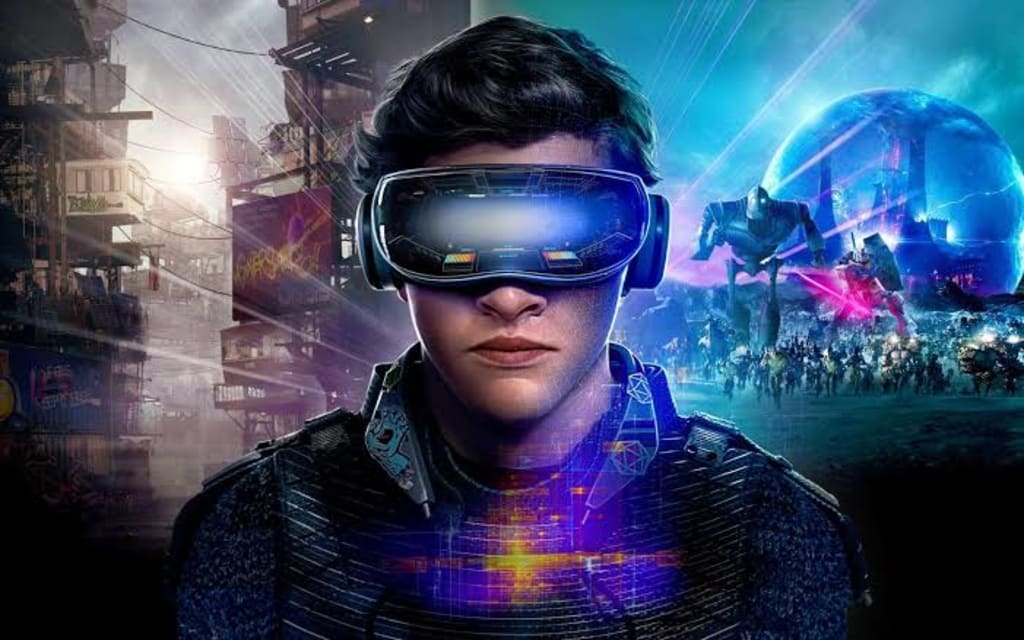
In a world where virtual reality had become the dominant form of entertainment and communication, the lines between the real and virtual worlds were constantly blurred. People spent hours each day plugged into their VR headsets, immersing themselves in a endless array of immersive experiences.
As the technology advanced, people began to spend more and more time in virtual reality, to the point where they rarely left their homes in the real world. They communicated with friends and family through virtual avatars, and even held virtual meetings and events.
The virtual world became a place where anything was possible. People could visit exotic locations, try out new careers, or even live out their wildest fantasies. It was a place where people could be whoever they wanted to be, free from the constraints of their physical bodies.
However, as people became more and more reliant on virtual reality, they began to lose touch with the real world. They became isolated from their physical surroundings and disconnected from the people around them.
There were those who resisted the lure of virtual reality, preferring to live their lives in the real world. They were seen as strange and out of touch, and were often ostracized by society.
One such person was a young woman named Sarah. She had always been wary of virtual reality, and had never plugged into the VR network. She lived a simple life, working as a farmer and spending her days tending to her crops and livestock.
But even Sarah couldn't escape the influence of virtual reality. As more and more people abandoned the real world in favor of the virtual one, the demand for food and other physical goods dwindled. Sarah's farm struggled to stay afloat, and she was forced to turn to virtual reality in order to make ends meet.
At first, Sarah was hesitant to enter the virtual world. But as she plugged into her headset, she was amazed by the endless possibilities it offered. She could visit distant lands and experience things she had never even dreamed of.
But as she spent more and more time in virtual reality, Sarah began to realize that it was not the utopia she had thought it was. She missed the simple pleasures of the real world, and the constant presence of virtual reality was beginning to wear on her.
One day, Sarah made the decision to unplug from virtual reality and return to the real world. It was a difficult adjustment, and she faced many challenges as she reintegrated into society. But she found solace in the beauty of the natural world and the connections she made with other people.
As Sarah looked around at the people plugged into their VR headsets, she couldn't help but wonder what the future held. Would virtual reality eventually consume everything, or would people find a way to balance the virtual and real worlds? Only time would tell.
Despite the challenges she faced, Sarah was determined to find a way to bring balance back to society. She realized that virtual reality had its place, but it couldn't be allowed to consume everything.
Sarah began to speak out about the dangers of excessive virtual reality use, and her message resonated with many people. Slowly but surely, a movement began to emerge, with people from all walks of life joining together to demand change.
The virtual reality companies, seeing their profits threatened, fought back fiercely. They poured money into lobbying efforts and propaganda campaigns, trying to convince people that virtual reality was the future and that those who opposed it were backward and out of touch.
But Sarah and her allies refused to be silenced. They organized protests and boycotts, and used social media to spread their message far and wide. Gradually, public opinion began to shift.
As the movement gained momentum, lawmakers began to take notice. They passed new regulations requiring virtual reality companies to include warning labels on their products, and to limit the amount of time people could spend in virtual reality.
The virtual reality companies fought back, but they were ultimately unsuccessful. People had come to understand the dangers of excessive virtual reality use, and were no longer willing to blindly embrace it.
Sarah's efforts had paid off. People had found a way to balance the virtual and real worlds, and both were thriving as a result.
Sarah, who had once been seen as a strange outlier, was now hailed as a hero. She was invited to speak at conferences and events all around the world, sharing her message of balance and moderation.
And as she looked out at the sea of people in front of her, Sarah knew that she had made a difference. The virtual and real worlds were no longer at odds, but were instead working together to create a better future for all.
About the Creator
Keep reading
More stories from Jomarie Omandam and writers in Futurism and other communities.
The AI Ethical Dilemma
In the not-too-distant future, artificial intelligence had advanced to the point where it was indistinguishable from human consciousness. AI had become a vital part of society, present in everything from self-driving cars to advanced medical devices. Many people had grown accustomed to relying on AI for their daily needs, and it had become an integral part of their lives.
By Jomarie Omandam3 years ago in Futurism
Data Annotation Tools Market: AI Training Demand, Labeled Data Needs & Industry Growth Outlook
According to IMARC Group's latest research publication, global data annotation tools market size reached USD 2.11 Billion in 2024. Looking forward, IMARC Group expects the market to reach USD 12.45 Billion by 2033, exhibiting a growth rate (CAGR) of 20.71% during 2025-2033.
By sujeet. imarcgroup4 days ago in Futurism
Saudi Arabia Used Car Market: Price Sensitivity, Certified Used Cars & Sales Momentum
According to IMARC Group's latest research publication, Saudi Arabia used car market size was valued at USD 10.2 Billion in 2025. The market is projected to reach USD 17.4 Billion by 2034, exhibiting a growth rate (CAGR) of 6.11% during 2026-2034.
By Abhay Rajput4 days ago in Futurism


Comments
There are no comments for this story
Be the first to respond and start the conversation.