space
Space: The Final Frontier. Exploring space developments and theorizing about how humans fit into the universe.
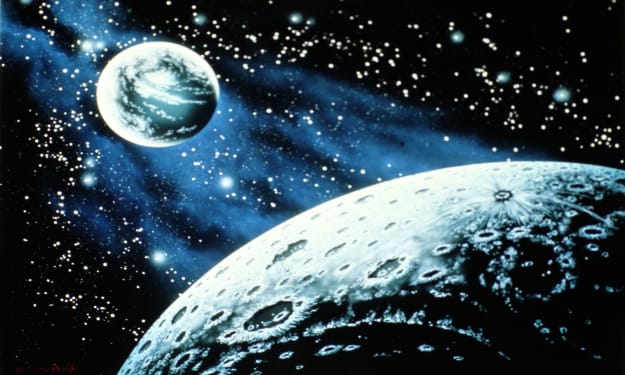
Impact Craters of North America
The time: June 30, 1908. The place: central Siberia, Imperial Russia. A giant meteorite, blindingly incandescent, streaked across the sky and smashed to Earth near the Tunguska River, devastating a roughly circular region nearly 150 kilometers in diameter. Forests were flattened and several herds of reindeer killed. The earth was pitted by cone-shaped craters up to 50 meters across. Ground vibrations from the impact shattered windows scores of kilometers away. Heat seared the bark from trees, and smoke billowed many kilometers into the atmosphere. Shock waves from the blast were "heard" around the world by delicate microbarographs, instruments that measure pulsations in atmospheric pressure set up by very long sound waves.
By Futurism Staff10 years ago in Futurism
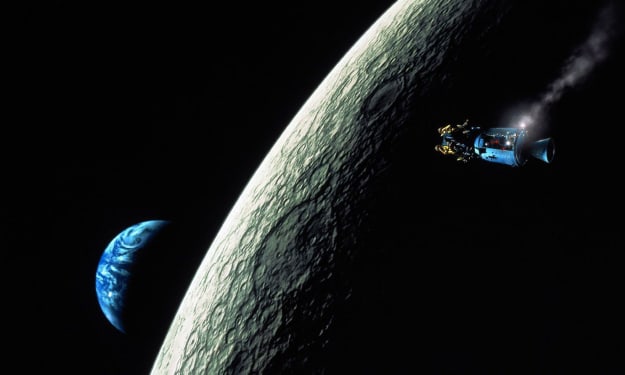
How Apollo 13 Avoided Disaster
Are you superstitious? Would you fly on ship number 13? Jim Lovell, Fred Haise, and Ken Mattingly didn't think the number 13 would be unlucky for them. They had trained for many months to fly the third lunar landing mission, Apollo 13. Lovell and Haise planned to spend 33 hours exploring the surface of the Moon, while Mattingly circled above them in the command module Odyssey. The story of what happened instead is a tribute to the bravery, ingenuity, and teamwork not only of the astronauts themselves, but also of the hundreds of controllers, technicians, and scientists who brought three men safely home from outer space. You can decide whether or not the number 13 was unlucky for them at the end of the story.
By Futurism Staff10 years ago in Futurism
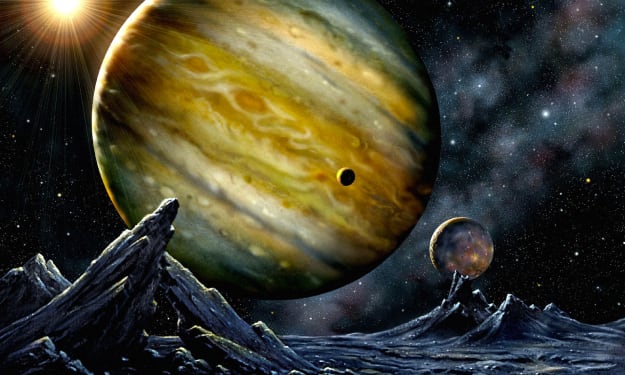
Life on Jupiter
Most people can swim. Even I can, though someone once said unkindly that I give a spirited impression of a baby seal with training flippers. Most animals can also swim, at least passably. And we know that the sea is teeming with life, some of it very intelligent. Dolphins, sea lions, and porpoises are no fools, as we have learned. What, then, are the chances that, somewhere, advanced life forms live in a liquid environment?
By Futurism Staff10 years ago in Futurism
How Accurate is Astrology?
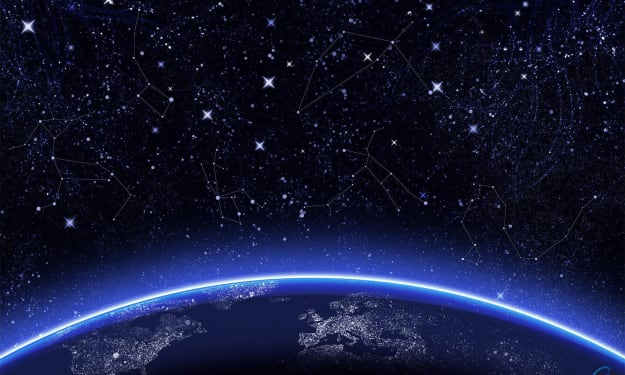
Over the decades, evidence has been accumulating of striking correlations between events in the heavens and events on earth. If astrological "influence" is a fact, it ought to be susceptible to statistical study. With this starting point, a number of early studies were made (the most famous by Jung), some of which appeared to vindicate astrological claims, at least to astrological devotees. Then, in 1950, a young Sorbonne graduate in statistics, Michel Gauquelin, set out to disprove these claims, with unexpected results.
By Futurism Staff10 years ago in Futurism
What is a Meteor Shower?
Thousands of people observe the night sky throughout the year, either as a hobby or for scientific purposes. Meteor showers hold a unique benefit over other types of stargazing—you don't need a telescope. You won't even need binoculars. All you will need is an alarm clock to wake you up at the right time, and a sleeping bag if you plan to camp out. However, simply stepping out into your back yard is enough for most to observe a meteor shower. But exactly what is a meteor shower? What are these natural occurrences that we call "shooting stars" and go out of our way to place wishes on? Learning what you're seeing will make your next stargazing session that much more interesting.
By Futurism Staff10 years ago in Futurism
How to Buy a Telescope
So you want a telescope? You've been reading through astronomy websites, ooing and ahhing at those close-up photos of the moon, planes, star clusters, and galaxies. You're researching the pioneers of astronomy and getting ready to explore the wonders they discovered. And what better way to visit these cosmic wonders than with a nice new telescope!
By Futurism Staff10 years ago in Futurism
Is Life on Mars Possible?
Is it any coincidence that The Martian came to the big screen the same week that NASA discovered water on Mars? Many people believe that this it's too suspicious to be a coincidence. The Martian, released on October 2, 2015, depicts Matt Damon as astronaut ark Watney, who is suspected to be dead after a dangerous storm hits Mars. After being left behind by his crew mates, it is discovered that he had in fact, survived the storm. Left to survive the desolate environment and somehow send a message to Earth that he has survived, Watney faces the challenge of staying alive on an uninhabitable planet. The discovery of water on Mars seems like it could have been created as a publicity stunt to promote the movie. However, the discovery has caused scientists to relish the possibilities of what life on that planet would be like, and to ask "is life on Mars possible?"
By Futurism Staff10 years ago in Futurism
Most Exciting NASA Space Missions
NASA has kept the world on its toes. From Apollo to Chandra to Viking, and all of the space exploration in between, NASA's entire history has been step after giant step for mankind. The organization was established in 1958 by President Dwight D. Eisenhower to encourage peaceful applications in space science. Since then, NASA has led the vast majority of US space missions. Throughout these decades, NASA has launched many an exciting and revolutionary mission, from winning the space race to launching numerous unmanned missions for observational purposes. As man looks from the most exciting NASA space missions and exploration towards colonization, more and more privately held space companies are popping up to complement NASA's work. With Elon Musk's SpaceX releasing the first privately funded, liquid-propellant rocket to reach orbit and working towards enabling people to live on other planets, it seems that the future of space travel may be more privately run than governmental. However, as we move forward, it is important to look back and see how far NASA has brought us with the most exciting NASA space missions.
By Futurism Staff10 years ago in Futurism