space
Space: The Final Frontier. Exploring space developments and theorizing about how humans fit into the universe.
What Happens to Your Body When Exposed to Space?
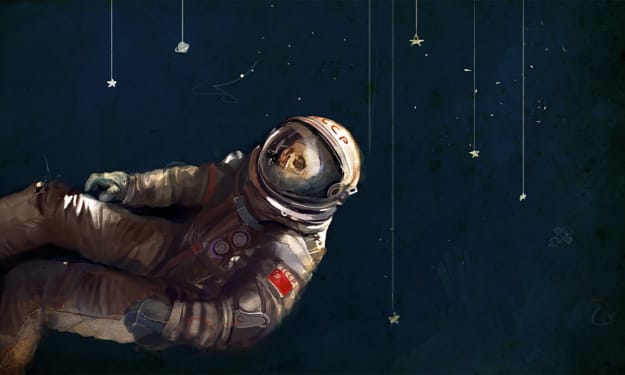
We've all seen that movie: where some unfortunate guy gets sucked out of an airlock and is thrown from his spaceship into unknown space. What is the first thing he does? Struggle to breathe. This is followed by panic, while blood oozes out of his eyeballs and ears. Until finally, his slow death ends, and all we're left with is a frozen corpse. Yuck.
By George Gott9 years ago in Futurism
Creepy Mind-Blowing Theories About the Universe
As children we are constantly questioning everything. Like 'how does that work' or 'where do babies come from?' The questions were endless and since then we’ve been ingrained to ask questions. As we get older, queries become more complex. For most people, one question stands out the most - the meaning of life. This question is more nebulous than just what is the meaning. Before we can even crack the surface of that question we need to answer a vast subset of inquiries first, like: is our reality even real? Why we are here? Are we alone in the universe? How did the universe begin? The answers to these questions, so far, are for the most part theories, but some can be explained by hypothesis and observations. There is much compelling evidence for each idea, but you certainly shouldn’t, for the sake of your sanity, take these theories as gospel. The following is an examination of the most mind-blowing theories about the universe that will make you question your entire existence.
By George Gott9 years ago in Futurism
Science of Auroras
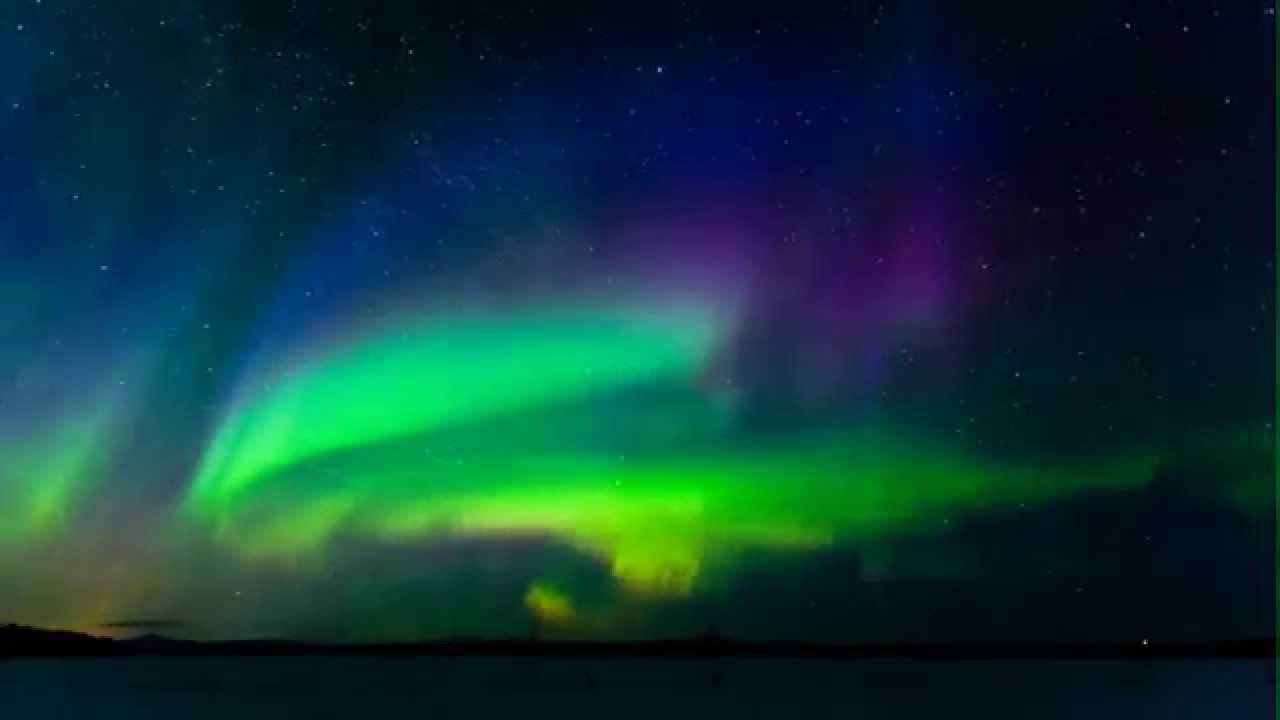
Our atmosphere, the thin membrane that separates Earth from space, is a remarkable geophysical laboratory. In it are synthesized the fascinating colored lights known as auroras, one of nature's most splendid phenomena. Now that the sunspot cycle is reaching its peak, we can expect auroras to light up our night skies with greater frequency.
By George Gott9 years ago in Futurism
Q&A with 'Blue Gemini's' Mike Jenne
The year is 1968: The Cold War is far from over, nuclear annihilation is always only a heartbeat away. America is racing the Soviet Union to land men on the Moon, a war is raging, and a pivotal presidential election looms on the horizon. A child of the early space age, Lieutenant Scott Ourecky joined the Air Force with aspirations of going to flight school. A brilliant engineer, he repeatedly fails the aptitude test to become a pilot but is selected to work on a highly classified military space program—the innocuously named Aerospace Support Project—in which Air Force astronauts are slated to fly missions to intercept and destroy suspect Soviet satellites. When one of the astronauts in training abruptly falls out of the project, Ourecky is asked to fill in for the two-man simulated missions and survival training. Although Ourecky was only a temporary “place holder,” not destined to fly in space, he soon finds himself much more involved than he ever anticipated—and in deepest peril.
By Natasha Sydor9 years ago in Futurism
History of the Space Shuttle Columbia
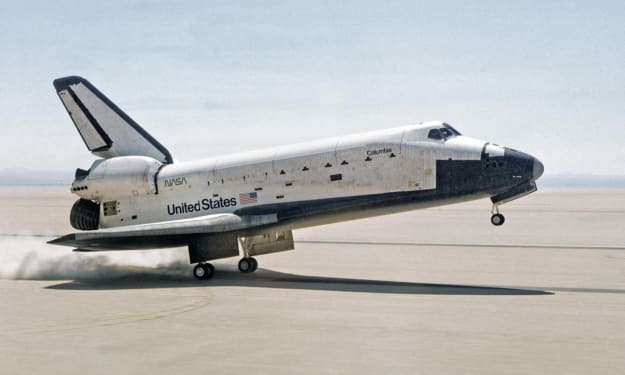
"That's one small step for man, one giant leap for mankind." Those were the memorable words spoken by astronaut Neil Armstrong. From Neil Armstrong's first steps on the Moon to the discovery of water on Mars, space exploration is no longer science fiction. It has been many decades since Space Shuttle Columbia took off for its fifth mission into space. On November 11, 1982, STS-5 successfully took off following the success of the first four test flights. It then executed a triumphant landing after spending five days, two hours, 14 minutes and 26 seconds in orbit.
By Futurism Staff9 years ago in Futurism
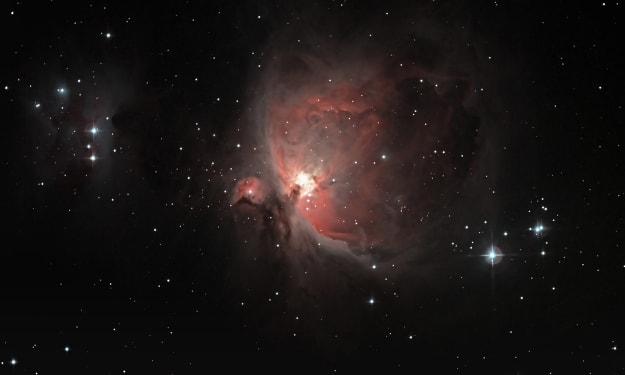
Orion's Great Nebula M42
M42, the Great Orion Nebula, also called Messier 42 is a diffuse nebula that is located in the Milky Way in the constellation Orion. Situated in the sword of the greek mythological hunter, it is so bright it is able to be seen with the naked eye on clear nights. Additionally, it is the closest region of the sky to earth where most stars are born. Scientists have noted that M42 has a mass of approximately 2000 times the mass of the sun.
By Futurism Staff9 years ago in Futurism
Freeman Dyson's Vision of the Future
Professor Freeman J. Dyson has been discussing mind-boggling concepts in a calm, matter-of-fact, one-should-expect way since 1956. 'One should expect that within a few thousand years of its entering the stage of industrial development, any intelligent species should be found occupying an artificial biosphere which completely surrounds its parent star.' It is his hobby he says disarmingly, something that grew up alongside his career as one of the finest mathematical physicists of the last century. To his former colleagues at Princeton's Institute for Advanced Studies, Dyson was known for his understanding of what goes on in the core of a star or in the interaction of high-energy beams of subnuclear particles—contributions that earned him the American Institute of Physics' Heineman Prize and the Royal Society's Hughes Medal.
By George Gott9 years ago in Futurism
Greatest Space Opera Books of All Time
The space opera has become a staple sub-genre of science fiction. Funnily enough, like all things unusual, the term 'space opera' began as a mockery. The term referred to them being typical, dramatic 'soap operas' with the added specialty of having some 'spaceship yarn' woven into the uninspiring plot. However, this sub-genre has now evolved into something much bigger and has produced some true masterpieces. For this list, we will be considering 'space opera' as a work of science fiction with the bonus of occurring or relating to space. So sit back, fasten your seatbelts, and get ready to be blown away by this unique spatial ride with our list of the greatest space opera books of all time.
By Emily McCay9 years ago in Futurism
Gods Live Among The Stars
Many years ago, the human race began to receive invitations that hailed from planets millions of miles distant. They arrived one by one, each inducing an ever-higher state of human exultation, and all were individual marvels of art and science.
By Ellie Snyder9 years ago in Futurism
What Are Dwarf Planets?
In the Kuiper belt in the outer solar system alone, it is estimated that there could be 200 dwarf planets, as well as anywhere up to 10,000 beyond that. And with so many celestial objects just waiting to be discovered, we can't help but wonder what are dwarf planets?
By Lindsie Polhemus9 years ago in Futurism