literature
Science fiction's most popular literary writers from Isaac Asimov to Stephen King and Frank Herbert, and the rising stars of today.
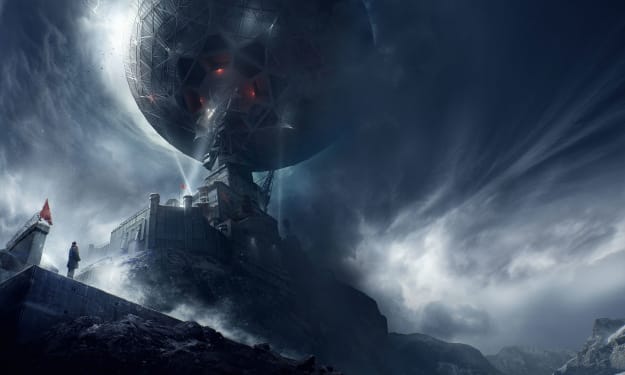
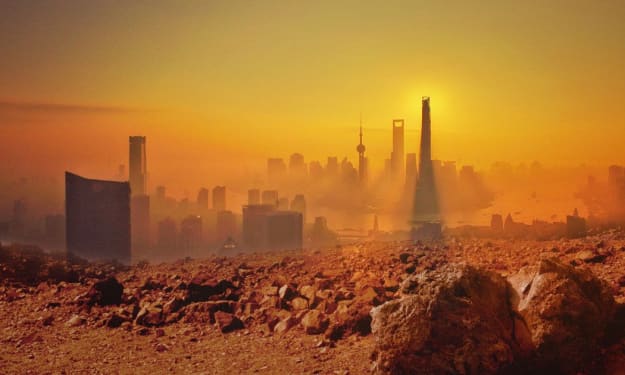
Liu Cixin’s 'The Three-Body Problem'
Liu Cixin’s The Three-Body trilogy became one of the most popular science fiction series in China rapidly after its publication. Starting in 2015, English-speaking audiences were finally given the opportunity to see what China had been buzzing about since 2008, when Tor Books published an English translation of the series. The Three-Body Problem is a promising start to a science fiction series: A brilliant plot unfolds against a tightly composed background that binds together physics, philosophy, and history. It is a novel that takes time to read because the philosophical positions of each character have to be carefully considered. The back and forth between the book’s factions shows that the author carefully considered the pressing issues at hand: humanity's place in the world, the value of human civilization, and the repercussions of extraterrestrial contact. The lively translation accomplished by Ken Liu in the English version brings all these elements to life on the page for English-speaking audiences.
By Michael Gold10 years ago in Futurism
Best Hard Sci-Fi Books
Fans of the sci-fi genre have been known to be… picky. Sure, we want our trail mix of starships, androids, cleverly disguised social commentary, “big thought-provoking ideas,” and snappy banter from severely conflicted cyborg characters. We also want, somewhere in the middle, an enormous, spacey McGuffin to keep the plot moving at warp speed. But all that’s a given; That’s the minimum essential goods. What most discerning fans demand is a level of authenticity; We want to know exactly “how” that tractor beam works, “how” that near-light speed engine runs, “how” that police telephone booth is really bigger on the inside. In other words, we want an author who knows what they’re talking about when it comes to the techy stuff—even if that stuff is totally imaginary! And not just Wookiepedia-level knowledge, either. Basically we want a genuine physicist like Michio Kaku whispering into the writer’s ear, telling them how all this stuff could, theoretically, work. Hard sci-fi answers these questions with its emphasis on technical accuracy and scientific detail.
By Matt Cates10 years ago in Futurism
Most Terrifying Sci-Fi Books
Peanut butter and jelly. Hot rods and bikinis. Sci-fi and horror. Some things are meant to go together! Yet, while most of us are all too familiar with our two favorite genres mixing it up in motion pictures, it’s often under appreciated how well these types blend in book form. Together, we can correct that fault, by cherry-picking a few classics, blowing off the binary dust which has shamefully accumulated upon these wizened tomes, and gearing up to get our wits scared out of us!
By Matt Cates10 years ago in Futurism
Arthur C. Clarke Interview
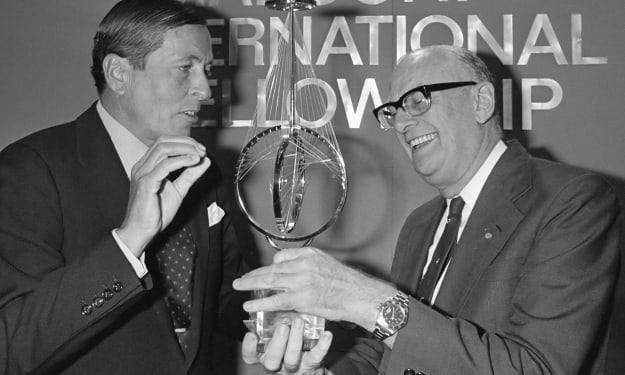
In 1945, a young English technical officer, who had spent World War II helping to develop radar systems for the Royal Air Force, published a remarkably prescient article in the British journal Wireless World. The article showed, in detail, how artificial satellites could be used to relay electronic communications around the world. The writer was Arthur C. Clarke.
By Futurism Staff10 years ago in Futurism
Stargate's Pauline Gedge
"Ixelion stepped under the archway of his Gate, the box clutched tightly in his hand, and the guards with their silver wands and stiff capes of scales greeted him with soft, deferential voices." So begins Pauline Gedge's unparalleled exploration of the creators of the universe in 1982's Stargate. At the dawn of time, the universe is overseen by the Worldmaker, who rules over each sun lord in the solar systems of his creation. Until, ruled by unexpected malice, he becomes the Unmaker.
By Natasha Sydor10 years ago in Futurism
Greatest Sci-Fi Protagonists
The literary multiverse has no shortage of would-be “heroes,” to use the term quite loosely. And when it comes to the wild and wooly genre of science fiction, it is practically a given that every story will feature some form of hero, antihero, or hero by default. Indeed, due to the flexibility of the genre, they literally come in all shapes, sizes, color, and species. Some are born of intergalactic royal blood; Others are constructed in cold laboratories out of wires, circuits, and steel. We’re going to attempt to pin down a list of the most compelling, original, and impactful protagonists the sci-fi world has ever known! Some you’ll see coming a light year away; others, hopefully, not so much… for where’s the fun in reading a list of names you already know? Enjoy!
By Matt Cates10 years ago in Futurism
Best Conspiracy Theory Books
In the age of whistleblowers, your world can come crumbling down in a second, but as the saying goes "the truth will set you free." Wouldn't you want to know the truth? And do you fully trust government? Now is the time to throw out what you’ve learned in school regarding what the world is and how it works. There are forces in the world that seem beyond comprehension, but there is always something worth understanding in everything that seems unexplainable. And from that grain of the unexplainable, a conspiracy theory is born. The Oxford English Dictionary defines conspiracy theory as "the theory that an event or phenomenon occurs as a result of a conspiracy between interested parties; spec. a belief that some covert but influential agency (typically political in motivation and oppressive in intent) is responsible for an unexplained event." We’ve compiled a list of the best conspiracy theory books that provide you with a stripped-down, objective, eye-opening view on a variety of conspiracy theories. It is up to you to decide, based on logic and evidence, what the truth really is.
By George Gott10 years ago in Futurism
Best Philosophically Driven Sci-Fi Books
The liberty to set a story anywhere, in any time period, and in any of our infinite realities gives sci-fi an uncanny power to reshape, or at least cause us to re-examine, our perception of the world. These brilliant authors can take the bare bones of a story, flesh it out with compelling characters and unique settings, and weave a plot whose pattern delights readers; but then go further.
By Jake Burgess10 years ago in Futurism
Jim Burns Interview
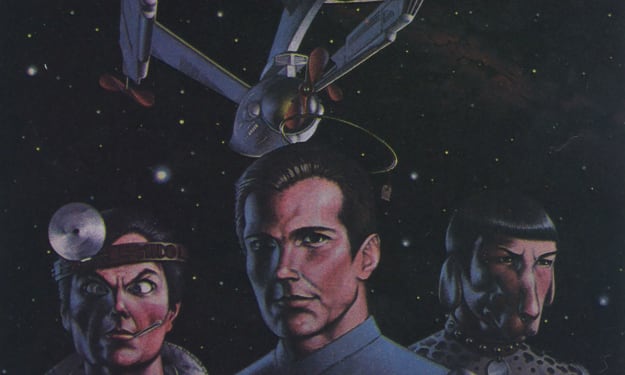
Science fiction cover artist Jim Burns is regarded as one of the Grand Masters of his craft. By utilizing clean lines, unique color work, and excellent composition, Burns’s work often exhibits intricate photo-realistic displays of advanced machines and detailed spaceships. Using primarily acrylics, and occasionally oils, Burns’s ability to take mundane objects and transform them into something otherworldly is nothing short of spectacular.
By Natasha Sydor10 years ago in Futurism
Ray Bradbury Interview
Ray Bradbury worked and wrote in a two-room office on Wilshire Boulevard in downtown Los Angeles. The rooms exploded with yellow brightness, and a visitor leaving the uproar of the street below might have felt that he had somehow walked into the middle of the sun. A gigantic, 15' high, stuffed Bullwinkle sat in the outer room, covered with hats and comic-book clippings, child's drawings and baseball cards. It set the tone for the man it served. "The problem with so many of the modern American writers," said Bradbury, "is that they exist in a world without children. I don’t believe they were ever young."
By Futurism Staff10 years ago in Futurism