humanity
The evolution of humanity, from one advancement to the next.
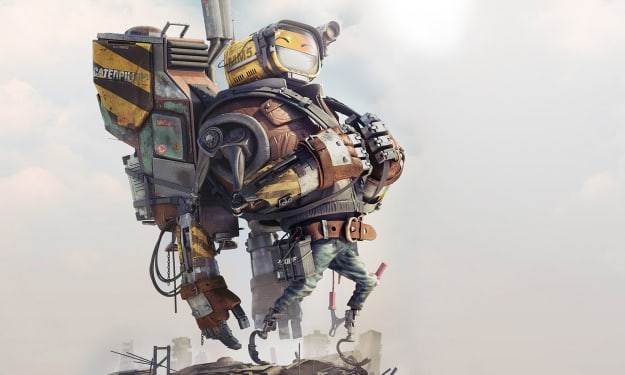
Robots Imitate Life
If you've been to an office, you probably know what a drop-ceiling is. It's the grid of whitish tiles in which light fixtures and ventilator grates are set. If you stand on a desk and push one of the rectangular tiles out of its frame, you can stick your head into the space above it and see your office building as it really is: air ducts and electrical cables, concrete beams and sprinkler pipes. When you lift the ceiling tile, you might feel a sensation of trespass as the secrecy above escapes into the office below. Once you know about the space above the ceiling, no office ever looks quite the same. Everything about an office looks strange when 30 percent of the building has to be hidden in order to make the other 70 look normal.
By George Lazenby10 years ago in Futurism
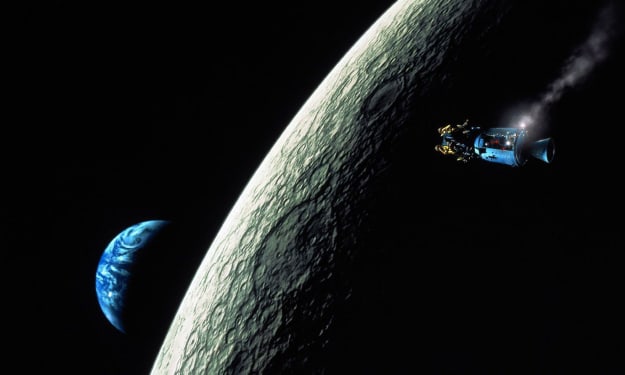
How Apollo 13 Avoided Disaster
Are you superstitious? Would you fly on ship number 13? Jim Lovell, Fred Haise, and Ken Mattingly didn't think the number 13 would be unlucky for them. They had trained for many months to fly the third lunar landing mission, Apollo 13. Lovell and Haise planned to spend 33 hours exploring the surface of the Moon, while Mattingly circled above them in the command module Odyssey. The story of what happened instead is a tribute to the bravery, ingenuity, and teamwork not only of the astronauts themselves, but also of the hundreds of controllers, technicians, and scientists who brought three men safely home from outer space. You can decide whether or not the number 13 was unlucky for them at the end of the story.
By Futurism Staff10 years ago in Futurism
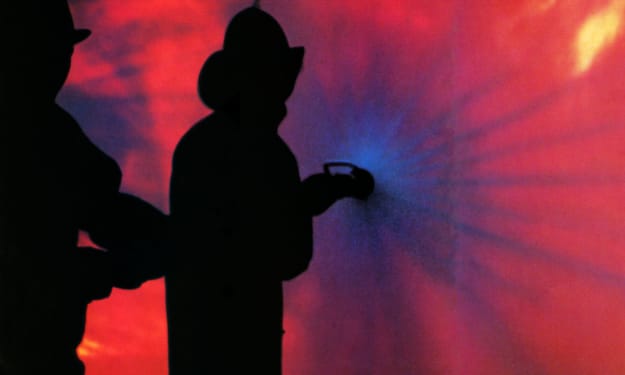
Fire Fighting Ice
On a cold Christmas Day a long time ago, a five-alarm fire at 2724 Heath Avenue, in the Bronx, New York City, raged out of control for more than five hours before firefighters were able to subdue the flames. Firemen arriving at the scene found hydrants locked solidly with ice and were forced to use 750-gallon pumpers. While the firemen attempted to unfreeze pumper spigots with acetylene torches, flames raced through the cockloft of the six-story white-brick building and spilled from the windows on the upper floor. Firefighters battled the flames from fire escapes on the face of the building, but intense heat drove them off the ice-coated metal stairways. From the street below, Fire Commissioner Charles Hynes watched as the icy spray from water cannons pelted the street with golf-ball-size hail. "These were the most difficult circumstances under which we had to operate," he said, referring to the arctic weather and the immense volume of water needed to extinguish the blaze. "If it had been summer, it would have been a one-alarm, easy," said a department spokesman.
By Izzy Erlich10 years ago in Futurism
Asimovian Robotonomics
The following article was originally published on The Free Advice Man's website here. Asimovian Robotonomics is a Comprehensive Economic System, backed by specific laws, based on the highest ethical standards, in which Robots, and other Human-Labor-Replacing or Augmenting Technologies, such as Automated Machinery, Computers, and other Advanced Machines, perform mundane (tedious, boring) and/or potentially dangerous, unhealthy, but essential work that Human Labor would otherwise have done without causing harm to the Socio-Economic and Financial welfare of those persons who are rendered work-wise redundant, non-essential, or less required. It is named after Isaac Asimov, the World Renowned Famous late Grandmaster of Sci-Fi and Science Author who was also a champion of Advanced Human Thinking and Social Progress.
By Jean-Pierre Fenyo10 years ago in Futurism
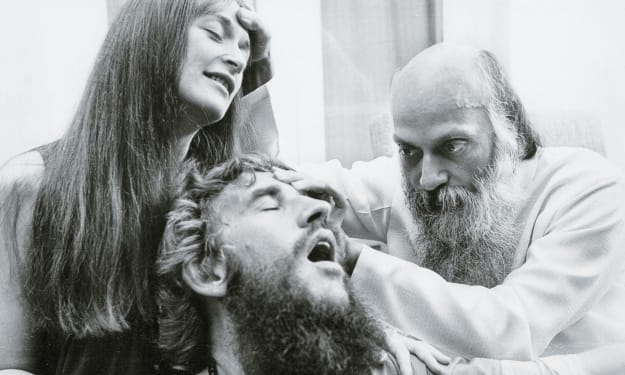
What Everyone Should Know About Osho
The entry ticket to the Osho Commune International in Poona, India, is a hospital certificate stating that your blood has tested negative for the AIDS virus within the past month. If you haven't brought a certificate with you to India, you submit to the needle at the local hospital. After picking up the form a few hours later, you walk several blocks to the commune through the crowded, dusty, diesel smelling streets of the city, which is located about 120 miles southeast of Bombay. You enter the commune through a gate manned by robed guards. Past that point, you are surrounded by an 11-acre Edenic world that's designed to defeat death.
By Futurism Staff10 years ago in Futurism
Mysticism Guide
In the West, we choose between countless different brands and models of automobile and canned string bean; Now, with the blooming of eastern mysticism in our midst, we must shop among a vast proliferation of ways to heaven, a chaotic spiritual supermarket where no consumer commission sets guidelines. Mysticism, older than science or logic, offers umpteen intuitive and direct ways to happiness and wisdom. Don't be a careless shopper. Can you really afford the tens of thousands of dollars it might take to be saved by Scientology? Have you considered the hardships Mel Lyman's Karma Squad might impose on you? Are you aware, in short, of just what's cooking in your favored cult? In this article, the major cults and sects active today are outlined, along with a handy guide to costs, survival-potential, guru-biographies, and what to expect for your mind and body. Welcome to the wonderful world of mysticism.
By Futurism Staff10 years ago in Futurism
Evolution of Cults
The decline of secret "orders" like the Masons has been balanced by new and weirder quasi-religious sects, which intrigue science-surfeited youngsters with obscure philosophies. The 60s brought with it hippies saying it was the Worst of Times. Respond to the polluted air and the putrid rivers and the unsafe streets by leaving the cities altogether, they said. Dance in tune with nature out beyond cemented-over civilization to find your authentic self. Most of us are not about to take that step, yet we have embraced their entire array of neo-religions, para-religions, pseudo-religions. In a word, cults.
By Futurism Staff10 years ago in Futurism
Tucson's Biosphere 2 Lessons
The human brain has spawned a parallel universe of imagined lifeforms, landmarks, and civilizations. Though usually conceived of as fiction, this parallel universe often leaks into various Earth systems. Robot explorers, genetically engineered animals, artificial intelligence, international space stations—these are, before anything else, the products of our imagination. They are what happens when an organism is capable of asking itself: What does the future look like? The Biosphere 2 in Tucson, Arizona is a totemic example of how such fantasies can carry over into reality.
By Megan May Daalder10 years ago in Futurism
Economics Vs Environmental Crisis
From our wildlife being taken over to our greenhouse gases being at an all-time high, environmental crisis is forcing us to ask what, how, and why. Throughout history, there have been recurring battles between man and nature in every century, from nature versus big corporations to growth versus quality of life. In each battle, each opposing side struggles to regain control of the situation at hand. But what they really should be addressing is: When have we gone too far?
By Kenneth Brower10 years ago in Futurism
Science Needs Unreasonable Leaps
An abiding fascination of science is its propulsive creativity and unreasonable leaps. Why does the occasional lone genius succeed where a lavishly funded, mission-oriented project has failed? Even odder, why should Alexander Fleming, half a century ago, have made his mightily significant discovery of penicillin—yet leave its consummation to Howard Florey and Ernst Chain more than 10 years later? Often it requires great risk for scientists to make great strides.
By Bernard Dixon10 years ago in Futurism