how to
How to create science fiction and technology projects in a simplistic, easy manner.
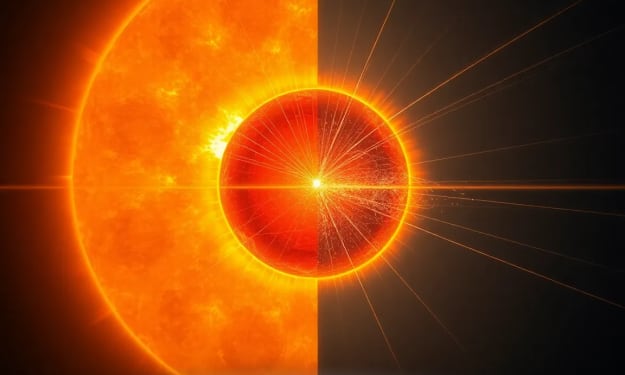
The Journey of Light: How a Photon Travels from the Heart of the Sun to Your Window
Every morning, when sunlight streams through your window, it feels instant and effortless. The room brightens, shadows retreat, and a new day begins. But behind that familiar beam of light lies one of the most extraordinary journeys in the universe a journey that takes tens of thousands, sometimes even millions of years to complete.
By Holianyk Ihor8 months ago in Futurism
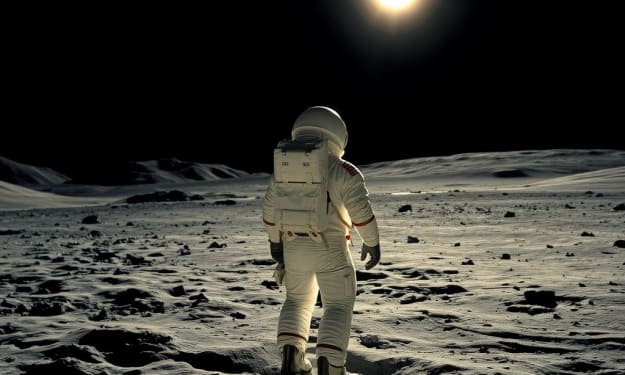
Why Your Shadow on the Moon Will Be the Strangest One of Your Life
Imagine standing on the Moon’s dusty, gray surface, suited up in your bulky spacesuit, surrounded by absolute silence. Above you, a pitch-black sky stretches out endlessly. The Sun blazes down, not through a blue sky, but in raw, direct brilliance. You take a step and suddenly notice your shadow. But it’s… bizarre. Unlike anything you’ve ever seen on Earth.
By Holianyk Ihor8 months ago in Futurism
How Do You Qualify for a Real ESA Letter in California
To qualify for an Emotional Support Animal (ESA) letter in California, you must be diagnosed with a mental or emotional health condition that substantially limits your ability to perform daily life activities. This diagnosis must be made by a licensed mental health professional (LMHP) who is legally authorized to practice in California. The professional will evaluate whether an emotional support animal can alleviate your symptoms, and if so, issue a legitimate ESA letter as part of your treatment plan. This letter is essential if you wish to live with your animal in no-pet housing under protections provided by the federal Fair Housing Act (FHA) and California’s state-specific ESA laws under AB 468. However, California imposes stricter requirements than most states. For example, therapists must have an established therapeutic relationship with the client for at least 30 days before writing an ESA letter. Instant or same-day ESA letters without a real clinical connection are not valid under California law.
By Shane Jackson8 months ago in Futurism
What If Earth Is the Only Habitable Planet?
Loneliness Among the Stars and the Uniqueness of Our Blue World When we gaze into the night sky, the stars seem endless millions of tiny lights twinkling like cosmic invitations. Each one is a distant sun, many with planets orbiting them. In recent decades, astronomers have discovered thousands of exoplanets, and quite a few lie in the so-called "habitable zone" the not-too-hot, not-too-cold region where liquid water could exist.
By Holianyk Ihor8 months ago in Futurism
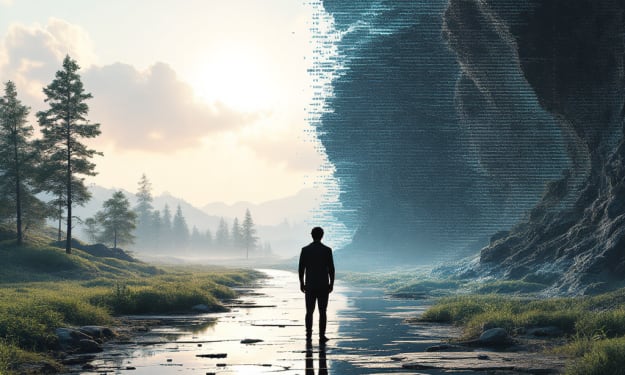
The Simulation Hypothesis: Are We Living in the Matrix?
What if everything around you every sound, sensation, and memory is part of a sophisticated computer program? Once considered the domain of science fiction, the idea that our universe might be a virtual simulation is now seriously discussed by philosophers, physicists, and computer scientists. What was once the premise of a blockbuster film like The Matrix has grown into one of the most provocative theories of our time. But what exactly is the simulation hypothesis, and why are so many brilliant minds taking it seriously?
By Holianyk Ihor8 months ago in Futurism
Why Are Stars Different Colors? What Their Light Reveals About Them
When we gaze at the night sky, it often looks like a sea of tiny white lights scattered across the darkness. But if you take a closer look especially through a telescope you'll notice that not all stars shine the same. Some glow a deep red, others shine gold or yellow, and some dazzle with an icy blue brilliance. Why are stars different colors, and what can their light tell us about them?
By Holianyk Ihor8 months ago in Futurism
The Instruments of Astronomy: Tools That Let Us See the Invisible Universe
When we look up at the night sky, the stars seem like distant, unreachable specks of light beautiful but untouchable. But for astronomers, the cosmos is much more than a glittering ceiling. Thanks to powerful instruments and cutting-edge technology, scientists can now peer into the darkest corners of the Universe, watch stars being born, study planets far beyond our solar system, and even detect the ripples of spacetime itself. So, what are the tools that make this incredible exploration possible? Let’s dive into the fascinating world of astronomical instruments.
By Holianyk Ihor8 months ago in Futurism
I Used To Just Go For A Walk, Now I Get Worried If I Don't Hit My 10K Steps A Day
Introduction The quote: "I used to just go for a walk, now I get worried if I don't hit my 10K steps a day" is from Matt Haig, I don't know if it was a one off or from one of his books but I was reminded of it in the Seven Days In post from 2019:
By Mike Singleton 💜 Mikeydred 8 months ago in Futurism
Where Does Space End? Mysteries at the Edge of the Universe
When we gaze into the night sky, it feels like it stretches on forever. Countless stars, distant galaxies, and invisible black holes draw our eyes farther and farther into the abyss. But one question, both thrilling and philosophical, lingers in the back of many minds: where does space end? Does the universe have a boundary? And if so, what lies beyond it?
By Holianyk Ihor8 months ago in Futurism
The Theory of Cosmic Mind: Could the Universe Be Conscious?
At the intersection of science and philosophy lies one of the most provocative and enigmatic ideas of our time the theory of the Cosmic Mind. It suggests that the universe is not merely a mechanical system governed by physical laws, but something far more complex perhaps even conscious, purposeful, or self-aware. While it may sound like science fiction, this theory draws from deep philosophical roots and modern interpretations of consciousness and reality.
By Holianyk Ihor8 months ago in Futurism
Planets Without Sunlight: The Mystery of the Wandering Worlds
When we imagine planets, we typically picture them orbiting a bright star, basking in the warmth of sunlight just like Earth. The star provides light, energy, and the gravitational anchor that keeps planets in their stable orbits. But what if we told you that not all planets play by these rules? Somewhere out there, drifting alone in the vast cold darkness of space, are planets with no sun at all. These are known as rogue planets mysterious, starless worlds lost in the cosmic night.
By Holianyk Ihor8 months ago in Futurism