how to
How to create science fiction and technology projects in a simplistic, easy manner.
What Happens Inside a Meteor During Its Fall to Earth?
Every time we see a bright streak across the night sky a meteor blazing through the atmosphere we’re witnessing a truly cosmic event. But have you ever wondered what’s happening inside that fiery object during those dramatic seconds of descent? A meteor is not just a rock falling from the sky. It’s undergoing a violent transformation, both physically and chemically. Let’s take a journey into its core and uncover the incredible events unfolding within.
By Holianyk Ihor7 months ago in Futurism
When the Moon Was Closer: What the Sky Looked Like Millions of Years Ago
Imagine looking up at the night sky hundreds of millions of years ago. The stars were still there, the Milky Way still stretched like a luminous river across the heavens but the Moon? It was a very different sight. Back then, it loomed much larger and brighter in the sky, dominating the night with an intensity we can barely imagine today. Its gravitational pull stirred the seas with incredible force, shaping coastlines and perhaps even influencing the origins of life itself. But how close was the Moon, and what did the world look like beneath its powerful glow?
By Holianyk Ihor7 months ago in Futurism
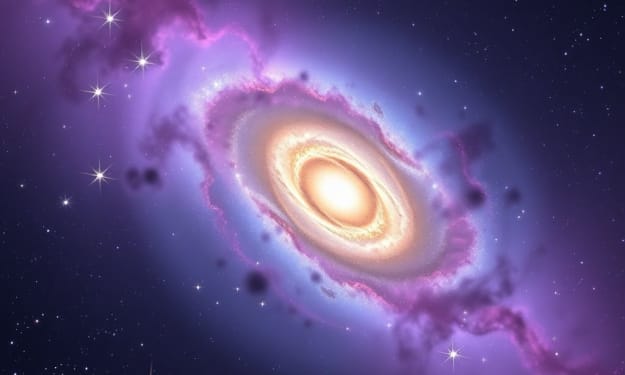
What’s the Difference Between a Galaxy and a Nebula?
Understanding Cosmic Scale One Cloud at a Time When we gaze at the night sky or marvel at breathtaking telescope images, we often see dazzling spirals, glowing patches, or soft, misty shapes floating in the dark. Some of these spectacular sights are galaxies, while others are nebulae. At a glance, they might seem similar both beautiful, both mysterious but they’re fundamentally different in size, structure, and purpose in the grand architecture of the universe.
By Holianyk Ihor7 months ago in Futurism
When Did the First Star Light Up the Universe?
A Journey Into the Darkness Before the Dawn When we look up at the night sky today, we're greeted by the soft shimmer of countless stars from brilliant giants to dim, fading embers. Every star we see is a blazing sphere of plasma, burning hydrogen and illuminating the cosmos. But believe it or not, there was a time when the entire Universe was completely dark. No stars, no galaxies, no light. Just vast, empty space. So, when did the very first star ignite and bring light to the cosmos?
By Holianyk Ihor7 months ago in Futurism
Ambient AI and the Collapse of First-Person Truth
Three months ago, Sarah Chen discovered her smart glasses had been recording a private conversation with her business partner one that, when processed through ambient AI interpretation, painted her as the aggressor in what was actually a heated but collaborative brainstorming session. The AI's summary, complete with emotional sentiment analysis and "conflict probability scores," had already been archived in her corporate wellness profile.
By Prince Esien7 months ago in Futurism
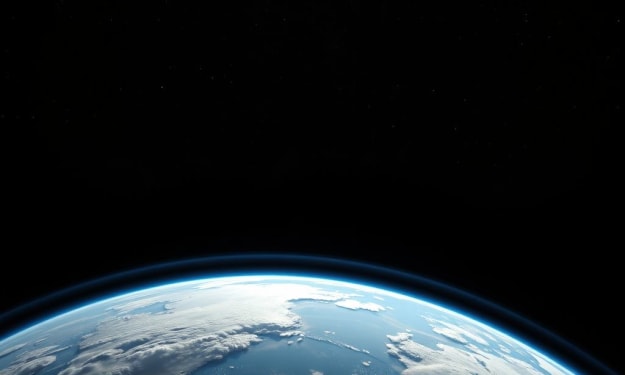
When Did Humans First See Earth from Space?
A moment in history that forever changed our perception of the world For most of human history, our understanding of Earth was limited to what we could see from its surface. We mapped coastlines, climbed mountains, and gazed at the stars but no one truly knew what our planet looked like in its entirety. That all changed in one extraordinary moment: the day a human first looked down at Earth from the depths of space.
By Holianyk Ihor7 months ago in Futurism
How Do Solar Sails Work?
Spacecraft Propelled by Light Imagine a spaceship gliding silently through the vast emptiness of space no engine roar, no fuel tanks, and no trail of smoke behind it. Instead of being pushed by burning fuel, it sails gracefully on beams of sunlight. This isn’t science fiction; it’s a real and promising method of space travel known as solar sailing.
By Holianyk Ihor7 months ago in Futurism
Could a Planet Be Completely Transparent?
Science Fiction or Physics of the Future? Imagine a planet so clear you could see stars through it a giant glass sphere floating in the depths of space. No clouds, no crust, no shadows of mountains or valleys. Just pure transparency, as if Jupiter were made of crystal. Is this a wild flight of science fiction, or could such a world actually exist?
By Holianyk Ihor7 months ago in Futurism
Could Earth One Day Lose Its Atmosphere?
A Journey Into the Planet’s Possible Future The Earth’s atmosphere is a delicate yet vital layer of gases that wraps around our planet like a protective blanket. It gives us the oxygen we breathe, shields us from harmful solar radiation, and traps just enough heat to keep the climate livable. But is this shield eternal? Could Earth someday lose its atmosphere and turn into a barren world like Mars?
By Holianyk Ihor7 months ago in Futurism
AI Is Already Replacing Tech Jobs
It is no longer a futuristic headline. Artificial intelligence is not only transforming how we work but is now actively replacing certain roles in the tech industry. From software development to customer support and even content generation, AI systems are increasingly handling tasks that were once considered too complex for machines.
By Rupa Pathak7 months ago in Futurism
Beyond Spreadsheets: How Custom Platforms Help Finance Firms Avoid Compliance Pitfalls
Spreadsheets have long served as the foundation of the financial sector, supporting everything from client tracking to compliance monitoring across both small advisory firms and large wealth management companies. However, as the industry evolves with stricter regulations, expanding teams, and a growing need for real-time collaboration, the limitations of relying solely on spreadsheets are becoming evident. This article examines why many financial institutions are moving away from spreadsheets and how custom software for managing finances enables smarter, more secure, and scalable operations.
By Sergey Laptick7 months ago in Futurism