habitat
The natural home and environment for all things sci fi, including future homes and territories.
What Happens Inside a Meteor During Its Fall to Earth?
Every time we see a bright streak across the night sky a meteor blazing through the atmosphere we’re witnessing a truly cosmic event. But have you ever wondered what’s happening inside that fiery object during those dramatic seconds of descent? A meteor is not just a rock falling from the sky. It’s undergoing a violent transformation, both physically and chemically. Let’s take a journey into its core and uncover the incredible events unfolding within.
By Holianyk Ihor7 months ago in Futurism
When the Moon Was Closer: What the Sky Looked Like Millions of Years Ago
Imagine looking up at the night sky hundreds of millions of years ago. The stars were still there, the Milky Way still stretched like a luminous river across the heavens but the Moon? It was a very different sight. Back then, it loomed much larger and brighter in the sky, dominating the night with an intensity we can barely imagine today. Its gravitational pull stirred the seas with incredible force, shaping coastlines and perhaps even influencing the origins of life itself. But how close was the Moon, and what did the world look like beneath its powerful glow?
By Holianyk Ihor7 months ago in Futurism
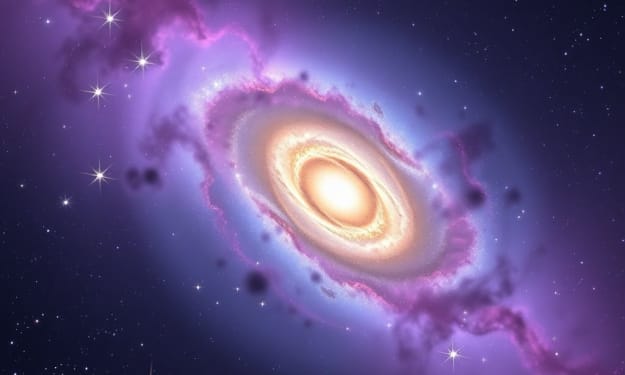
What’s the Difference Between a Galaxy and a Nebula?
Understanding Cosmic Scale One Cloud at a Time When we gaze at the night sky or marvel at breathtaking telescope images, we often see dazzling spirals, glowing patches, or soft, misty shapes floating in the dark. Some of these spectacular sights are galaxies, while others are nebulae. At a glance, they might seem similar both beautiful, both mysterious but they’re fundamentally different in size, structure, and purpose in the grand architecture of the universe.
By Holianyk Ihor7 months ago in Futurism
When Did the First Star Light Up the Universe?
A Journey Into the Darkness Before the Dawn When we look up at the night sky today, we're greeted by the soft shimmer of countless stars from brilliant giants to dim, fading embers. Every star we see is a blazing sphere of plasma, burning hydrogen and illuminating the cosmos. But believe it or not, there was a time when the entire Universe was completely dark. No stars, no galaxies, no light. Just vast, empty space. So, when did the very first star ignite and bring light to the cosmos?
By Holianyk Ihor7 months ago in Futurism
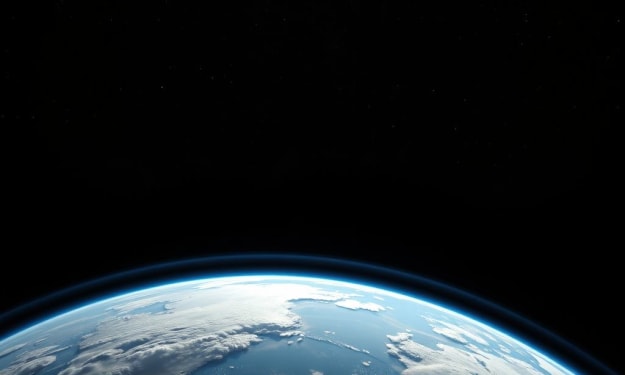
When Did Humans First See Earth from Space?
A moment in history that forever changed our perception of the world For most of human history, our understanding of Earth was limited to what we could see from its surface. We mapped coastlines, climbed mountains, and gazed at the stars but no one truly knew what our planet looked like in its entirety. That all changed in one extraordinary moment: the day a human first looked down at Earth from the depths of space.
By Holianyk Ihor7 months ago in Futurism
How Do Solar Sails Work?
Spacecraft Propelled by Light Imagine a spaceship gliding silently through the vast emptiness of space no engine roar, no fuel tanks, and no trail of smoke behind it. Instead of being pushed by burning fuel, it sails gracefully on beams of sunlight. This isn’t science fiction; it’s a real and promising method of space travel known as solar sailing.
By Holianyk Ihor7 months ago in Futurism
Could a Planet Be Completely Transparent?
Science Fiction or Physics of the Future? Imagine a planet so clear you could see stars through it a giant glass sphere floating in the depths of space. No clouds, no crust, no shadows of mountains or valleys. Just pure transparency, as if Jupiter were made of crystal. Is this a wild flight of science fiction, or could such a world actually exist?
By Holianyk Ihor7 months ago in Futurism
Could Earth One Day Lose Its Atmosphere?
A Journey Into the Planet’s Possible Future The Earth’s atmosphere is a delicate yet vital layer of gases that wraps around our planet like a protective blanket. It gives us the oxygen we breathe, shields us from harmful solar radiation, and traps just enough heat to keep the climate livable. But is this shield eternal? Could Earth someday lose its atmosphere and turn into a barren world like Mars?
By Holianyk Ihor7 months ago in Futurism
The Art of Illusion: When Fire Meets Magic in the Palm of a Hand
In the mesmerizing image above, a delicate balance of danger and wonder is captured. A hand extends outward, fingers curled as though summoning a force unseen, while four aces hover mid-air—engulfed in flames and trailing smoke as if plucked from a magician’s wildest dream. This photograph doesn’t just depict a moment; it evokes an entire narrative, one that dances between illusion, control, chaos, and the elemental essence of fire. It stands at the intersection of art, magic, and metaphor.
By Fazal Malik7 months ago in Futurism
Revolution in His Eyes: The Timeless Symbolism of a Rebel’s Roar
Introduction In the heart of any revolution lies not just the chaos of conflict, but the fire of human willpower. Captured in the image above is a powerful moment that encapsulates that spirit: a man mid-battle cry, gun in hand, passion etched into every line of his face. His clothes are rugged, his gear practical, and his stance unmistakably defiant. This is not merely a photo—it is a visual symphony of rebellion, courage, and ideology. Whether staged or real, symbolic or literal, this single frame serves as a tribute to the human drive to resist oppression.
By Fazal Malik7 months ago in Futurism
The Memory Collector . AI-Generated.
Elias sat alone behind the curved glass partition of his memory clinic, the name glowing in soft blue neon: REMEMBR – Memory Removal & Emotional Relief Services. His office smelled of old wires and lavender air mist, a calming scent designed by corporate psychologists to help clients let go of pain.
By Ihsanullah7 months ago in Futurism
Where Does Gravity End?
The Limits of Attraction That Don’t Exist When you toss a ball into the air, you don’t expect it to disappear into space it falls back down. That’s gravity doing its job. We feel it every moment: it keeps our feet on the ground, the Moon in orbit, and the planets swirling around the Sun. But here's a curious question: where does gravity actually end? Is there a point in the universe where it just stops?
By Holianyk Ihor7 months ago in Futurism