habitat
The natural home and environment for all things sci fi, including future homes and territories.
The Titan Colony Concept — Life Beneath Methane Clouds
When humanity first gazed upon the golden, hazy images sent back by the Cassini–Huygens mission, it became clear that Saturn’s moon Titan was not just another frozen satellite. Here was a world with mountains, rivers, rain, and lakes — but everything made of something alien. Instead of water, methane flows in liquid form. Instead of white clouds, the skies are thick with orange hydrocarbon haze. The air is heavy, the light dim, and the temperature bone-chilling — a staggering minus 180°C.
By Holianyk Ihor5 months ago in Futurism
Magnetic Pulse Rotary Engines: Engineering the Future of Motion
In the global race for cleaner, smarter, and more efficient energy, engineers and inventors constantly search for technologies that could transform how we generate and use power. Among the most intriguing concepts is the magnetic pulse rotary engine — a device that turns magnetic energy into mechanical motion through a carefully timed series of electromagnetic impulses.
By Holianyk Ihor5 months ago in Futurism
Fusion Drive: The Power Source That Could Take Us Between Worlds
For over half a century, humans have dreamed of venturing beyond the Moon — to Mars, the outer planets, and maybe even the stars themselves. Yet our greatest limitation isn’t imagination. It’s propulsion. Chemical rockets, the same technology that took Apollo to the Moon, remain the backbone of space travel today. They’re powerful but painfully inefficient — guzzling vast amounts of fuel for tiny amounts of payload.
By Holianyk Ihor5 months ago in Futurism
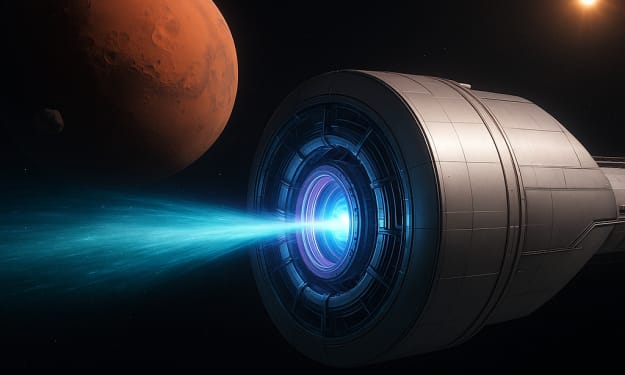
VASIMR Plasma Engines: The Next Leap Toward Interplanetary Travel
For more than half a century, humanity has been dreaming of Mars. Countless films, novels, and scientific proposals picture astronauts stepping onto the Red Planet’s dusty plains. Yet despite all the excitement, one stubborn obstacle remains: getting there in a reasonable amount of time.
By Holianyk Ihor5 months ago in Futurism
Earendel: The Most Distant Star Ever Detected
In the spring of 2022, astronomers spotted something extraordinary through the Hubble Space Telescope: a tiny glimmer of light from the edge of the observable universe. At first, many believed it could be a distant galaxy, or perhaps just a cluster of stars blurred together. But now, thanks to the unprecedented clarity of the James Webb Space Telescope (JWST), scientists have confirmed that this faint spark is, in fact, a single star.
By Holianyk Ihor5 months ago in Futurism
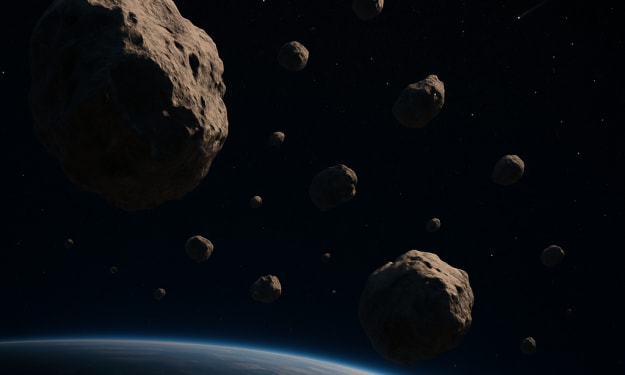
Millions of Small Bodies Threatening Earth Will Soon Be Visible — Predictions from LSST and Next-Generation Sky Surveys
For decades, the night sky has looked like a familiar canvas, dotted with stars, planets, and the occasional streak of a meteor. Yet beneath this seemingly calm picture hides a dynamic swarm of small bodies — asteroids, comets, and other fragments left over from the birth of our Solar System. Many of them cross paths with Earth, sometimes uncomfortably close. Until now, only a fraction of these objects have been cataloged. But that is about to change.
By Holianyk Ihor5 months ago in Futurism
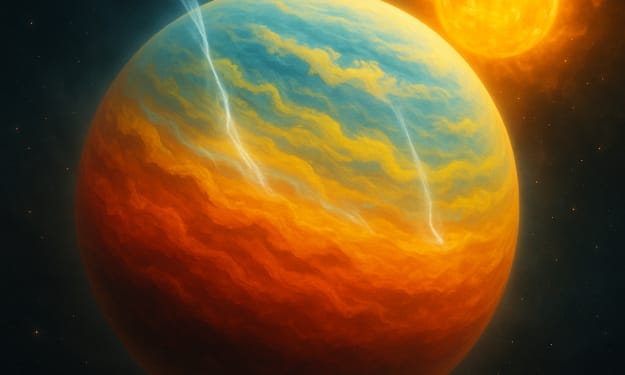
New Observations of Exoplanet WASP-52 b Reveal Helium and Water Despite Its Host Star’s Fierce Radiation
When astronomers first began discovering exoplanets in the 1990s, most of them were little more than faint dots of light in distant skies. Today, thanks to advanced telescopes and precise techniques, these alien worlds are no longer just points in the dark—they are objects we can study in detail, even down to the chemical makeup of their atmospheres. Recently, the hot Jupiter known as WASP-52 b has surprised astronomers with a remarkable discovery: signs of both helium and water vapor in its atmosphere. This is astonishing, considering the harsh radiation from its host star, which should, in theory, strip such fragile molecules away.
By Holianyk Ihor5 months ago in Futurism
A Record-Breaking System: The Exoplanet Family Racing Through the Galaxy
Astronomy has a way of surprising us, even when we think we’ve seen it all. We’re used to hearing about new stars, exoplanets, or distant nebulae lighting up the cosmic stage. But sometimes, discoveries are so striking that they make us pause and reimagine what’s possible in the universe.
By Holianyk Ihor5 months ago in Futurism
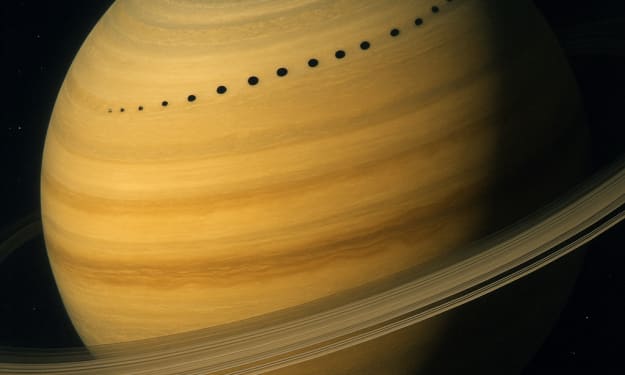
The Mysterious “Dark Beads” Above Saturn’s Pole: JWST Unveils a Cosmic Puzzle
Saturn has always been one of the most enigmatic worlds in our solar system. Known for its dazzling rings, its golden-hued atmosphere, and its bizarre six-sided polar storm, the gas giant is a favorite subject of astronomers. Yet just when we think we’ve learned most of its secrets, Saturn surprises us again. Recently, NASA’s James Webb Space Telescope (JWST) captured something utterly unexpected in the planet’s northern atmosphere: a string of strange, dark structures scientists are calling “mysterious dark beads.”
By Holianyk Ihor5 months ago in Futurism
The Most Distant Quasar: A Glimpse Into the Dawn of the Universe
Astronomers have recently made a discovery that pushes the limits of our cosmic vision: the most distant quasar ever found. This ancient beacon of light formed just 500 million years after the Big Bang—when the Universe itself was still in its infancy. Peering at this quasar is like looking back across time to witness the first chapters of cosmic history.
By Holianyk Ihor5 months ago in Futurism
A New System of “Super-Earths” Found Around Star Gliese: Multiple Potentially Habitable Worlds Discovered
Astronomers have once again delivered a discovery that could reshape our understanding of the universe. Orbiting the red dwarf star Gliese, scientists have identified a remarkable planetary system that includes several so-called “super-Earths.” These are worlds larger than our planet, yet still small and rocky enough to resemble Earth in their physical makeup.
By Holianyk Ihor5 months ago in Futurism