future
Exploring the future of science today, while looking back on the achievements from yesterday. Science fiction is science future.
What Will life be like Post -COVID 19?
Right now, the world has come to A stop it seems, at least for now. As businesses that are non essential struggle to find ways to earn money while the rest of the world plummet Financially,there’s no shadow of a doubt that things won’t quite be the same as it was even after COVID-19. So how is your life about to change? It won’t be the type of world you were use to after all of this and consider this a glimpse into the future. Although it seem scary, it’s our future and you’ll just have to suck it up and live in it, no matter how dystopian it might get. When your governor refers to the “new Normal, realize it‘s not just reopening of businesses and other institutions, but rather, the beginning of the future promised by The Jetsons or science fiction.
By Kyle Smith6 years ago in Futurism
THE NON-INNOVATIVE "TIME TRAVEL INNOVATION" THAT'S NOT AN INNOVATION, NOR TIME TRAVEL, AT ALL
"Is it really possible to travel back in time? What about traveling into the future, have we finally figured out how to do that? Well, you’ll have to read on to find out…"
By Marshall Barnes6 years ago in Futurism
Cleaning up the Ocean
Many people might not know, but plastic has been important for human evolution, and we use it for multiple things. The problem with plastic is that it doesn’t just disappear; it sticks around for hundreds of years and sometimes it ends up in the natural environment, mostly on the ocean. Plastics can get to the ocean in different ways; for example, the rain and winds can drag plastics to the ocean, but that’s not the only way they can get to the ocean, another common way is through storm drains. When plastics reach the ocean, they never break down completely, instead they turn into really small pieces called microplastics that can be dangerous for marine life. A study run by the Monterey Bay Aquarium shows that small ocean animals are consuming microplastic particles; yes, those are the same ocean creatures that we consume. These microplastic particles mainly come from consumer products like plastic water bottles and product packaging, but not all plastics in the ocean get to break down into microplastics, sometimes plastics end up being eaten by large ocean animals, which is really dangerous for them because their digestive system can get clogged up. Once their digestive system is clogged up, the animal stops receiving the nutrition that they need and end up dying with their stomachs full of plastic (“Plastic pollution”). I believe we should become more aware of the problems that plastics are bringing to the ocean and worry about finding a way to take plastics out of the ocean and planning on what to do with those plastics after they out of the ocean.
By The Home Vlog6 years ago in Futurism
5 Ways to Replace Money In The Apocalypse
Money... a word that coincides with freedom this day in age. In order to prevent yourself from becoming one of the homeless, your going to need some kind of income, in America especially. Without a dollar in your pocket, it can be hard to survive in the real world. Although what would happen if humanity was faced with some massive catastrophic event? One big enough to cripple our society... What if every government across the globe collapsed and paper currency became worthless? Surely we would need some form of method to buy and sell valuable merchandise. That is exactly what we will be discussing in today's article; how can we replace paper currency, so that we might maintain some kind of structure within society after the next world-wide cataclysm.
By Carlos Guerra6 years ago in Futurism
Is Bamboo the sustainable material of the future?
Bamboo is growing in more ways than one! I'm not sure about you, but I feel like I'm seeing bamboo in almost every shop I go into (And trust me, I go to the shops a fair bit). It seems that this unique plant isn't just useful as a building material or food for humans (and pandas!) - it has an array of applications and is growing at an exponential rate (quite literally - I'll touch on this later!), as one of the most common materials in the eco-sustainability movement we are currently experiencing across the planet.
By Jackie Green6 years ago in Futurism
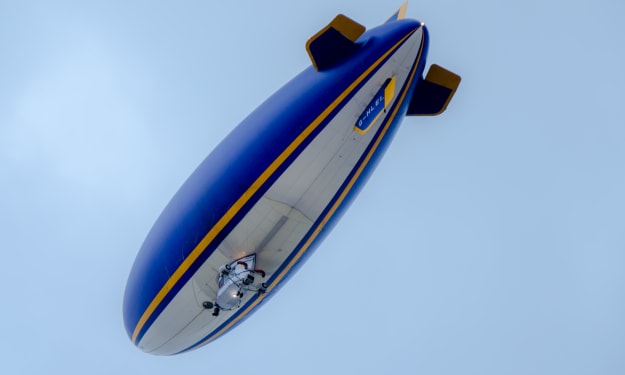
Is The New Golden Age of Airships Upon Us?
If you're old enough, or remember much in your high school history class, you probably remember the golden days of airships. Not so long ago, blimps and their cousins were the darlings of pilots and many a pundit predicted they would take over aviation. But then jet engines stole their place in history and airships were relegated to the logo for a tire company.
By Michael J. Albee6 years ago in Futurism