evolution
The evolution of science, science fiction, and mankind throughout the years.
Evolution Without Darwin
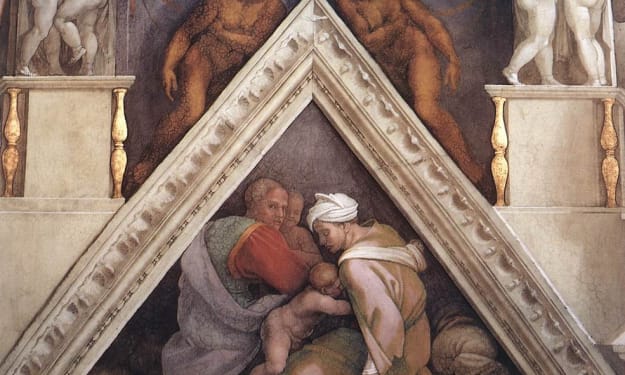
Darwin suspected it, but he would roll over in his grave if he knew how his dogma on adaptation and natural selection is changing. His original teachings are still not accepted by fundamentalist religious people. The new thinking would make them both apoplectic! Evolutionary thinking is finally beginning to mature past Darwin's explosion onto the science scene, after 159 years of stagnation. Forty years ago, there was another explosion in the science world. Stephen Jay Gould published a paper called The Spandrels of San Marco and the Panglossian Paradigm: A Critique of the Adaptationist Programme. What it proclaimed was heresy in biology. Simply put, Gould said that not all adaptations are adaptations, some things are by-products that an organism can put to use, but they were not naturally selected. He likened these abilities to the spandrels in the church of San Marco. A spandrel is a triangular shape created when a dome is added to a rectangular room with arches between the arch and the wall. Artists used these spaces for artwork. Gould saw traits that were like spandrels—the body is a restricted form (the rectangle), and the dome was an adaptive trait. In between were usable by-products—the spandrels.
By Monica Bennett8 years ago in Futurism
Is It the Supernatural or Just Mere Coincidence?
Have you ever wondered is there more to life than just living? Is there something or someone watching over us? Is there something out there? Do things happen coincidently or purposely? Is there a purpose for our lives? Is there meaning to life? What are we existing for?
By Courtney Chai8 years ago in Futurism
The Real Hobbit
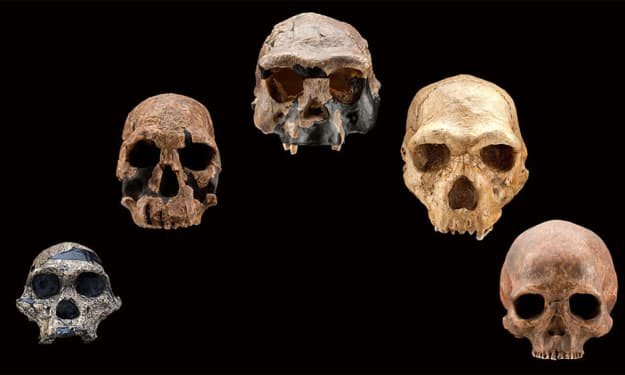
If there ever was a species that rocked the scientific world, it was Homofloresiensis. It was so tiny, so small brained, so out of time and place. Found on the Island of Flores in Indonesia in 2003. How did it get there? It had to be by boat of some kind. How does it fit in our family tree? That is something no one has been able to figure out yet. It was the WTF reaction by researchers as well as its diminutive size that complicated its acceptance into the species Homo. The keyboarding went quantum. It was a pathological anomaly. It had this disease or that syndrome. You name the disorder, floresiensis had it. The most common choice was Down's Syndrome, which is very rare among primates. Only two known cases have ever been found. When more bones and tools were found, we were asked to imagine a tribe of Down's Syndrome dwarfed hominins sailing off to Flores and establishing themselves as hunters. Really.
By Monica Bennett8 years ago in Futurism
Evolution of the Big Brain
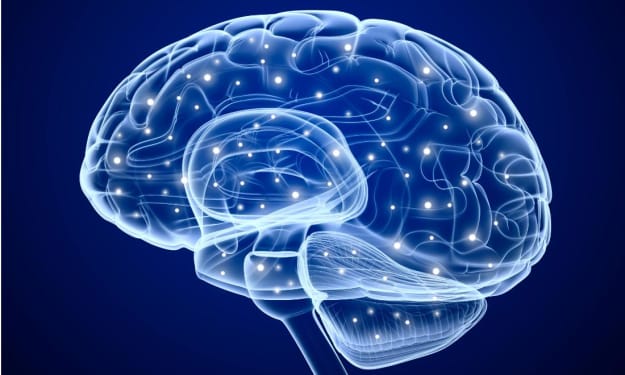
Our brains are truly the one thing that has separated us from everything else that has lived on this planet, and it was happenstance. It evolved serendipitously, as a side effect of our environmental lifestyle, and the tale is a glorious tribute to the beauty of evolution. Let me be clear. We did not need a big brain to survive. Nothing else has one, and all life here progresses fine without one. Its usefulness allowed us to conquer every environment. So what did we do that was so right?
By Monica Bennett8 years ago in Futurism
Neanderthal and the Denisovans
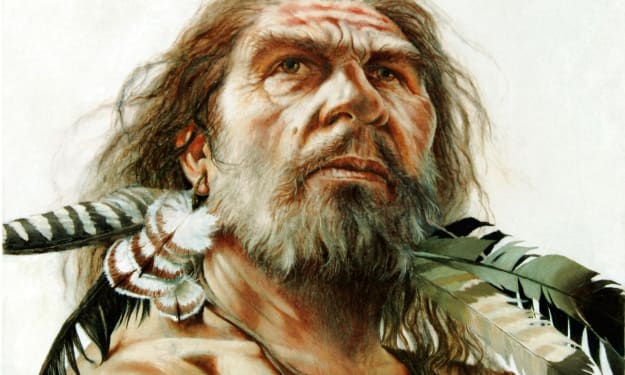
The southern Iberian Peninsula near Gibralter was the last outpost of Neanderthal. They languished there until as late as 24kbp (thousand years before present). This area offered several survival elements They had warmth, seafood, and cliffs. With so much game gone at this point, they probably relied on food provided by the sea and cliffs. The cliffs also offered security from intruders. Climate had undergone drastic changes. A volcanic eruption 40kbp began a series of extremely cold seasons. This caused a loss of game animals and the calving of icebergs that also lowered temperatures. This is seen as the match that broke the camel's back for our cousins. Some researchers believe that Neanderthals couldn't make warm enough clothing, but that seems ridiculous. These were a people long used to living in colder temperatures. After all, aren't they built for the cold with their shortened arms, legs, and stocky bodies, just like Arctic people today?
By Monica Bennett8 years ago in Futurism
Why We Walk on Two Legs
Perhaps the greatest frustration in evolutionary biology is bipedalism. Why walk on two legs if running on all fours is faster? Well, for the last hundred years or so, we were taught we stood up to see over the tall grass of the savannah, much like meerkats. This freed our hands to carry food, make tools, and become the mighty hunter. That theory went out the window when the entire Savannah Hypothesis bit the dust. Ardipithecus and Australopithecines are now viewed as semi-woodland dwellers. Here we developed two-leggedness because we stood on branches, using the hands to steady us, employing a light touch. They have even determined how strong the touch would be as we steadied ourselves, swaying branches and what the force of a breeze would be. Some people have got too much time on their hands!
By Monica Bennett8 years ago in Futurism
Out of Africa
Today's view of human evolution is rapidly shifting from the now-defunct Savannah Hypothesis to the more believable coastal living scenario. No longer is the idea that we developed our brains while hunting on the savannah held true. Some have opted for a semi-woodland environment, but this, too, is leading us to coastal living as the preeminent ecosystem where we evolved from a small-brained biped into a large-brained one. Picture, if you will, a group of LCAs (Last Common Ancestor) living on the east coast of Africa, blocked to the west by the Ethiopian Escarpment, and to the east by the Red Sea. There is plenty of freshwater. We know this because there is a continuum of freshwater springs in this area today, produced by the movement in the East African Rift System. Seafood was plentiful. Even the old and the very young had all they could eat. There was volcanism and rift movement and occasionally openings in the rift would come about and some would leave this paradise for the interior. They may have gotten lost out in this different world and been unable to make their way back. Or, the pathway they took out of their normal environment may have been closed off by rift activity. Unless you think bipedal forms of hominids sprung up spontaneously all over Africa, this is the only interpretation. The likelihood of that is remote when you consider the extremely different environments in which this adaptation would have had to occur.
By Monica Bennett8 years ago in Futurism
Why Are We Hairless?
We are called the naked ape because we show more skin than any other primate. The gentleman in the picture appears hairless, but we know his hair has been removed for the shot. However, it may surprise you to know that we have just as many hair follicles as a chimpanzee. Our hair is just finer and much shorter. So why do we show so much more skin than any other primate?
By Monica Bennett8 years ago in Futurism
Language
So much has been written about speech and language, someone could open a library with no other topic. Some will argue that speech is different from language, but here they will be treated as one and the same. So much has been written about the FOXP2 gene lately, but language concerns more than just one gene. Since we now have the Neanderthal genome to work with, we know they also had FOXP2. Molecular techniques show the gene is older than Neanderthal, going back to at least 400,000 years ago. Did Neanderthal have language? The proof is presumptive. They lived in groups, hunted in teams, probably buried their dead, and new research shows they also made cave paintings. It seems unreasonable they did these things in relative silence. Both Stephen Jay Gould, the evolutionary biologist, and Noam Chomsky, the language guru, believed language was a side effect of a bigger brain. They believe language was not selected for, in the traditional Darwinian way, but occurred because of its association with a non-language gene. It happens that the FOXP2 is not only related to speech, but also digestion. If that is the gene that allowed for speech, then speech may be a side effect of its digestive function. Another gene related to language is CNTNAP2. Disruption in this gene is associated with both Autism and specific language impairment. Neanderthal did not have this gene, which produces a neurexin-family neural growth factor. They have to do with carrying impulses in the brain across the synapse between neurons. Language may also have been a side effect of either brain development or reorganization. The ability to gather ancient DNA may, in the future, supply answers to these questions.
By Monica Bennett8 years ago in Futurism
Humans Are Chaos
All humans are inherently evil. Science has proven time and time again that humans are born with many malevolent possibilities, even though not everyone may show it. Different factors, such as the way each human is raised and the environment they grow up in are what set the moral guidelines that suppress such evil. Although not everyone acts upon the darkness within, they are all born being capable of great destruction.
By Carolyn Hannigan8 years ago in Futurism