
Samsung Galaxy Unpacked 2026: What to Expect From the Galaxy S26 Event
Ahead of the Feb. 25 launch in San Francisco, leaks and live-blog reporting point to an iterative S26 lineup, a headline “Privacy Display” on the Ultra, and new Galaxy Buds—plus lingering questions about Android XR glasses.

What Happened (Facts)
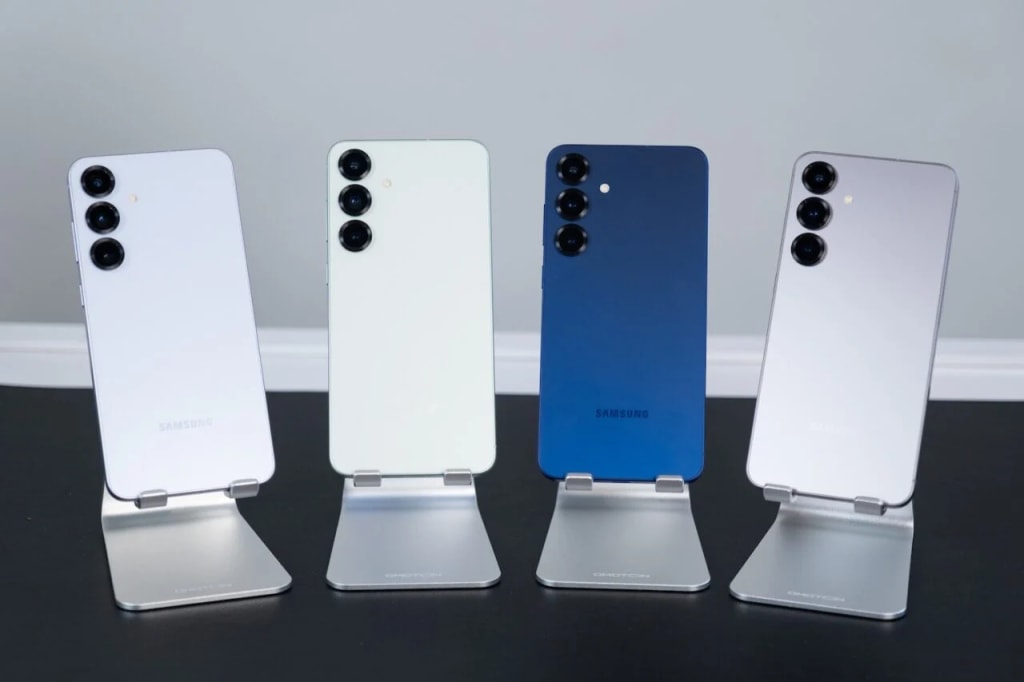
Samsung’s first Galaxy Unpacked event of 2026 is scheduled for Feb. 25 in San Francisco, with the presentation set to begin at 1 p.m. ET / 10 a.m. PT, according to the live coverage preview shared by Gizmodo’s team (Raymond Wong, Kyle Barr, and James Pero).
Based on that same preview and associated leak chatter referenced in the live blog, the headline expectation is the introduction of the next Galaxy S-series phones:
Galaxy S26
Galaxy S26+
Galaxy S26 Ultra
Gizmodo describes the Ultra as likely to remain the feature leader, including Samsung’s best cameras and continued support for the S Pen.
The “Privacy Display” leak narrative
A major rumored feature highlighted in the live blog is a so-called “Privacy Display”—a screen behavior that would allow the phone to darken parts of the display (or potentially the full screen) depending on viewing angle, so that content is visible primarily to the user looking straight at it. The live blog suggests this could apply not only to the main screen but potentially to incoming notifications as well.
This feature is attributed to a “mountain of evidence” from past reports and recent leaks, including posts from the leaker Ice Universe. Gizmodo’s write-up frames this as the most exciting rumored change and notes that it may be exclusive to the Galaxy S26 Ultra at launch, with S26 and S26+ possibly getting it later (or not at all initially).
New earbuds expected: Galaxy Buds 4 and Buds 4 Pro
The live preview also says new wireless earbuds are likely: Galaxy Buds 4 and Galaxy Buds 4 Pro. Gizmodo positions these as direct competitors to Apple’s AirPods lineup, noting that leaks have been circulating for weeks and predicting a potential design “vibe shift” compared to the prior Buds generation. The blog cautions that major new health features are not guaranteed.
“Don’t expect an S26 Edge”
Gizmodo reports that a successor to the ultra-thin S25 Edge may not arrive. The live blog claims Samsung reportedly canceled the S26 Edge due to weak sales of the prior model—while also noting that ultra-thin phones may be a tough sell broadly, not only for Samsung.
“More evolution, not revolution”
In terms of overall product direction, Gizmodo’s preview emphasizes that the S26 line is likely to be iterative, similar in look and function to the S25 series, reflecting the broader reality that there are “only so many ways to make a glass slab.”
Live coverage context
The live blog also includes logistical reporting: a major snowstorm in the US Northeast disrupted travel plans for at least one Gizmodo reporter, who then planned to cover the event remotely—while another team member already in California would provide hands-on footage.
Finally, the preview raises a question about possible “surprises,” specifically: whether Samsung and Google might show a more polished version of their Android XR smart glasses.
What Is Analysis (Interpretation)
1) Privacy becomes a feature you can see
If the “Privacy Display” works as described, its biggest strategic advantage isn’t technical—it’s legibility. Most privacy improvements (encryption, sandboxing, permissions, VPNs) are real but invisible. A screen that visibly blocks shoulder-surfing is instantly demo-able in a store and instantly understood by non-technical buyers. That makes it a rare privacy feature that can compete with camera demos on the showroom floor.
But it also raises hard questions:
Will it affect screen brightness, battery life, or viewing comfort?
Can it be applied granularly without breaking usability (e.g., obscuring notifications but leaving navigation readable)?
Does it work reliably in real-world angles—public transport, cafes, meetings—where “off-axis” viewing is constant?
If Samsung nails those details, competitors may feel pressure to ship their own “obvious privacy” features—not because consumers demanded them historically, but because once one company makes privacy visual, it becomes a new category.
2) Iteration is the new flagship strategy—unless AI truly changes workflows
The live blog’s “evolution, not revolution” framing matches the current smartphone reality: most hardware gains are incremental year over year. That doesn’t mean launches are unimportant; it means the differentiator shifts from specs to experience.
The real “revolution” angle Samsung could still claim—if it’s ready—is software: AI features that don’t just generate content but change how you use the phone. Yet “Galaxy AI improvements” are often hard to feel day-to-day unless they reduce friction reliably. The risk for Samsung is that AI demos can look magical on stage but feel optional in real life.
So if the S26 launch is mostly iterative hardware, Samsung needs one or two changes that are:
immediately noticeable (privacy display fits that)
consistently useful (harder)
not just another “AI filter for photos”
3) Buds matter because ecosystems matter
New Buds 4/Buds 4 Pro may look like side dishes next to a flagship phone, but they’re strategic glue. Earbuds are worn daily; they create habit and lock-in. If Samsung can improve ANC, comfort, and multipoint switching, it strengthens the Galaxy ecosystem against Apple’s (and increasingly Google’s).
The key is whether the Buds changes are meaningful or cosmetic. A “new look” is easy; better microphones in real wind, better transparency mode, and more stable connectivity are what sustain upgrades.
4) The “Edge is dead” rumor reflects changing consumer priorities
If the S26 Edge truly doesn’t happen, it suggests the market is cooling on ultra-thin devices—especially if thinness comes with tradeoffs (battery, thermals, durability, cameras). That’s a broader pattern: consumers may now value stability and longevity more than being the thinnest object in the room. If Samsung leans into that, it’s a tacit admission that spec bravado has diminishing returns.
5) XR glasses are the wildcard—high upside, high skepticism
The tease about Android XR glasses is important because it signals where “the next platform” might be. But smart glasses have repeatedly struggled with:
social acceptability
battery life
usefulness beyond demos
privacy concerns (for bystanders)
If Samsung shows polished XR hardware, it could steal attention even from the S26. If it doesn’t, the absence will be telling: phones are still the revenue engine, and XR remains a long bet.
About the Creator
Keep reading
More stories from Behind the Tech and writers in Futurism and other communities.
If AI Makes Work Obsolete, Who Controls the Food Supply?
What Happened (Facts) A Guardian analysis piece by economist-journalist Eduardo Porter argues that the biggest missing debate in today’s AI panic is not “Will AI take our jobs?” but a more basic question: if human labor becomes economically irrelevant, how will people afford to live — and who decides what they get?
By Behind the Techabout 9 hours ago in Futurism
Real Estate Software Market Outlook: Digital Property Management and Growth Opportunities
According to IMARC Group's latest research publication, The global real estate software market size was valued at USD 12.2 Billion in 2024. Looking forward, IMARC Group estimates the market to reach USD 28.2 Billion by 2033, exhibiting a CAGR of 9.27% during 2025-2033.
By James Whitman6 days ago in Futurism
Capnography Devices Market Trends: Portable Monitoring Growth, Clinical Adoption & Industry Outlook to 2033
The increasing prevalence of respiratory diseases, growing demand for minimally invasive monitoring, and stringent safety guidelines for anesthesia and sedation are driving the capnography devices market. These factors are further supported by technological advancements in portable devices and the expansion of emergency medical services. According to IMARC Group’s latest data, the global capnography devices market size was valued at USD 429.4 Million in 2024. Looking forward, IMARC Group estimates the market to reach USD 685.0 Million by 2033, exhibiting a CAGR of 5.06% during 2025-2033.
By Andrew Sullivan4 days ago in Futurism
Goodbye, Mr. Duvall
It is turning out to be an interesting year. I was in the middle of teaching a class when a pop-up appeared on the screen announcing the death of Mr. Robert Seldon Duvall (yes, that was his full name). I was in the middle of a discussion on the obsession we have with winning when it comes to sports (the Winter Olympics was a theme), and I felt as though things were coming full circle. We had already lost Gene Hackman last year, and along with that titan, it feels though one particular golden age has closed off to be replaced by...?
By Kendall Defoe 7 days ago in Geeks



Comments
There are no comments for this story
Be the first to respond and start the conversation.