
Insect Growth Regulators Market Outlook: Sustainable Pest Control Solutions and Growth Opportunities
The insect growth regulators (IGR) market is witnessing steady growth, driven by increasing demand for environmentally friendly and targeted pest control solutions in agriculture, public health, and residential applications.

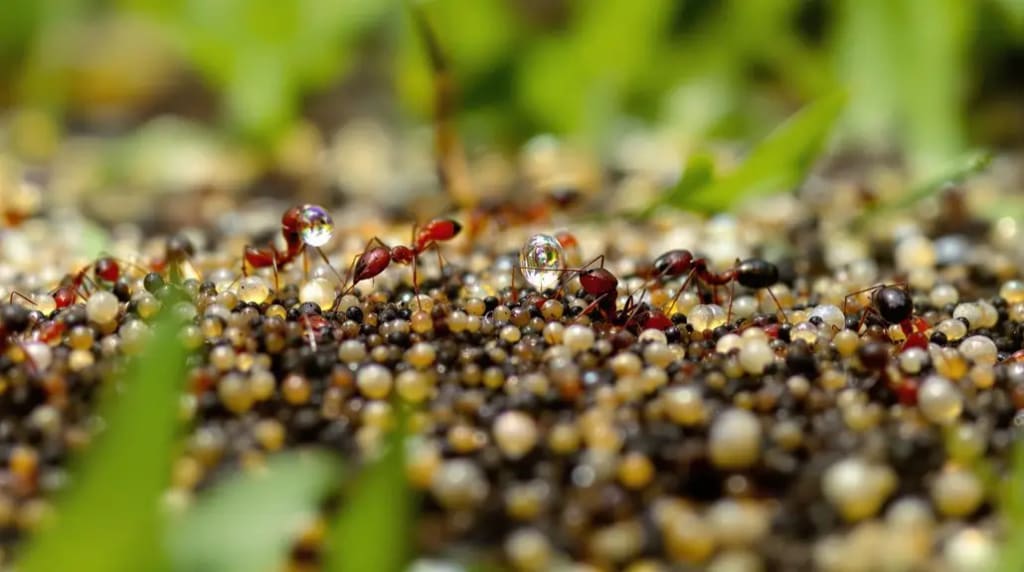
According to IMARC Group's latest research publication, The global insect growth regulators market size was valued at USD 1,082.36 Million in 2024. Looking forward, IMARC Group estimates the market to reach USD 1,768.16 Million by 2033, exhibiting a CAGR of 5.32% during 2025-2033.
How AI is Reshaping the Future of Insect Growth Regulators Market
- Precision Application Through Drone Technology: AI-powered drones equipped with computer vision enable variable-rate application of insect growth regulators across agricultural fields, analyzing crop health and pest pressure in real-time to optimize dosage rates and timing, reducing chemical use by up to 30% while improving efficacy.
- Automated Pest Monitoring and Early Detection: Machine learning algorithms integrated with IoT sensors and image recognition systems continuously monitor insect populations, identifying pest species and developmental stages with 95% accuracy, enabling predictive deployment of targeted IGR treatments before infestations escalate and minimize crop damage.
- Smart Formulation Development: AI accelerates molecular design of novel IGR compounds by analyzing millions of chemical structures and predicting their effectiveness against specific insect targets, reducing development time from 10 years to 3 years and enabling creation of environmentally safer, highly selective pest control solutions.

Insect Growth Regulators Industry Overview:
The IGR market is experiencing transformation driven by strict regulatory frameworks and resistance management needs. The United States Environmental Protection Agency maintains clear tolerance schedules for over 15 active IGR ingredients, providing manufacturers with predictable approval pathways while ensuring safety standards. Eastern European markets are gaining momentum as the Common Agricultural Policy extends eco-scheme payments rewarding integrated pest management adoption. Japan's government actively promotes sustainable agricultural practices through the MIDORI program, allocating JPY 2.2683 trillion in farmer incentives favoring reduced chemical pesticide use and encouraging biologicals.
Insect Growth Regulators Market Trends & Drivers
Rising insect resistance to conventional chemical pesticides has become a critical challenge pushing farmers and pest control professionals toward IGR adoption. Repeated exposure to traditional insecticides has created resistant pest populations across major agricultural regions, reducing treatment effectiveness and forcing higher application rates that increase costs and environmental concerns. IGRs offer an alternative mechanism by disrupting insect development rather than targeting nervous systems, making them valuable tools in resistance management programs. The National Pest Surveillance System launched by India's government in August 2024 uses AI-driven technology to connect farmers directly with agricultural scientists for expert pest control guidance, reducing reliance on pesticide sellers while promoting scientific approaches. This shift toward evidence-based pest management accelerates IGR integration into comprehensive control strategies across agriculture, urban pest control, and forestry applications where resistance issues threaten conventional product efficacy.
Government regulations on chemical pesticides continue tightening globally, accelerating the transition toward safer alternatives like insect growth regulators that demonstrate lower environmental impact. Regulatory agencies including the U.S. Environmental Protection Agency and European Food Safety Authority are imposing stricter restrictions on hazardous insecticides due to documented toxic effects on humans, wildlife, and pollinator populations. The European Union's political intention to decrease conventional pesticide usage aligns with recent legislation promoting biological alternatives, while the Sustainable Farming Incentive in the UK now provides paid support for IPM planning, with organizations like ADAS and NFU developing free IPM Planning Tools in September 2023 to assist farmers in developing crop-specific management strategies. Global organic farming area increased by over 20 million hectares in 2022, reaching 96 million hectares total with 4.5 million organic producers worldwide and organic food sales approaching 135 billion euros annually, according to IFOAM - Organics International. This regulatory push combined with organic farming growth creates substantial market opportunities for IGR products that meet sustainability criteria while delivering effective pest control across diverse agricultural and commercial applications.
Integrated pest management program adoption is fundamentally reshaping pest control practices, with IGRs playing an increasingly central role in these comprehensive strategies. IPM emphasizes multiple control methods including biological control, habitat modification, and selective chemical interventions with minimal environmental disruption, and IGRs fit perfectly within this framework due to their targeted action against insect pests without harming beneficial organisms. The Horizon Europe project IPMorama, inaugurated in September 2024, will test and conduct scientific experiments exploring next-generation integrated pest management in European agriculture. Syngenta partnered with Lavie Bio in February 2024 to develop innovative pheromone-based biological solutions for managing pests in corn and rice—crops feeding 3.5 billion people globally. Government support through programs like Mexico's Secretariat of Agriculture and Rural Development (SADER), which received USD 4.3 billion in the 2024 federal budget representing a 5% increase from 2023, demonstrates institutional commitment to advancing sustainable pest management. Saudi Arabia's agriculture market expansion from USD 130 billion in 2024 to a projected USD 207 billion by 2033 further illustrates the growth potential for IGR adoption in emerging agricultural markets implementing modern pest control practices.
Leading Companies Operating in the Global Insect Growth Regulators Industry:
- BASF SE
- Central Life Science (Central Garden & Pet Company)
- Control Solutions Inc (China National Chemical Corporation)
- Dow Inc
- Nufarm Limited
- OHP Inc. (AMVAC Chemical Corporation)
- Russell IPM Ltd
- Sumitomo Chemical Co. Ltd.
- Syngenta AG
Insect Growth Regulators Market Report Segmentation:
By Product:
- Chitin Synthesis Inhibitors
- Juvenile Hormone Analogs and Mimics
- Ecdysone Antagonists
- Ecdysone Agonists
Chitin synthesis inhibitors represent the largest class, holding around 41.2% of the market due to their high effectiveness in disrupting insect exoskeleton formation, leading to pest mortality. They are widely used across lepidopteran and coleopteran pest spectra in both field and stored-grain settings.
By Form:
- Aerosol
- Liquid
- Bait
Liquid dominates with around 46.6% market share due to ease of application, superior coverage, and effectiveness in pest control. They are widely used in agriculture, commercial pest control, and public health programs for treating large areas efficiently.
By Application:
- Agriculture
- Residential
- Commercial
Agriculture accounts for around 45.6% of market share due to rising need for effective pest control in crop production. IGRs help manage destructive pests like aphids, whiteflies, and caterpillars while minimizing environmental impact.
Regional Insights:
- North America (United States, Canada)
- Asia Pacific (China, Japan, India, South Korea, Australia, Indonesia, Others)
- Europe (Germany, France, United Kingdom, Italy, Spain, Russia, Others)
- Latin America (Brazil, Mexico, Others)
- Middle East and Africa
North America exhibits clear dominance, holding over 39.6% market share in 2024 due to strong regulatory foundation, rapid technology adoption, and advanced precision agriculture practices.
Recent News and Developments in Insect Growth Regulators Market
- March 2025: Bayer AG unveiled Plenexos insecticide, a next-generation ketoenol that moves through leaves and roots to protect crops such as cotton, tomatoes, and lettuce from sap-feeding pests, while meeting tougher sustainability targets ahead of its multi-country rollout in 2026. The systemic activity across sucking pests aligns with environmental stewardship goals and demonstrates the industry's commitment to innovative, sustainable solutions.
- March 2024: Syngenta introduced Advion® Trio cockroach gel bait to assist pest management professionals in controlling cockroaches throughout all phases of their life cycle. Utilizing synergistic effects of three active components with varying mechanisms, including two insect growth regulators, Advion Trio provides enhanced management of challenging cockroach infestations, representing a significant advancement in urban pest control technology.
- February 2025: Control Solutions Inc. introduced the Precision Delivery System with Doxem Precise, a dry flowable bait for cockroach control. Designed for precision application, it provides long-lasting protection in extreme conditions. Effective for over six months, it reduced callbacks and was ideal for commercial kitchens and food-handling environments, demonstrating innovations in professional pest management product delivery systems.
- January 2025: Sumitomo Chemical fully acquired Philagro in France and planned to acquire Kenogard in Spain by fiscal year 2024. The strategic acquisitions aim to expand the company's European crop protection business, integrate operations, explore additional M&A opportunities, enhance biorationals portfolio, and double regional sales by 2030 through strengthened market presence.
- February 2025: BASF began registration in Japan for Prexio Active, a new active ingredient in insecticides developed to control all major rice hopper pests. This regional emphasis on crop protection innovation demonstrates the company's commitment to addressing specific pest challenges in key agricultural markets while expanding product portfolios across diverse geographies and crop systems.
Note: If you require specific details, data, or insights that are not currently included in the scope of this report, we are happy to accommodate your request. As part of our customization service, we will gather and provide the additional information you need, tailored to your specific requirements. Please let us know your exact needs, and we will ensure the report is updated accordingly to meet your expectations.
About the Creator
Michael Richard
Michael Richard is a Market Research Expert specializing in market intelligence, competitive analysis, and data-driven insights. He helps organizations understand trends and emerging opportunities through in-depth research.
Keep reading
More stories from Michael Richard and writers in Futurism and other communities.
Voice Over LTE (VoLTE) Market Outlook: 4G Network Expansion and Enhanced Communication Growth Opportunities
According to IMARC Group's latest research publication, The global voice over LTE (VoLTE) market size reached USD 23.2 Billion in 2024. Looking forward, IMARC Group expects the market to reach USD 919.8 Billion by 2033, exhibiting a growth rate (CAGR) of 50.5% during 2025-2033.
By Michael Richarda day ago in Futurism
Hair Shampoo Market Trends: Ingredient Innovation, Premiumization & Forecast to 2034
Rising environmental pollution, evolving consumer lifestyles, and growing awareness around scalp health are fueling demand for hair shampoos globally, supported by the shift toward herbal and natural formulations, rapid e-commerce expansion, and continuous product innovation targeting specific hair concerns. According to IMARC Group’s latest data, The global hair shampoo market size reached USD 38.0 Billion in 2025. Looking forward, IMARC Group expects the market to reach USD 48.0 Billion by 2034, exhibiting a CAGR of 2.62% during 2026-2034.
By Andrew Sullivan6 days ago in Futurism




Comments
There are no comments for this story
Be the first to respond and start the conversation.