
Australia Luxury Fashion Market: Rising Affluent Demand, Digital & Retail Expansion & Sustainability Trends
How growing affluent consumer spending, expanding digital and boutique retail channels, and increasing demand for sustainable and ethical premium fashion are shaping Australia’s luxury fashion market

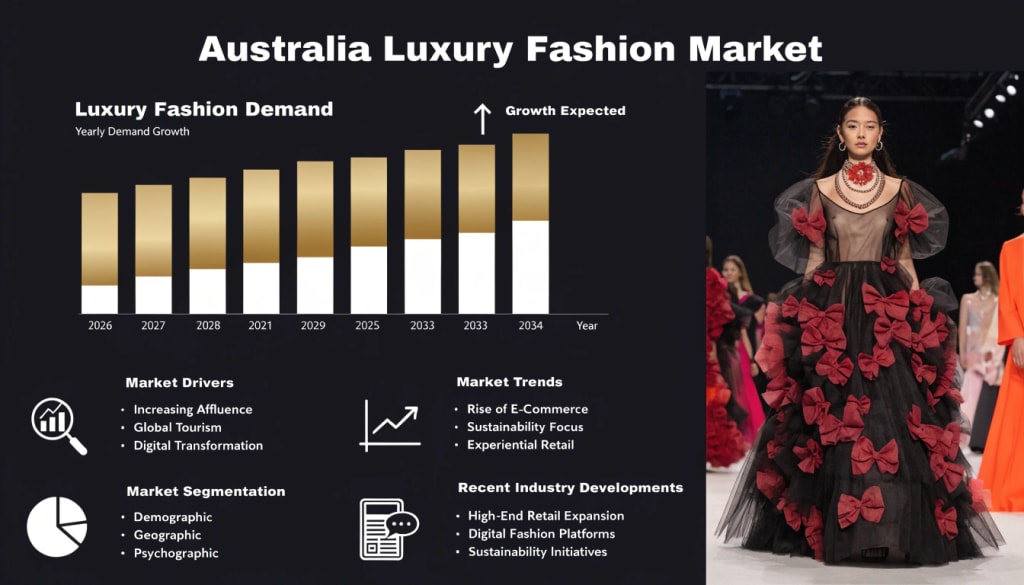
According to IMARC Group, the Australia luxury fashion market reached USD 5.2 Billion in 2025 and is projected to grow to USD 6.8 Billion by 2034, exhibiting a compound annual growth rate (CAGR) of 2.95% during 2026–2034. The steady expansion of the market reflects rising disposable incomes, growing affluent consumer segments, and evolving lifestyle aspirations across Australia. Luxury apparel, footwear, handbags, and accessories are increasingly viewed as lifestyle investments rather than occasional indulgences. As digital retail channels expand and sustainability becomes central to brand positioning, Australia luxury fashion market share continues to evolve within a competitive global landscape.
Why Should Smart Buyers and Investors Know About the Australia Luxury Fashion Market?
Stable Premium Segment Growth
A projected CAGR of 2.95% reflects steady demand within the high-value segment.
Brand Loyalty and Pricing Power
Luxury brands benefit from strong consumer attachment and premium pricing resilience.
Digital Retail Scalability
E-commerce expansion enhances national and international reach.
Sustainability-Driven Competitive Advantage
Ethical positioning strengthens long-term brand credibility.
Experiential Retail Differentiation
Immersive boutique experiences foster customer engagement and repeat purchases.
Recent Trends & Developments in the Australia Luxury Fashion Market
October 2025:
Expansion of luxury flagship boutiques in major urban shopping districts.
July 2025:
Increased focus on sustainable capsule collections using recycled materials.
March 2025:
Growth in online luxury resale platforms catering to circular fashion demand.
Australia’s luxury fashion market is evolving through a balanced combination of affluent consumer demand, digital retail expansion, and sustainability-driven innovation. Growing from USD 5.2 Billion in 2025 to a projected USD 6.8 Billion by 2034, the industry reflects steady premiumization trends and rising global fashion awareness. Social media influence, boutique retail experiences, and ethical sourcing initiatives are redefining competitive strategies. As consumers increasingly seek exclusivity, craftsmanship, and responsible production, Australia’s luxury fashion sector is positioned for sustained and brand-centric growth within the global premium apparel landscape.
Australia Luxury Fashion Market Vision 2050
1. Circular Fashion Ecosystems
Resale, rental, and refurbishment models may integrate into luxury brand strategies.
2. AI-Driven Personalization
Advanced data analytics could tailor product recommendations and design customization.
3. Sustainable Fabric Innovation
Bio-based textiles and recycled materials may redefine premium fashion standards.
4. Immersive Digital Fashion Experiences
Metaverse retail environments and virtual fashion showcases may complement physical stores.
5. Strengthened Global Brand Collaborations
Strategic partnerships with international designers could enhance domestic and export growth.
What Are the Key Growth Drivers in the Australia Luxury Fashion Market?
Rising Affluent Consumer Spending
Australia’s expanding high-income demographic supports sustained demand for premium fashion. High-net-worth individuals and aspirational middle-class consumers are investing in globally recognized brands that symbolize exclusivity and craftsmanship.
Growing Demand for Premium Apparel and Accessories
Luxury consumers prioritize quality, heritage, and distinctive design. Designer clothing, leather goods, footwear, and limited-edition collections continue to attract both domestic shoppers and international tourists.
Influence of Celebrity Culture and Social Media
Celebrity endorsements and influencer marketing significantly shape purchasing decisions. Platforms such as Instagram and TikTok amplify global fashion trends, enabling luxury brands to reach younger, digitally engaged audiences.
Expansion of Digital Retail Channels
Luxury fashion brands are strengthening e-commerce presence through direct-to-consumer platforms and premium online marketplaces. Virtual showrooms, augmented reality try-ons, and seamless omnichannel experiences enhance customer convenience.
Growth of Boutique and Experiential Retail
Flagship stores and boutique outlets emphasize immersive shopping experiences. Personalized styling consultations and exclusive in-store events reinforce brand loyalty and premium positioning.
Urban Population Growth
Major metropolitan centers are witnessing population expansion and increased concentration of affluent consumers. Urbanization supports luxury retail expansion in high-end shopping districts.
Sustainability and Ethical Fashion Trends
Consumers are becoming more conscious of environmental and social impact. Brands incorporating ethical sourcing, sustainable fabrics, and transparent supply chains gain competitive advantage. Sustainable luxury is transitioning from niche positioning to mainstream expectation.
About the Creator
Kevin Cooper
Hi, I'm Kavin Cooper — a tech enthusiast who loves exploring the latest innovations, gadgets, and trends. Passionate about technology and always curious to learn and share insights with the world!
Keep reading
More stories from Kevin Cooper and writers in Futurism and other communities.
Australia Acoustic Insulation Market: Noise Control Demand, Construction Growth & Sustainable Materials
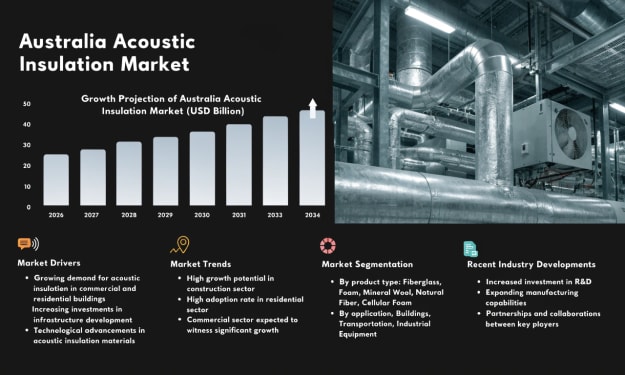
According to IMARC Group, the Australia acoustic insulation market reached USD 464.7 Million in 2025 and is projected to grow to USD 769.0 Million by 2034, exhibiting a compound annual growth rate (CAGR) of 5.58% during 2026–2034. The market’s expansion reflects growing awareness of noise pollution and stricter building performance standards across Australia. Rapid urbanization, high-density residential developments, and expanding commercial infrastructure are driving demand for effective soundproofing solutions. In parallel, sustainability priorities and green building initiatives are accelerating the shift toward eco-friendly acoustic insulation materials, strengthening Australia acoustic insulation market share across construction segments.
By Kevin Cooper5 days ago in Futurism
The Tesla Model Pi: 5 Surprising Truths Behind the Internet’s Favorite Tech Myth
The Ghost in the Machine In the hyper-saturated landscape of consumer electronics, few ghosts haunt the digital zeitgeist quite like the "Tesla Model Pi." The allure is a masterclass in brand gravity: a smartphone engineered by the world’s most disruptive industrialist, designed to shatter the Apple-Google duopoly. However, if you have spent any time on TikTok or YouTube lately, you’ve likely been fed a diet of sophisticated engagement-bait—a alternate reality where the device has already launched, costs a pittance, and connects directly to the Red Planet.
By Mohammad Hamid2 days ago in Futurism
M-Education Market to hit USD 24.3 Billion by 2034
The global M-Education market is experiencing steady growth as mobile technologies continue to transform digital learning environments. The market is projected to increase from USD 5.9 billion in 2024 to approximately USD 24.3 billion by 2034, reflecting a 15.2% CAGR during the forecast period. Mobile education platforms allow students and professionals to access learning content through smartphones and tablets, creating flexible and convenient learning opportunities.
By Roberto Crum2 days ago in Futurism



Comments
There are no comments for this story
Be the first to respond and start the conversation.