
AI in Vaccine Development: Use Cases, Real-World Examples, and Future Impact
AI in Vaccine Development

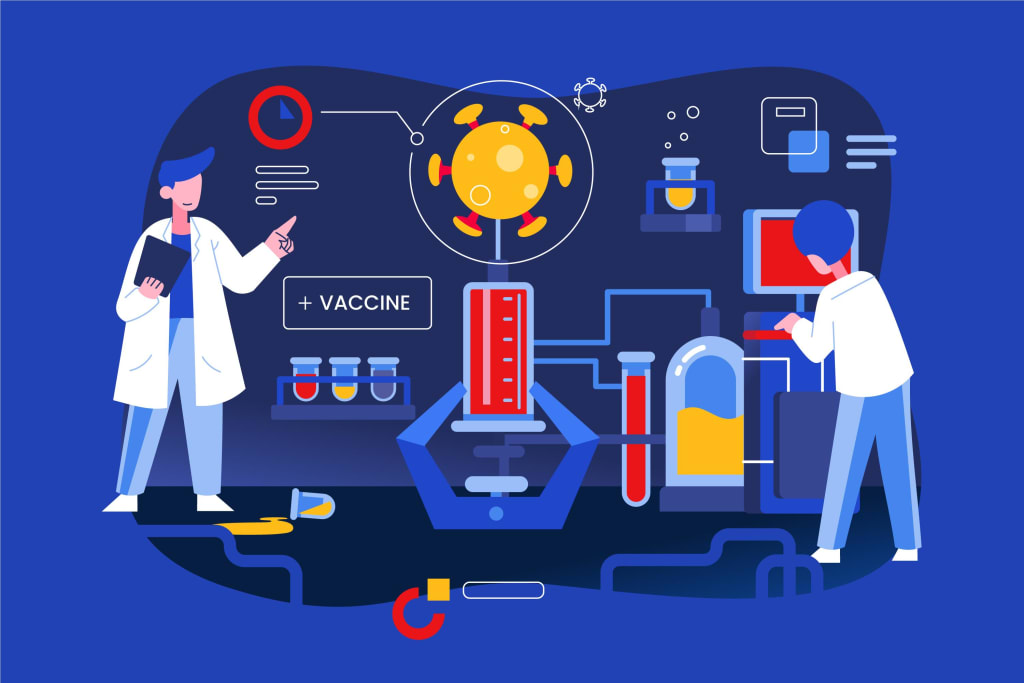
Vaccine development remains a critical, complex process in healthcare, requiring extensive research and biological modeling. Laboratory testing and multiple phases of clinical trials. Accurate vaccine development requires accurate antigen identification, safety validation, and large-scale testing across diverse populations; that’s why the process generally takes several years.
Now, if this process is this complex and requires testing on a diverse population, how can AI help? AI in healthcare is fundamentally transforming how medical teams tackle complex challenges, from disease diagnosis to drug discovery. One of the most impactful applications is vaccine development. AI in vaccine development does not mean replacing the current process or scientists; it is meant to help speed it up. AI uses machine learning and data analysis to help researchers study large amounts of biological data more quickly and accurately. It also supports simulations of immune responses, making it easier to identify potential vaccine candidates.
In this article, we will explore the use cases of AI in vaccine development and see how healthcare companies are using AI for vaccine design, to speed up trials, predict mutations, prioritize patients, and address vaccine hesitancy.
How AI Speeds Up the Vaccine Development Process
AI technologies like Machine learning and deep learning can speed up the entire vaccine development process and make it more intelligent. This is how AI can speed up things
Antigen Discovery & Design: Scientists have to test thousands of proteins, which is a time-consuming process. However, AI searches millions of proteins quickly in days rather than weeks. By using ML algorithms, scientists can predict which antigens are most likely to generate a potent immune reaction even before they are tested in the lab. AI can recognize the pattern of immunogenicity that humans might overlook, and with that, AI narrows the initial long list to a mere handful of potential antigens to be tested in the lab.
Immune Response Simulation: An AI system that is trained on vast amounts of data of the human immune system would be able to predict the response of T cells and B cells to various vaccine candidates. This allows scientists to fix potential errors before human clinical trials. In the future, when AI becomes more advanced, scientists might be able to replace animal testing with a computer-based approach to immunology to increase safety profiles.
Clinical Trial Optimization: AI in vaccine development helps accelerate clinical trials as it matches patients most likely to enroll and respond favorably to the vaccine. ML helps analyze and optimize clinical trial results by studying previous trial results and focusing on appropriate clinical endpoints and safety monitoring, which helps decision-making committees make quicker and safer decisions.
Manufacturing Excellence: Production hiccups in manufacturing can delay rollouts. AI balances bioreactor settings, determines the best temperatures, and identifies the most appropriate pH levels. AI is also better at inspecting products than a human eye can possibly process. In fact, AI-powered manufacturing during the COVID-19 vaccine production aided in rolling out from a small quantity to billions while maintaining quality.
Real-Time Uses of AI in Vaccine Development
1. Viral Mutation Prediction
AI examines millions of viral samples to forecast which mutations are likely to appear next and which strains will become dominant in various geographic areas. Machine learning algorithms predict viral evolution trends, which allow vaccine developers to create vaccines in advance of potential threats. During the COVID-19 pandemic, AI successfully forecasted the emergence of the Delta and Omicron strains weeks before they became prevalent, enabling quick vaccine reformulation.
Impact: Proactive vaccine development, minimizing mismatch years and compressing development cycles by months.
2. Personalized Safety and Efficacy
AI examines how different groups of people react to vaccines based on genetic makeup, age, medical conditions, and past exposures. Machine learning algorithms determine which groups of people build stronger immune systems, which are at greater risk of adverse events, and which need different dosing regimens, allowing for tailored vaccine recommendations rather than a one-size-fits-all approach.
Impact: AI in vaccine development can minimize adverse events, tailore dosing regimens for different groups, and improve overall vaccine effectiveness.
3. Adverse Event Detection
AI can constantly monitor safety reports from millions of vaccinated people worldwide and detect safety signs in hours rather than weeks and months. It reviews reports collected from doctors and nurses, as well as social media and health organizations, and uses machine learning to detect unusual clusters of safety concerns.
Impact: Early warning systems help prevent serious adverse events, enabling public health teams to take prompt action in response to any safety concerns.
4. Adjuvant and Combination Optimization
Machine learning helps to determine which individual immune-enhancing adjuvants work best with given vaccine antigens, as well as which vaccines could potentially be combined safely into a single-dose formulation. The expert AI development company can build an AI system that can conduct thousands of computer simulations to test different combinations of vaccines to find the best match without the long process of trial and error.
Impact: Reduced injections, potent immunity responses, better patient compliance, and enhanced speed in formulation development.
5. Biomarker Discovery
AI finds the immunologic markers that consistently predict the effectiveness of vaccines. Because of that, vaccine studies can reach conclusions sooner based on these immunologic markers rather than months later after disease prevention data becomes available. Machine learning algorithms sort through levels of antibodies and cells called T-cells to identify the immunologic measurements associated with vaccine efficacy in the real world.
Impact: There is a reduction in observation time by 6-12 months, quicker approvals, cheaper trials, and faster licensing during public health emergencies.
6. Regulatory Intelligence
It also explores regulatory documents and approved vaccine dossiers to identify the best avenues of development and predict regulatory hurdles to overcome before submission. On the other hand, machine learning looks at patterns in safety reviews and regulatory requirements to help companies overcome these hurdles in a timely manner.
Impact: Reduced surprise from regulation, quicker approvals, smoother submissions, and less back-and-forth.
7. Epidemiological Forecasting
Machine learning predicts where and when outbreaks will occur so manufacturers can align vaccine production accordingly. AI puts together data from disease surveillance, population density, traveling patterns, and trends from previous outbreaks to predict which regions will require vaccines and when.
Impact: Vaccines reach the most needy areas, waste is reduced, outbreaks are tackled sooner, and more effective use of resources is achieved.
8. Vaccine Hesitancy Reduction
AI analyzes social media and surveys to determine exactly what people in various populations are worried about, and it identifies online misinformation as it spreads. Through natural language processing, precisely what is on the minds of various communities becomes clear, so instead of a generic campaign, it can be tailored to that community.
Impact: Community concern-based campaigns, timely detection of misinformation, and increased vaccination.
9. Personalized Vaccine Design
AI designs vaccines matched to a particular person's genetic profile, previous immunity, and disease conditions. Machine learning can then analyze a particular individual's genetics, vaccination history, and health status to determine and make the most effective vaccine formula and schedule. Regarding cancer vaccines, AI identifies mutations peculiar to a particular tumor and then develops vaccines targeting those unique tumor mutations.
Impact: Improve efficacy for poor responders, potentially transformative development of cancer vaccines, and precision medicine approaches to vaccination.
Real Word Examples
These real-world examples show that AI in vaccine development isn't just theory anymore; it's actually working. Companies are saving time in finding better vaccines and also personalizing treatment. More companies are watching their success and starting to use AI too.
Moderna and BioNTech
Moderna and BioNTech are two companies at the forefront of using AI to design mRNA vaccines. They use computer programs to automatically optimize the genetic sequences of their vaccines and predict how people's immune systems will respond. What used to take many years to develop can now happen in just a few weeks. During the COVID-19 pandemic, they showed how powerful this technology is; they quickly developed their vaccines and could even adapt them when new virus variants showed up.
What They Did: Used AI to speed up vaccine design from years down to months (2020-2023)
Roche and IBM
Roche, a major pharmaceutical company, teamed up with IBM (a leading technology company) to create an AI system that can predict how different people will respond to vaccines. The system looks at a person's genes and immune system to figure out whether they'll have a strong response to the vaccine or if they might experience side effects. This helps doctors give the right vaccine to the right person at the right dose.
What They Did: Created AI tools to personalize vaccines for different people (2021-present)
GlaxoSmithKline (GSK)
GSK, one of the world's biggest vaccine makers, uses AI throughout its entire vaccine development process. From finding the right starting materials to designing clinical trials, AI helps them every step of the way. Their computers can screen millions of potential vaccine candidates quickly and pick the most promising ones to test in the lab, something that would take humans much longer.
What They Did: Used AI across the whole vaccine development pipeline to find and test vaccines faster (2019-present)
CEPI (Coalition for Epidemic Preparedness Innovations)
CEPI is an organization that funds vaccine development, especially for diseases that could become pandemics. They believe AI is crucial for stopping future outbreaks. They help smaller companies and research teams around the world get access to AI tools so they can develop vaccines faster, not just for common diseases, but also for rare tropical diseases and pandemic threats.
What They Did: Gave smaller organizations access to AI technology for vaccine development (2018-present)
Current Challenges of AI in Vaccine Development
- Data Quality: The data presented in vaccine research is usually inadequate, owned, or not in a standard structure.
- Regulatory Framework: Agencies are still developing approval pathways for candidates identified by AI.
- Validation Requirements: Extensive lab and clinical tests are necessary for the predictions made by AI to be validated.
- Model Generalization: Difficulty in adapting to another context when trained on only one type of vaccine.
- Resource Barriers: One challenge associated with computational theory is the high computational costs involved.
- Integration Issues: Pharmaceutical companies face difficulties when switching over to workflows that use AI technology.
Conclusion
Artificial intelligence in vaccine development is a question of speed, not replacement. AI doesn’t replace scientists, traditional tests, or the cautious validation we depend on; it amplifies human expertise using data-driven approaches. By sifting through biological data and detecting patterns that would have been missed by humans, AI can shorten timelines from years to months. And every forecast made by AI still undergoes lab and clinical validation prior to approval. This interplay between human expertise and machine intelligence has already yielded impressive successes, accelerating the development of COVID-19 vaccines and enabling us to adapt more quickly to new variants.
If we look ahed, successful vaccine development requires this kind of teamwork where pharma companies can hire AI engineers and data scientists who understand computation and vaccine biology. As the quality of data improves and regulations change, access to AI expands from large organizations to smaller ones, democratizing the reach of vaccine innovation globally. This AI-enabled data-driven approach helps provide quicker answers to critical questions, such as which vaccine candidate is most promising, and moves us closer to a prospect of vaccine development that could match the timescales of emerging threats and even prevent pandemics from taking hold in the first place.
About the Creator
Kiran Moda
Passionate Techwriter: I love to empower business leaders with technological innovations. Let's explore the technical world, from software development to AI.
Keep reading
More stories from Kiran Moda and writers in Futurism and other communities.
AI in Vaccine Development: Use Cases, Real-World Examples, and Future Impact
Vaccine development remains a critical, complex process in healthcare, requiring extensive research and biological modeling. Laboratory testing and multiple phases of clinical trials. Accurate vaccine development requires accurate antigen identification, safety validation, and large-scale testing across diverse populations; that’s why the process generally takes several years.
By Kiran Modaabout 20 hours ago in Futurism
Exoplanets That Defy Classification — Even in Theory
In 1990s, many expected them to resemble familiar worlds: rocky planets like Earth, gas giants like Jupiter, or icy bodies similar to Neptune. The assumption was simple—different systems, same basic categories. Reality, however, turned out to be far more imaginative.
By Holianyk Ihor4 days ago in Futurism
Egypt Access Control Market Analysis: Industry Overview, Key Players & Future Outlook
According to IMARC Group's latest research publication, Egypt access control market size reached USD 86.74 Million in 2024. The market is projected to reach USD 194.87 Million by 2033, exhibiting a growth rate (CAGR) of 9.41% during 2025-2033.
By Abhay Rajput6 days ago in Futurism
Should We Not Try to Get Too Political?
Here's something you often hear people say, "I try not to get too political." I understand the sentiment and I sympathize with it... while at the same exact time, I completely disagree with the notion. Whether it's referring to social media or wherever, it's kind of unavoidable. You can attempt to sidestep it, not engage, leave the less important things for actual politicians to discuss... you can want it to not take over your life, your conversations, your relationships, and that makes perfect sense.
By Stephen Kramer Avitabile5 days ago in Writers


Comments
There are no comments for this story
Be the first to respond and start the conversation.