
The Anatomy of a Silent Room
A Study of Solitude, Echoes, and the Ghosts We Carry in Our Pockets

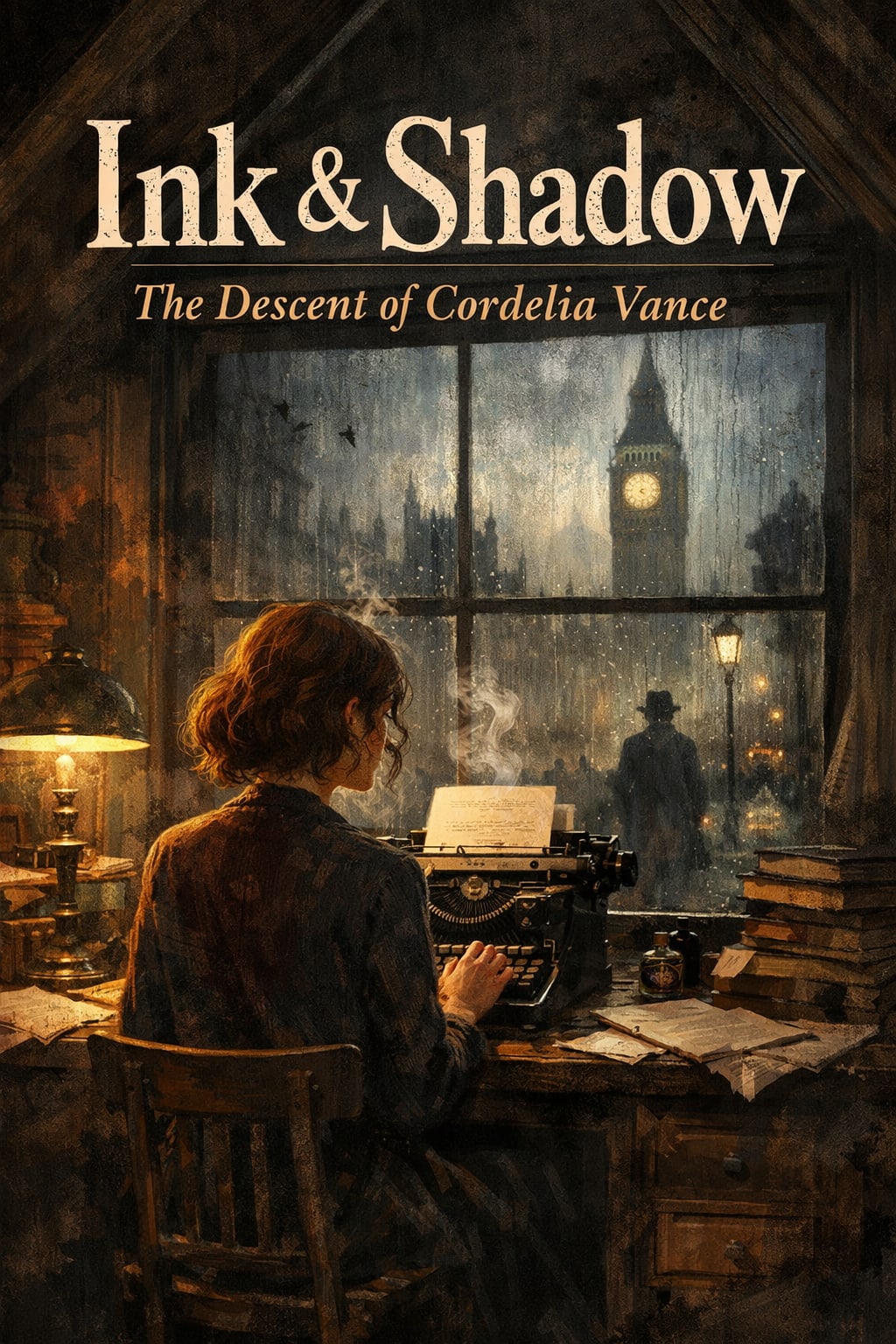
In the quietest hour of the night, when the rest of London is nothing but a distant hum of neon and regret, my attic room begins to breathe. It’s a rhythmic, dusty inhalation that smells of old paper and the lingering scent of Earl Grey tea that went cold hours ago. I am Cordelia, and I am a collector of silences. People think silence is a void, a lack of sound. They are wrong. Silence is a heavy, velvet thing; it has texture, weight, and if you listen long enough, it has a voice that sounds remarkably like your own, but from a life you’ve forgotten to live.
I sat at my desk, the wood scarred by years of ink spills—blue-black bruises that marked the passage of a thousand stories. Before me lay a blank sheet of paper. To most, it’s a terrifying emptiness. To me, it’s a white flag of surrender, a place where the noise in my head can finally lay down its arms. My fingers, stained at the tips with the permanent residue of my trade, hovered over the keys of my 1948 Underwood typewriter. It is a heavy, iron beast that requires a certain level of violence to operate. You don’t just type on an Underwood; you command it.
The story I wanted to tell tonight wasn’t mine, and yet, every word felt like a splinter being pulled from my own skin. It was about a man who lived in a house made of glass clocks. He could see every second passing, crystalline and fragile, but he could never touch them. He was a prisoner of the "now," watching the "then" shatter and the "soon" remain forever out of reach.
Clack. Clack-clack.
The sound of the first keys hitting the platen was like a heartbeat in the stillness. I wrote about the way the light filters through the cracked window of the soul. I wrote about the beauty of decay—how an old, abandoned house isn’t dying, but simply returning to the earth in a slow, graceful dance. I wrote about a woman I saw on the Tube today, whose eyes held the entire history of a shipwreck, though she was only staring at a grocery list.
I am often asked—usually by well-meaning strangers who find my reclusion "concerning"—why I choose to live this way. Why the attic? Why the shadows? Why the endless ink?
They don't understand that for someone like me, the "real world" is the hallucination. The crowded streets, the frantic pursuit of status, the relentless digital chatter—it’s all a thin veil. The truth is found in the margins. The truth is in the things people leave behind in used books: a pressed wildflower, a bus ticket from 1984, a tear-stained note that simply says, "I tried."
As the clock on the mantle chimed 3:00 AM, the story began to take its own shape, independent of my will. The man in the glass clock house realized that the only way to be free was to break the glass. But to break the glass was to end the time. It was a tragedy of existence.
My heart raced. This was the moment where the writer disappears and the story becomes the only reality. I could feel the cold Atlantic wind of my childhood in Edinburgh blowing through the gaps in my London floorboards. I could hear the whispers of the authors on my shelves—Woolf, Plath, Poe—cheering for the destruction of the glass.
When I finally pulled the last page from the machine, the room felt different. The silence had shifted. It was no longer heavy; it was hollowed out, as if the words had eaten the weight of the air. I looked at the stack of paper—1,200 words of blood and ink.
I stood up, my joints protesting the hours of stillness, and walked to the window. The sky was turning that bruised shade of purple that precedes the dawn. Somewhere out there, people were waking up to live their lives. I, however, had just finished living a hundred.
I poured the remains of the cold tea into the sink and watched the dark liquid swirl down the drain. Another day, another sacrifice to the altar of the page. I am Cordelia Vance, and I am not lonely. How can I be, when I am surrounded by so many ghosts who are finally learning how to speak?
About the Creator
Cordelia Vance
Lost in the ink-stained corridors of a life lived through pages. I write to capture the whispers of ghosts we pretend not to hear and the shadows we call home. Welcome to my attic of unspoken truths.
Keep reading
More stories from Cordelia Vance and writers in Fiction and other communities.
THE LAST ALGORITHM
Kael's fingers danced across the crystalline interface, tracing lines of shimmering code that most people mistook for incantations. In the Compiled Realm, there was no difference. Magic was software. Reality was the operating system. And Kael was a debugger.
By Cordelia Vanceabout 2 hours ago in Fiction
When the World Is Honest in the Rain
The first time Mira saw Arjun, it was raining over the old university library, the kind of rain that softened the world and made even strangers seem like memories. She had been sitting by the tall arched window, a copy of Pride and Prejudice open in her hands, though she had read the same page three times without understanding a word. Outside, the gulmohar trees trembled under silver sheets of water. Inside, the air smelled of paper and quiet longing.
By Maavia tahir3 days ago in Fiction


Comments
There are no comments for this story
Be the first to respond and start the conversation.