
Europe Snack Bar Market Size and Forecast 2025–2033
How Health Trends, Convenience, and Innovation Are Reshaping Europe’s On-the-Go Nutrition Industry

Introduction: A Market on the Move
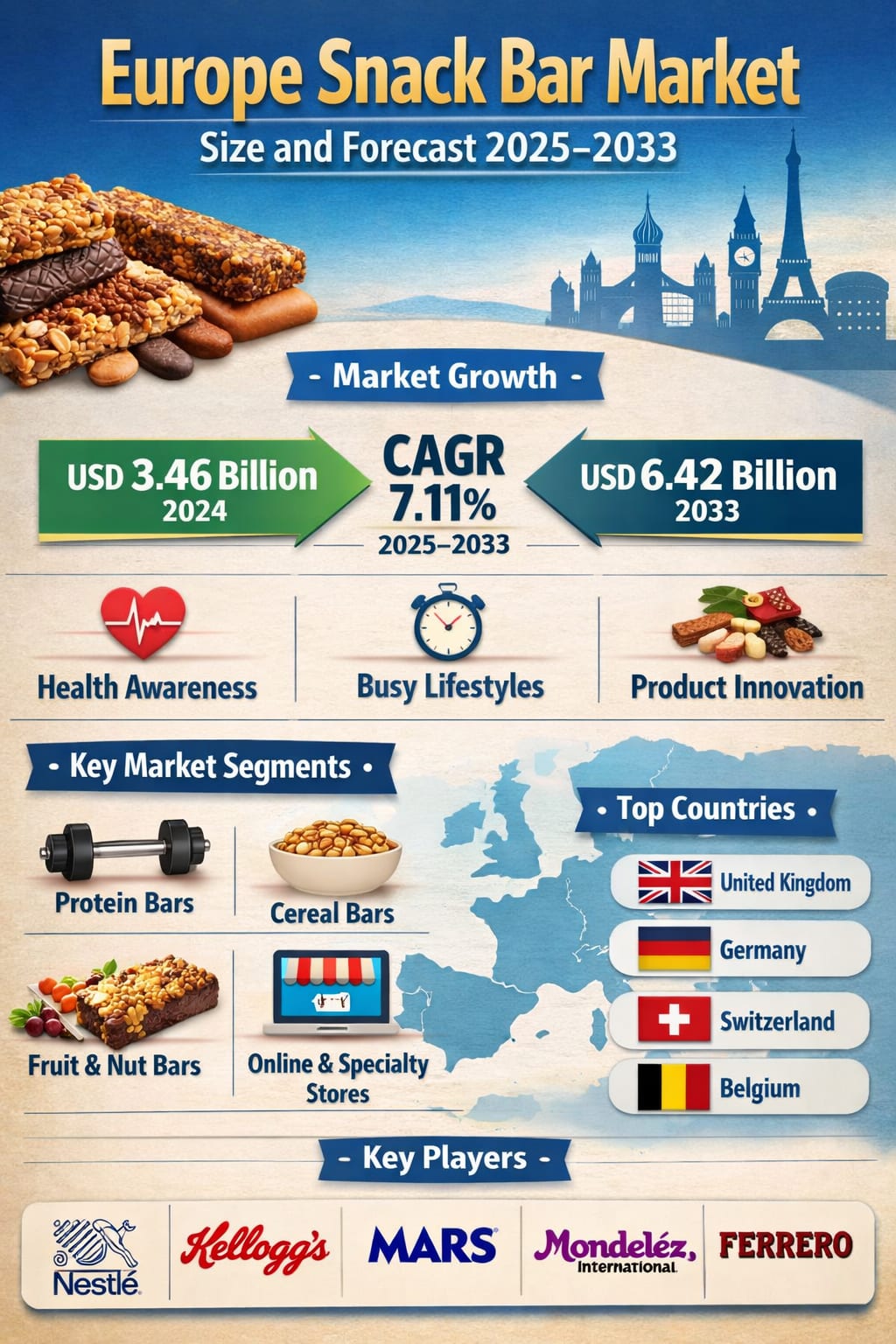
The Europe Snack Bar Market is undergoing a dynamic transformation as consumers across the region rethink how, when, and why they snack. Valued at around USD 3.46 billion in 2024, the market is projected to reach approximately USD 6.42 billion by 2033, expanding at a compound annual growth rate (CAGR) of 7.11% between 2025 and 2033, according to Renub Research.
This impressive growth trajectory reflects more than just rising sales volumes. It signals a broader shift in European food culture—one shaped by increasing health awareness, hectic urban lifestyles, and a growing demand for convenient yet nutritious food options. Snack bars, once seen mainly as occasional treats or emergency hunger fixes, have evolved into everyday companions for commuters, students, fitness enthusiasts, and busy professionals.
Protein bars, energy bars, and plant-based snack bars are now central to this evolution. At the same time, the expansion of modern retail formats and e-commerce channels has made these products more accessible than ever. Together, these forces are redefining the snack bar from a simple impulse purchase into a strategic part of daily nutrition routines across Europe.
Europe Snack Bar Market Outlook
A snack bar is traditionally understood as a convenient, ready-to-eat food product designed for quick consumption. Across Europe, snack bars have long been associated with speed, portability, and simplicity—qualities that fit neatly into the continent’s fast-paced urban environments.
Historically, Europe’s strong café and bakery culture shaped how people consumed quick meals. However, changing work patterns, longer commutes, and more time spent outside the home have gradually shifted preferences toward packaged, portable, and shelf-stable snacks. Snack bars now serve as breakfast substitutes, post-workout fuel, mid-day energy boosters, and even light meal replacements.
In major cities such as Paris, Barcelona, Berlin, and London, snack bars have become a familiar sight in convenience stores, supermarkets, vending machines, gyms, and office pantries. What makes today’s market different is the diversity of offerings. Beyond classic cereal bars, consumers can choose from protein-rich options, fruit and nut blends, vegan and gluten-free variants, and functional bars fortified with vitamins, minerals, or superfoods.
Another notable shift is the health-driven repositioning of snack bars. Many brands now emphasize clean-label formulations, natural ingredients, reduced sugar, and ethical sourcing. This blending of convenience with nutrition is reinforcing the role of snack bars as a mainstream food category rather than a niche product.
Key Growth Drivers in the Europe Snack Bar Market
Rising Health and Fitness Awareness
One of the most powerful engines behind market growth is the increasing focus on health, wellness, and active living across Europe. Consumers are becoming more mindful of what they eat, how often they eat, and how food supports their energy levels, fitness goals, and overall well-being.
Snack bars, particularly protein and functional bars, are benefiting from this shift. They are widely perceived as healthier alternatives to traditional confectionery and sugary snacks. For gym-goers, runners, cyclists, and even casual fitness enthusiasts, snack bars offer a convenient way to refuel with protein, fiber, and essential nutrients.
At the same time, demand for clean-label products is rising. Shoppers increasingly read ingredient lists and prefer products without artificial additives or preservatives. In response, manufacturers are launching bars made with natural, organic, and plant-based ingredients, aligning their portfolios with modern dietary expectations.
Convenience and On-the-Go Consumption Trends
Europe’s urban lifestyle continues to accelerate, and with it, the demand for quick, portable food solutions. Many consumers skip traditional meals due to time constraints, replacing them with smaller, more frequent eating occasions. Snack bars fit perfectly into this pattern.
Their compact size, long shelf life, and easy portability make them ideal for commuting, office breaks, travel, and outdoor activities. Innovations in packaging—such as resealable wrappers and multipacks—have further enhanced convenience and encouraged repeat purchases.
Retailers also play a crucial role by placing snack bars in high-visibility locations such as checkout counters, convenience store shelves, and vending machines. Combined with a growing variety of flavors and textures, this visibility supports impulse buying and strengthens everyday consumption habits.
Product Diversification and Innovation
Innovation remains at the heart of the European snack bar market’s expansion. Brands are constantly experimenting with new ingredients, formats, and functional benefits to capture evolving consumer preferences.
From bars enriched with superfoods, nuts, seeds, probiotics, and plant proteins to those designed for specific needs such as energy, satiety, or recovery, the category has become highly diversified. Flavor innovation also plays a major role, with options ranging from indulgent chocolate and caramel blends to refreshing fruit and nut combinations.
The rise of vegan, gluten-free, and high-fiber bars reflects broader dietary trends linked to health concerns, allergies, ethical considerations, and lifestyle choices. Sustainability is also entering the innovation agenda, with companies exploring recyclable packaging and more responsible sourcing practices.
Challenges Facing the Europe Snack Bar Market
Intense Competition and Market Saturation
Despite its strong growth outlook, the European snack bar market is highly competitive. The presence of global FMCG giants, regional brands, private labels, and niche startups has created a crowded marketplace with intense competition for shelf space and consumer attention.
This saturation increases price pressure and margin challenges, especially in mass retail channels. At the same time, rapidly changing consumer preferences force brands to innovate continuously, raising development and marketing costs. Niche segments such as keto, vegan, and high-protein bars, while attractive, further fragment the market and make differentiation more complex.
Balancing Health Claims with Taste and Texture
While health is a key purchase driver, taste and texture remain decisive. Many consumers are willing to try healthier snack bars, but they expect them to be enjoyable as well. Products that compromise too much on flavor or mouthfeel often struggle with repeat purchases.
Developing bars that are low in sugar, high in protein, and still tasty is technically challenging and can increase production costs. Moreover, strict European regulations on health and nutritional claims require careful formulation and transparent labeling, adding another layer of complexity for manufacturers.
Key Market Segments
Europe Protein Snack Bar Market
Protein snack bars represent one of the fastest-growing segments within the European snack bar market. Driven by the popularity of sports nutrition and high-protein diets, these products appeal not only to athletes but also to everyday consumers seeking long-lasting energy and better satiety.
Manufacturers are expanding their offerings with plant-based protein sources such as pea, rice, and soy to cater to vegan and vegetarian consumers. Improvements in taste and texture have helped overcome earlier consumer resistance, while wider distribution through gyms, health stores, and online platforms has boosted accessibility.
Europe Cereal Snack Bar Market
Cereal bars continue to dominate in volume terms, thanks to their family-friendly positioning, affordability, and widespread availability. Typically made from oats, rice, or other grains combined with honey, nuts, or dried fruits, these bars are often seen as wholesome breakfast alternatives or mid-day snacks.
Parents value them for children’s lunchboxes, while office workers appreciate their portability and mild sweetness. Recent product development focuses on natural ingredients, higher fiber content, and reduced sugar, aligning this mature segment with modern health trends.
Distribution Channels: Online and Specialty Stores
The rise of online retail has transformed how snack bars are discovered and purchased. E-commerce platforms allow consumers to compare products easily, explore niche brands, and subscribe to regular deliveries. Personalized nutrition boxes and subscription models are becoming increasingly popular, especially among fitness-focused consumers.
At the same time, specialty stores—including health food shops, nutrition stores, and fitness retailers—are driving premiumization. These outlets emphasize quality, functionality, and expert advice, making them ideal for protein, organic, and functional snack bars.
Country-Level Insights
Belgium
Belgium’s snack bar market reflects the country’s appreciation for quality ingredients and craftsmanship. Consumers show strong interest in natural, clean-label, and organic products, while sustainability and ethical sourcing are gaining importance. The market features a mix of international brands and local artisanal producers, with online sales growing steadily alongside traditional retail.
Switzerland
Switzerland stands out for its premium positioning and strong focus on quality and transparency. Demand is high for organic, natural, and protein-fortified bars, supported by an active outdoor and fitness culture. Swiss-made credentials and environmentally friendly packaging play a significant role in building consumer trust.
United Kingdom
The UK is one of Europe’s largest and most dynamic snack bar markets. Snack bars are widely consumed at work, school, and during sports activities. The market is characterized by a vibrant mix of established brands and innovative startups offering vegan, high-protein, and low-sugar options. Strong retail penetration across supermarkets, convenience stores, and online platforms supports continued growth.
Germany
Germany’s market is shaped by health consciousness, clean-label preferences, and sustainability concerns. Consumers pay close attention to ingredient lists and nutritional value, driving demand for protein, cereal, and nut-based bars. Environmentally friendly packaging and functional benefits such as energy and satiety are key selling points.
Market Segmentation Overview
By Product Type:
Confectionery Variant
Cereal Bar
Fruit & Nut Bar
Protein Bar
By Distribution Channel:
Supermarkets and Hypermarkets
Convenience Stores
Specialty Stores
Online Stores
Others
By Country:
Belgium, France, Germany, Italy, Netherlands, Russia, Spain, Switzerland, Turkey, United Kingdom, Rest of Europe
Competitive Landscape and Key Players
The European snack bar market features a strong lineup of global and regional players, all competing through product innovation, branding, and distribution reach. Key companies include:
Abbott Laboratories
Ferrero International SA
General Mills Inc.
Halo Foods Ltd
Kellogg Company
Mars Incorporated
Mondelēz International Inc.
Nestlé SA
PepsiCo Inc.
The Hershey Company
These companies are analyzed across four perspectives: Overview, Key Persons, Recent Developments, and Revenue, highlighting how strategic investments, acquisitions, and product launches continue to shape the competitive environment.
Final Thoughts: A Market Built for Modern Lifestyles
The Europe Snack Bar Market is no longer just about quick bites—it is about smart, flexible nutrition for modern living. With the market expected to grow from USD 3.46 billion in 2024 to around USD 6.42 billion by 2033 at a CAGR of 7.11%, the long-term outlook remains highly positive.
Health awareness, convenience, and continuous innovation will keep driving demand, while digital retail and specialty channels will reshape how consumers discover and buy snack bars. Although competition is intense and product development challenges remain, brands that successfully balance taste, nutrition, transparency, and sustainability will be best positioned to win consumer loyalty in the years ahead.
In many ways, the evolution of the snack bar mirrors the evolution of European lifestyles themselves—faster, more health-conscious, and more selective, yet still deeply connected to the simple pleasure of good food, wherever and whenever it is needed.
About the Creator
Homemade Snacks Using Eggs
Why spend money on store-bought snacks filled with preservatives when you can create these irresistible treats right in your own kitchen? Using just eggs, flour, and a few pantry staples, these ten recipes prove that homemade is always better—tastier, healthier, and surprisingly simple. From crispy to fluffy, savory to sweet, there's something here for every craving. Let's get baking!
By yue . shui6 days ago in Feast
Cooking A Valentines Meal For Two
Cooking A Valentines Meal For Two Valentine’s Day has never been about restaurant tables for me. Too much noise, too much rushing, plates arriving before you have finished the last mouthful. I would rather stay home and cook. It feels more honest. If I am going to say I care about someone, I would rather show it in the way I chop onions and stir a sauce slowly, tasting as I go.I start early in the afternoon. Not because it takes hours, but because I like the quiet build up. The kitchen feels different on a day like that. I clear the counters properly, wipe everything down, put music on low. Nothing dramatic. Just something soft in the background.
By Marie381Uk 7 days ago in Feast



Comments
There are no comments for this story
Be the first to respond and start the conversation.