literature
Families and literature go hand in hand; fictional families to entertain, reflect and inspire.
Penny Penguin Shares Her Ice. Content Warning. AI-Generated.
Far down in the shimmering, frozen land of Snowflake Bay, lived a young penguin named Penny. She was smaller than most of the other penguins and didn’t waddle as fast, but she had the warmest heart in the entire colony.
By Najeeb Scholer6 months ago in Families
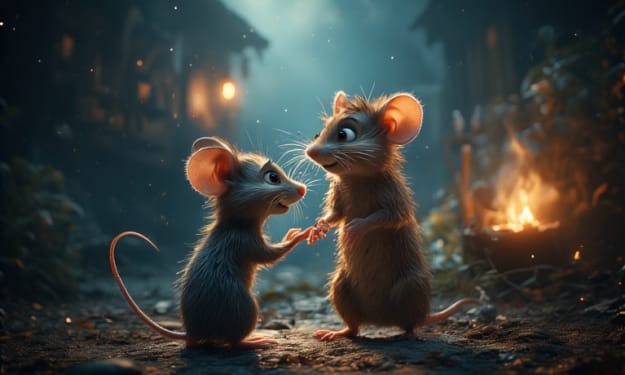
Milo the Mouse Finds Courage. Content Warning. AI-Generated.
In the heart of a tall, swaying meadow lived a tiny gray mouse named Milo. He was smaller than the other mice in his village, with big round ears and a nervous twitch in his whiskers. Milo was gentle, kind, and smart—but terribly shy and afraid of nearly everything.
By Najeeb Scholer6 months ago in Families
Benny and the Borrowed Bike. Content Warning. AI-Generated.
In a sunny town called Maplewood, where flowers bloomed year-round and the air smelled like cinnamon waffles, lived a curious and cheerful boy named Benny. Benny loved adventure more than anything—climbing trees, chasing butterflies, or building forts out of sticks and boxes.
By Najeeb Scholer6 months ago in Families
Freddy Fox and the Truth Trouble. Content Warning. AI-Generated.
In the heart of the Whispering Woods lived a fox named Finnegan, known far and wide for his cleverness. He could outsmart hunters, trick the crows out of crumbs, and even talk a squirrel out of its last nut.
By Najeeb Scholer6 months ago in Families
Thoughts on parents
Most parents haven’t lived 40 years, not even 20. They’re perspective monsters, and not because they’re unable to understand different perspectives, but because they don’t want to, and that’s the problem with millions, if not billions, of parents these days. They don’t try to understand. They don’t stop. They don’t ask. They never wonder what it feels like to be someone who’s not them. They never even try.
By Joe Goldberg6 months ago in Families
Acculturation as Adaptation: Dr. Su Yeong Kim on Cultural Navigation Among Immigrant Families
Understanding Acculturation Beyond Assimilation Acculturation is commonly defined as the ways individuals or organizations adapt their social, cultural norms, values, and beliefs to those of another. While this definition is commonly used in textbooks and research, it tends to oversimplify a more nuanced experience. Acculturation is the process by which individuals and communities negotiate the norms, beliefs, and values of a different culture alongside their own. It is a process which can lead to biculturalism of cultures rather than assimilation, which is about full absorption of a different culture. Adapting to biculturalism is a dynamic and fairly complex process. It is not a one-and-done process but rather an ongoing process of moving between multiple cultures, languages, and values.
By Su Yeong Kim6 months ago in Families
The Forgotten Sense
Here i am to discuss something related to human psycology... Of the five senses—sight, sound, taste, touch, and smell—one is often overlooked and underestimated: smell. While sight and hearing dominate our daily experiences, and taste and touch are celebrated in food and intimacy, smell lingers quietly in the background. Yet, its influence runs deep. Smell connects us to our past, shapes our emotions, and defines how we experience the world. It is the forgotten sense—one we ignore until we lose it or are suddenly overwhelmed by a memory triggered by a scent. In truth, smell may be one of the most powerful senses we have.
By Hamid Khan6 months ago in Families
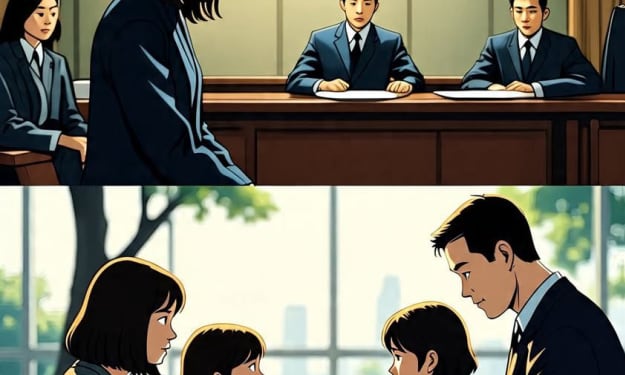
Don’t Want a Divorce: I’m Taking My Case Back
The divorce was almost finalized. A woman, determined and hurt, had taken the final steps toward separating from her husband. The paperwork was complete, every legal detail accounted for. Only one thing remained — her husband’s signature.
By Awais Ahmad6 months ago in Families
We Took a DNA Test as a Joke—Now We're Not Talking Anymore
It started the way a lot of things do these days—on a lazy Sunday afternoon, scrolling through social media. I saw an ad for one of those at-home DNA kits, the kind that promises to tell you where your ancestors came from and maybe connect you with long-lost relatives. I showed it to my sister, and we laughed. “Let’s do it,” she said. “Why not? What’s the worst that could happen?”
By Shoaib Afridi7 months ago in Families