
Why the Southern and Northern Skies Look Different
If you’ve ever traveled far from home—especially across the equator—you may have noticed something astonishing: the night sky changes. Familiar constellations vanish. New patterns appear. The North Star disappears entirely in the Southern Hemisphere. In its place, a different celestial landscape unfolds. So why do the southern and northern skies look different? The answer lies in Earth’s shape, its rotation, and your position on its surface. In this in-depth guide, we’ll explore the science behind hemispheric sky differences, how latitude changes what you see, and why certain constellations are exclusive to one half of the planet.

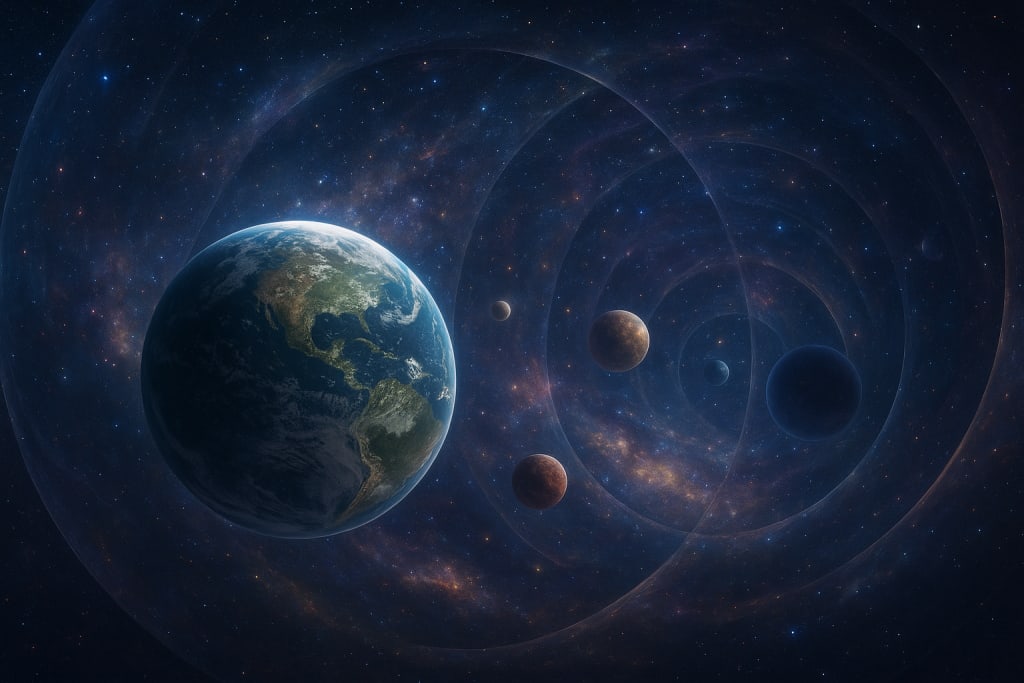
Earth’s Curvature Changes Your View of the Sky
The most important reason the skies differ is simple:
Earth is spherical.
Because Earth is round, people standing in different locations are oriented in slightly different directions relative to space. When you look up at the sky from the Northern Hemisphere, you are facing a different portion of the universe than someone standing in the Southern Hemisphere.
Imagine Earth at the center of a giant sphere of stars—what astronomers call the celestial sphere. Depending on where you stand, half of that sphere is above your horizon and half is hidden below it.
Change your latitude, and you change which half is visible.
________________________________________
The Role of Latitude
Latitude determines how much of the northern or southern celestial hemisphere you can see.
In the Northern Hemisphere:
• You can see stars near the north celestial pole.
• Some southern stars never rise above the horizon.
• Polaris is visible.
In the Southern Hemisphere:
• The north celestial pole is below the horizon.
• Polaris is invisible.
• Entirely different constellations dominate the sky.
At the equator, observers can see almost all constellations from both hemispheres at different times of the year. But as you move toward either pole, your view becomes increasingly restricted to one celestial hemisphere.
________________________________________
The North Star vs. The Southern Cross
One of the most dramatic differences between hemispheres is the presence—or absence—of Polaris.
In the north, Polaris appears nearly fixed in the sky. It marks true north and has guided travelers for centuries.
In the south, Polaris is never visible. Instead, navigators rely on the constellation Crux, also known as the Southern Cross.
Crux points toward the south celestial pole, helping determine direction much like Polaris does in the north.
These two celestial markers are mutually exclusive. You can never see both at the same time unless you are very close to the equator.
________________________________________
Constellations Unique to the Northern Sky
Certain constellations are permanently northern. Observers in the Southern Hemisphere never see them because they remain below the horizon.
Examples include:
• Ursa Major
• Cassiopeia
• Cepheus
These constellations circle the north celestial pole and are known as circumpolar constellations in northern latitudes.
Because of Earth’s curvature, they never rise high enough to be visible in southern regions.
________________________________________
Constellations Unique to the Southern Sky
Likewise, the Southern Hemisphere has constellations that northern observers never see.
Examples include:
• Crux
• Centaurus
• Carina
These constellations surround the south celestial pole and remain hidden from northern observers.
This division of the sky creates two distinct celestial identities.
________________________________________
Earth’s Rotation and the Celestial Poles
Earth rotates on its axis once every 24 hours. That axis extends into space and defines two imaginary points:
• The north celestial pole
• The south celestial pole
In the north, stars appear to circle around Polaris. In the south, stars circle around a relatively empty region near the south celestial pole.
Because the celestial poles point in opposite directions, observers in each hemisphere see stars rotating around different centers.
This rotational perspective dramatically changes the appearance of the night sky.
________________________________________
The Milky Way Looks Different Too
The Milky Way, our home galaxy, stretches across the sky as a luminous band of stars.
However, its brightest and most dramatic regions lie toward the galactic center—located in the direction of the constellation Sagittarius.
Southern Hemisphere observers often enjoy a clearer, more vertical view of the Milky Way’s core, especially in places like Australia and Chile.
In contrast, northern observers see the Milky Way tilted differently, and some of its brightest features never climb very high above the horizon.
This makes southern skies especially prized among astrophotographers.
________________________________________
Circumpolar Stars Differ by Hemisphere
Circumpolar stars are those that never rise or set—they simply circle the celestial pole.
In the north:
• Parts of Ursa Minor remain circumpolar at mid-latitudes.
In the south:
• Constellations like Octans circle the south celestial pole.
These permanent sky residents differ entirely between hemispheres.
________________________________________
The Equator: Where Both Skies Meet
At the equator, something remarkable happens.
Observers can see nearly every constellation in the sky over the course of a year.
• Northern constellations rise and set.
• Southern constellations also rise and set.
• No star remains permanently circumpolar.
The equator offers the most complete view of the celestial sphere.
This is why equatorial regions historically became important centers for astronomical observation.
________________________________________
Why You Can’t See the Entire Sky from One Place
Because Earth blocks half of the celestial sphere at any given time, no single location can see all stars in the universe.
Even over an entire year, your latitude limits how far north or south you can observe.
For example:
• Someone in New York City will never see Crux.
• Someone in Buenos Aires will never see Polaris.
Travel across the equator, and the sky transforms.
________________________________________
Historical and Cultural Differences
Different hemispheres developed unique mythologies based on their visible constellations.
Northern civilizations built stories around:
• Orion
• Ursa Major
Southern cultures created legends around:
• Crux
• Centaurus
Because the visible sky shapes storytelling, astronomy influenced mythology differently across hemispheres.
________________________________________
The Effect of Earth’s Tilt
Earth’s axial tilt (about 23.5 degrees) also influences how the sky appears seasonally.
While tilt explains seasonal changes in constellations, the hemispheric divide remains constant because the poles always point in opposite directions.
Even as Earth orbits the Sun, northern and southern observers maintain fundamentally different celestial views.
________________________________________
Space Exploration and a Global Sky
Modern technology allows us to observe the entire sky using satellites and space telescopes.
Observatories in both hemispheres work together to map the universe. For example:
• Northern observatories in United States
• Southern observatories in South Africa
Together, they provide a full-sky perspective that no single ground location can achieve.
________________________________________
A Simple Experiment
You can experience hemispheric differences yourself:
1. Learn a few northern constellations.
2. Travel south of the equator.
3. Look for them in the sky.
Some will sit low on the horizon. Others will vanish entirely.
In their place, new constellations will appear—proof that your position on Earth determines your window into the cosmos.
________________________________________
Final Thoughts
The reason southern and northern skies look different is beautifully straightforward: we live on a spherical planet.
Earth curves beneath our feet, and that curvature limits which portion of the celestial sphere we can see.
Because of this:
• Polaris shines only in the north.
• The Southern Cross rises only in the south.
• Entire constellations are exclusive to one hemisphere.
• The Milky Way appears differently depending on location.
Our night sky is not universal—it is local.
And yet, across hemispheres, the same physical laws govern the cosmos. Earth rotates. It orbits the Sun. The stars remain unimaginably distant.
Wherever you stand, the sky above you is shaped by your place on a spinning world traveling through space.
The difference between northern and southern skies is a reminder that perspective matters—even in astronomy.
About the Creator
Keep reading
More stories from shahkar jalal and writers in Education and other communities.




Comments
There are no comments for this story
Be the first to respond and start the conversation.