Latest Stories
Most recently published stories in Education.
Digital Wallets in the UK: Payments You Can Wear
Introduction Payments Are Becoming Invisible and Effortless Rapid growth in mobile payments is replacing cash and the customary wallet-based commerce method with an alternative mobile wallet method that is faster, easier and more convenient. In the United Kingdom, digital wallets have been widely adopted for secure in-store and online payments.
By deepanshu Thakurabout 12 hours ago in Education
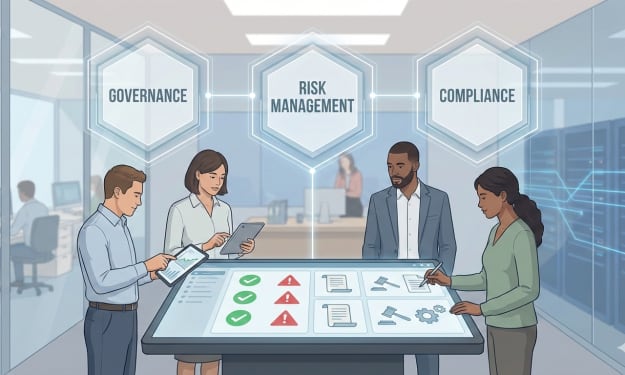
How GRCP Supports Organizational Compliance
Organizational compliance is no longer a simple checklist activity. It has become a critical responsibility for businesses of all sizes. Companies must follow laws, industry standards, internal rules and ethical expectations while managing daily operations. Failure to comply can lead to legal penalties, financial losses and serious damage to reputation.
By Snow Flakeabout 12 hours ago in Education
E-Books in the UK: Reading in a Digital-First Culture
Introduction Reading Habits Are Evolving With Technology Reading has long been used to obtain information and entertainment, as well as to enable personal development. Reading has evolved over time to include multiple formats, including early tablets and, more recently, digital formats. E-books have also become a common thing in the United Kingdom.
By deepanshu Thakurabout 12 hours ago in Education
Winter Thrills Done Right: A Practical Guide to Planning a Stress-Free Ski Vacation
A ski vacation offers a rare mix of adventure, relaxation, and natural beauty. From snow-covered peaks to peaceful mountain mornings, skiing trips create memories that stay long after the snow melts. However, without careful planning, the excitement can be overshadowed by unexpected expenses, long lines, or uncomfortable travel conditions.
By Neil Drukerabout 13 hours ago in Education
How Teaching Builds the Foundation for Stronger Professional Identity
Teaching others can significantly strengthen your professional identity, as it requires you to articulate what you know clearly. When you break down complex information into understandable steps, you sharpen your own mastery of the subject. This process forces you to analyze your assumptions, refine your explanations, and confirm the accuracy of your knowledge. As a result, you develop a more profound sense of confidence and clarity in your field. In these early stages of instructing others, the importance of professional skill-building becomes undeniably evident.
By Michael Gastinelabout 13 hours ago in Education
February Begins
White rabbits, white rabbits, white rabbits. It’s February, the worst month! I never know what to do in February, it suddenly hits that we’re a month into the new year and the belief that I have plenty of time to accomplish whatever it is I want to do this year evaporates into thin air. I respond in two ways, procrastinating or working on random little tasks. We had entrance examinations on Monday, so while I still went into work we didn’t have any exams to do, but I got everything prepped for the rest of the week. That means tests, exams and presentation grading!
By Max Brooksabout 17 hours ago in Education
Unveiling the “Spanish Village” Secret: How a Rare Citrus Compound is Challenging Modern Weight Loss Wisdom
In the world of nutritional science, researchers are constantly searching for the root causes of obesity. Recently, attention has shifted toward a small, remote village in Spain that presents a baffling paradox to modern medicine: despite a diet rich in bread and wine, the local population remains remarkably slim well into their 80s and 90s.
By Zirari Mohamedabout 18 hours ago in Education
Do You Still Remember Your Bully’s Birthday?
There’s something my readers need to know for the purpose of this post: I’m a bit odd. Not the quirky “Ooh, look at my collection of cool rocks or skulls/I’m into Tarot and the moon” and shit, more like “I have a collection of broken glass that I used to break with my own hands in school and now my palms are as thick as leather” and “I created a language to go with the world in my head and I use this language and symbols around the flat and pretend that people don’t look at these symbols and writing and quickly glance at me to make sure I’m not trying to hex them” odd. There are a lot of other examples, but if I gave all of these examples, this post could turn into a short novel.
By Violet Wrighta day ago in Education
Homeschooling Becoming The “Norm”
Recently I have seen a massive surge online of people talking about homeschooling their children. The comments on these posts are very diverse. Everyone seems to have a different opinion. So is homeschooling the right thing to do? Does it actually provide a better education than public school?
By Plural | By Mollie a day ago in Education
“What School Never Taught Me About Failure”. AI-Generated.
I was taught how to pass exams, not how to survive disappointment. By the time I failed for the first time, I thought something was wrong with me. School made failure look simple. Red marks. Wrong answers. A number at the top of the page that quietly decided how smart you were allowed to feel that day. If you failed, you studied harder. If you didn’t improve, you tried again. The system implied that effort always led to success, and success always arrived on schedule. Life didn’t follow the syllabus. School never taught me that failure could arrive suddenly, without warning, and stay longer than expected. It never explained what to do when effort doesn’t fix things. When hard work still ends in rejection. When you follow all the rules and still lose. I remember being praised for getting things right. For finishing first. For not making mistakes. I learned early that success earned attention, and failure earned silence. Teachers didn’t mean harm—but unintentionally, they trained us to associate worth with performance. So I did what I was taught. I chased achievement. I memorized expectations. I avoided risks that might expose weakness. I became good at appearing capable. What I never learned was how to fail without hating myself. The first real failure of my life didn’t come with a report card. It came quietly, disguised as “almost.” Almost good enough. Almost chosen. Almost successful. And there was no teacher to tell me what lesson I was supposed to learn. I failed, and nothing happened. No bell rang. No retake was offered. No clear feedback explained where I went wrong. The world just… moved on. And I was expected to move with it. School never taught me that failure doesn’t always look dramatic. Sometimes it looks like showing up every day and still feeling behind. Sometimes it looks like watching others move forward while you stay stuck. Sometimes it looks like success for everyone else and confusion for you. It never taught me that failure hurts in places you can’t explain. That it seeps into your confidence, your relationships, your sense of direction. That it can make you question things you never doubted before—your intelligence, your talent, your purpose. In school, failure was temporary. In life, it can feel permanent. We weren’t taught how to grieve the version of ourselves we thought we’d become. We weren’t taught how to sit with disappointment without turning it inward. We weren’t taught that failing at something doesn’t mean you are a failure—but that’s exactly how it feels when no one prepares you. School taught me how to aim for success, but not how to land after missing. It didn’t teach me that failure isn’t linear. That you don’t always fail once and then succeed. Sometimes you fail repeatedly, quietly, in ways no one claps for when you finally recover. Sometimes you succeed in areas no one grades. It didn’t teach me that failure can make you tired in a way sleep doesn’t fix. The kind of tired that comes from trying again when you’re no longer sure it’s worth it. The kind that makes you doubt your instincts. The kind that teaches you humility the hard way. And yet—this is what school missed the most. Failure didn’t ruin me. Avoiding it almost did. Because when you’re taught to fear failure, you shrink your life to fit your comfort zone. You stop trying new things. You stop asking questions. You stop risking embarrassment. You choose safe paths over meaningful ones. School taught me how to be correct. Failure taught me how to be brave. It taught me patience when progress was invisible. It taught me empathy for others who were struggling quietly. It taught me that confidence built on perfection collapses easily—but confidence built on survival lasts. Failure taught me that growth doesn’t always come with validation. That sometimes you have to believe in yourself without proof. That resilience isn’t about never falling—it’s about learning how to stand back up without applause. School never taught me how to redefine success. Failure did. Success stopped being about winning or being first. It became about continuing. About showing up honestly. About choosing growth over approval. About learning when to quit what isn’t right and when to persist even when fear says stop. I wish school had taught us that failure is not the opposite of success—it’s part of it. That mistakes are not evidence of inadequacy. That learning doesn’t always look neat or fast or impressive. But maybe school couldn’t teach that. Maybe failure only teaches itself. Now, when I fail, I don’t ask, “What’s wrong with me?” I ask, “What is this trying to show me?” And that question—more than any exam, grade, or certificate—is the most valuable lesson I ever learned. Just not in a classroom.
By Faizan Malika day ago in Education