Sustainability
world the best10 amazing places
The Grand Canyon The Grand Canyon is a natural wonder located in the state of Arizona in the United States. It is a vast, steep-sided canyon that was carved over millions of years by the Colorado River. The canyon is about 277 miles long, up to 18 miles wide, and over a mile deep in some places. It is a popular destination for tourists, who come to see the stunning views from the rim, hike in the canyon, or take a boat trip down the Colorado River. The Grand Canyon is home to a wide variety of plant and animal life, and is a UNESCO World Heritage Site. It is one of the most iconic and awe-inspiring natural wonders in the world. The Great Barrier Reef The Great Barrier Reef is the world's largest coral reef system and is located in the Coral Sea, off the coast of northeastern Australia. It is home to a wide variety of marine life, including fish, turtles, dolphins, whales, and over 600 species of coral. The reef is a popular destination for snorkeling and diving, and is also home to several resorts and tour operators that offer a variety of activities such as boat trips, guided snorkeling and diving tours, and glass-bottom boat tours. The Great Barrier Reef is home to some of the most diverse and beautiful marine ecosystems on Earth, and it is considered one of the seven natural wonders of the world. However, the reef is facing significant threats from climate change and other environmental factors, which have led to coral bleaching and other damage. Efforts are underway to protect and preserve the reef for future generations. The Taj Mahal The Taj Mahal is a white marble mausoleum located in Agra, India. It is considered one of the most beautiful buildings in the world and is a symbol of love. The Taj Mahal was built by the Mughal Emperor Shah Jahan in memory of his favorite wife, Mumtaz Mahal, who died during childbirth. Construction of the Taj Mahal began in 1632 and was completed in 1653. It is an example of Mughal architecture, a style that combines elements of Persian, Indian, and Islamic design. The Taj Mahal is a UNESCO World Heritage Site and is visited by millions of tourists each year. It is known for its intricate carvings, beautiful gardens, and stunning views of the Yamuna River. It is considered one of the greatest examples of Mughal architecture and is often referred to as the "Jewel of Muslim Art in India." The Pyramids of Giza
By indika sampath3 years ago in Earth
Know about solar panels and solar energy resources
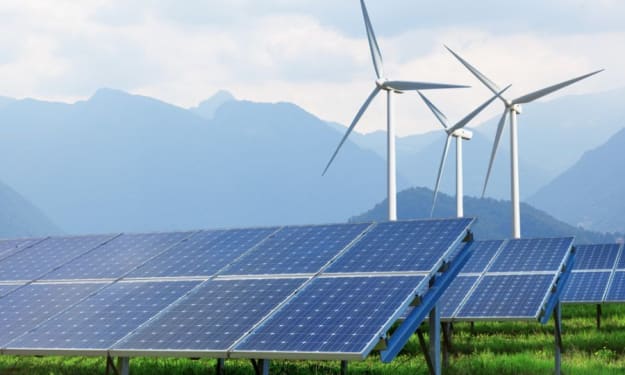
A solar water heater is a cost-efficient system for generating hot water for domestic usage. Solar energy is economically as well as ecologically sounds and is being hailed among the top renewable energy sources. A family or a small school will be able to save energy extensively through a Solar Geyser Madurai which will have high benefits in the coming years at a cost-effective price.
By chakra varthies3 years ago in Earth
Why is Solar Energy Important in Pakistan?
Solar power is not only renewable but also a CO2-free power source. The power generation methods have a very adverse impact on the environment, however, the use of solar panels for generating energy has very less impact on the environment. The only impact it has is mainly related to the production and supply of these panels. Pakistan has realized the importance of solar technology and hence the use of solar energy in Pakistan is increasing over time. The use of solar panels has obvious financial benefits. Other than these financial benefits, solar power also serves other pertinent benefits. Some of the best solar companies in Pakistan are offering such benefits that include:
By Uncle Berry3 years ago in Earth
10 Driest Places on Earth
10 Driest Places on Earth The fact that 71% of the Earth is made up of water is fantastic because it is essential for our survival. However, some regions fall under the category of hyper-arid deserts since they often receive less than 0.09 inches (2 millimeters) of precipitation annually. Even worse, some regions endure for years without receiving any rain, rendering them essentially uninhabitable. Amazingly, deserts cover 35% of the planet's surface, making them larger than you may imagine. Let's look at 10 of the driest locations on the planet.
By Paul Smith3 years ago in Earth
What happened to the Bronze Age?
Recently, I came across a great article about the findings of an ancient lake which showed a great drought during the end of the Bronze Age. It is an event which has many people discussing what really did happen to bring that age to an end. Some suggested the emergence of a great sea peoples, some say it was volcanoes and earthquakes. It could have been the lack of materials to build any more. A shipwreck was also discovered recently showing a cargo full of tin necessary for the bronze age. Geologically the composition showed that it came from a long way away and far from the Mycenean city states. This suggests that they were running out of materials and couldn’t sustain their civilization.
By Jennifer Allen3 years ago in Earth
Carbon Footprint Consultant In India
Carbon Footprint The total quantity of greenhouse gas emissions from the manufacture, use, and disposal of a good or service is its "carbon footprint." It consists of fluorinated gases, methane, nitrous oxide, and carbon dioxide, which trap heat in the atmosphere and contribute to global warming. Carbon dioxide is the gas that humans emit most frequently. The primary sources of a person's carbon footprint are often their transportation, housing, and food.
By agile advisor3 years ago in Earth