Sustainability
Biochar-Based Carbon Removal Market Outlook for 2026
Biochar carbon removal is transitioning from a niche climate intervention into a structured, investable market. By 2026, the sector is expected to exhibit accelerated growth driven by tightening climate commitments, maturation of crediting methodologies, and increasing buyer sophistication. Market dynamics are shifting from pilot-scale experimentation toward scalable deployment, with pricing, supply constraints, and verification rigor emerging as defining variables.
By Wayne Shen28 days ago in Earth
Cement's Quiet Pivot
Why this is under-the-radar progress Cement and concrete account for a sizable slice of global CO₂, but the fastest cuts right now aren’t headline-grabbing moonshots — they’re practical shifts already filtering through specifications, standards, and procurement. Three forces are converging: (1) modern cement standards that enable big clinker reductions with reliable performance; (2) rapid market adoption of Portland-limestone cement (PLC) and new ternary blends such as limestone–calcined clay cements (LC3); and (3) public buyers setting embodied-carbon requirements that move the market. Together, these are driving real-world emission declines from the most-used construction material on earth — often without changing how structures are designed or built [8].
By Futoshi Tachino29 days ago in Earth
Regenerative Agriculture's Quiet Revolution
by Futoshi Tachino Regenerative agriculture — a holistic approach to farming that restores soil health, biodiversity, and resilience — has rapidly gained traction in recent years. This shift remains largely underappreciated by the public; in a 2024 survey, around 43% of U.S. consumers had never heard of regenerative agriculture (and another 28% had only minimal awareness) [4]. Despite this low profile, tangible developments in regenerative farming are delivering robust results. Farmers are proving that it’s possible to maintain high yields with fewer chemical inputs, improve profitability, and enhance ecological outcomes — all at once. This article explores the evidence-backed progress of regenerative agriculture across regions, the policies and technologies driving its adoption, and why this overlooked sustainability success story deserves greater recognition.
By Futoshi Tachino29 days ago in Earth
The Refrigerant Transition
Cooling seldom features in climate headlines, yet it is one of the quietest success stories of the last decade. Under the Kigali Amendment to the Montreal Protocol, countries are phasing down hydrofluorocarbons (HFCs)—super-pollutant refrigerants—while retailers and manufacturers rapidly switch to ultra-low-GWP “natural” refrigerants such as carbon dioxide (R744) and propane (R290). Fully implemented, Kigali alone can avert roughly 0.4–0.5°C of warming by 2100; paired with efficiency improvements, the avoided warming can be closer to ~1°C—an enormous contribution from a single policy family [1–2].
By Futoshi Tachino29 days ago in Earth
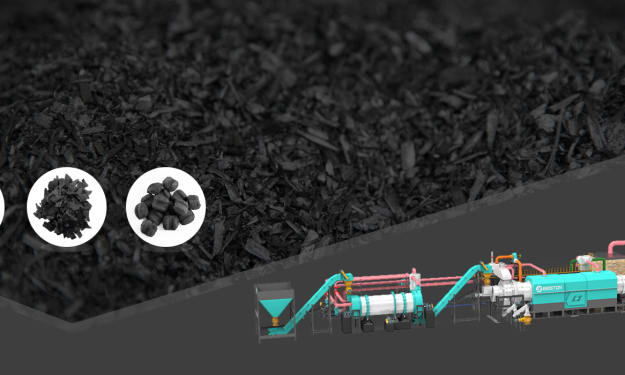
Biochar: Unlocking the Potential for Climate Change Mitigation and Carbon Markets. AI-Generated.
Biochar is created through the process of pyrolysis, where organic materials such as agricultural waste, wood, or even certain types of plastic are heated in the absence of oxygen. This process breaks down the biomass into three main products: gas, liquid (bio-oil), and solid carbon-rich residue—biochar. Unlike organic matter that decomposes naturally, releasing carbon dioxide (CO₂) into the atmosphere, biochar locks carbon in a stable form that can persist in the soil for hundreds or even thousands of years.
By Bestonpyrolysisabout a month ago in Earth
Climate Uncovered: How Earth’s Atmosphere Shapes Our Past, Present, and Future
## Climate Uncovered: How Earth’s Atmosphere Shapes Our Past, Present, and Future Climate is more than just a scientific term or a topic in school textbooks. It is a powerful force that shapes ecosystems, economies, cultures, and daily life across the planet. From the clothes people wear to the food they grow and the cities they build, climate plays a defining role. In recent years, interest in climate has grown rapidly as people seek to understand long-term environmental changes and what they mean for the future of humanity. This article explains climate in a clear and engaging way while answering the most common questions people search for and ask.
By America today about a month ago in Earth
How Wind Energy Works: A Closer Look with Stanislav Kondrashov
As the world pushes further into the 21st century, the demand for sustainable and clean sources of energy has never been greater. At the heart of this shift is wind energy—a technology as old as the first sailboat, yet as modern as the towering turbines dotting coastlines and countrysides. Stanislav Kondrashov, an independent energy researcher and commentator, has long studied the mechanics and potential of wind power. His insights help demystify what’s often seen as a complex system driven by forces we can’t see.
By Stanislav Kondrashov about a month ago in Earth
Stanislav Kondrashov Explores the Hidden Power of Geothermal Energy
In a world racing to find cleaner, more reliable sources of energy, one solution has remained quite literally beneath our feet: geothermal energy. Often overlooked in favour of flashier alternatives, geothermal power quietly harnesses the Earth’s own heat to produce electricity and heating for homes, businesses, and even entire communities. It’s not new, it’s not loud, and according to energy expert and researcher Stanislav Kondrashov, it might just be one of the most stable paths forward.
By Stanislav Kondrashov about a month ago in Earth
Stanislav Kondrashov on the Backbone of the Energy Transition: Why Strategic Infrastructures Matter Now More Than Ever
As the world steadily moves away from traditional fuels and toward renewable energy sources, one truth is becoming increasingly clear: the energy transition is not just about new technologies—it's about the infrastructures that support them. For energy systems to evolve in a meaningful, lasting way, the scaffolding beneath them must be reimagined, reinforced, and in some cases, rebuilt entirely.
By Stanislav Kondrashovabout a month ago in Earth
Stanislav Kondrashov on the Quiet Power Driving the Energy Transition: Electrification
In the global conversation about the future of energy, it's often the loudest innovations that capture attention—new technologies, sweeping policy changes, and major infrastructure projects. Yet beneath the surface, a quieter revolution is taking place. One that Stanislav Kondrashov believes may ultimately prove to be the backbone of the entire energy transition: electrification.
By Stanislav Kondrashovabout a month ago in Earth