Humanity
Edinburgh and Glasgow Top London as UK’s Nightlife Hotspots, Uber Data Shows. AI-Generated.
For decades, London has been seen as the undisputed heart of the UK’s nightlife, drawing partygoers with its clubs, concerts, late-night dining, and cultural events. However, new data released by Uber suggests that the balance may be shifting. According to recent ride-hailing trends, Edinburgh and Glasgow have now overtaken London as the UK’s top nightlife hotspots, signaling a major change in how and where Britons choose to spend their nights out.
By Aarif Lashari13 days ago in Earth
Pictured: British Mother Stabbed to Death in Spain. AI-Generated.
The tragic death of a British mother who was stabbed to death in Spain has sent shockwaves through both the local community where the incident occurred and her hometown in the United Kingdom. Spanish authorities have confirmed that the woman died after sustaining fatal stab wounds, and an active investigation is underway to determine the circumstances surrounding her death.
By Aarif Lashari13 days ago in Earth
Severe Weather Conditions and School Closures in the United States
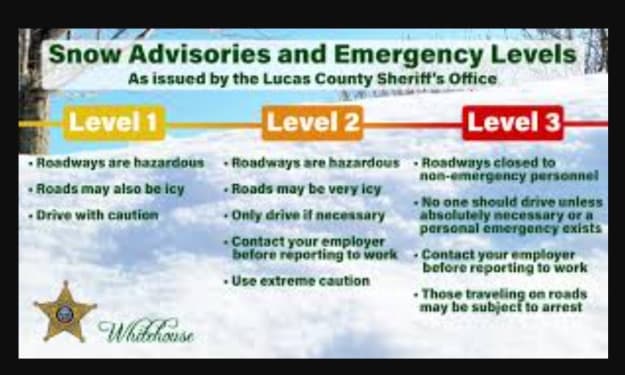
Severe Weather Conditions and School Closures in the United States Severe weather has long been one of the main reasons for school closures across the United States. From powerful winter storms and freezing temperatures to hurricanes, floods, and extreme heat, weather conditions can disrupt daily life and force education authorities to prioritize student safety. In recent years, climate variability has increased the frequency and intensity of these events, making weather-related school closures a recurring concern for families, educators, and local governments.
By America today 13 days ago in Earth
Trump Keeps Posting Private Messages on Truth Social. AI-Generated.
Former President Donald Trump has once again made headlines for an unusual reason: sharing private messages on Truth Social, the social media platform he founded. The posts, which reveal snippets of his personal and political communications, have sparked laughter, outrage, and renewed debates about the very nature of digital privacy. More importantly, this episode serves as a cautionary tale for everyone who uses work chats, messaging apps, or social platforms to communicate, proving that nothing online is truly private. Whether it’s WhatsApp, Slack, Teams, or private DMs, millions of people around the world use these tools daily, often assuming their conversations are confidential. Trump’s latest posts show just how risky that assumption can be — even for a former president. The Incident on Truth Social Over the past several weeks, Trump has posted screenshots of private conversations on Truth Social, including discussions that were originally intended for his aides, advisors, or campaign team. These posts include messages about political strategies, responses to media coverage, and even personal grievances. Observers quickly noticed that sharing these messages publicly exposes sensitive information that might otherwise have stayed private. While the former president’s followers seemed entertained or intrigued, the incident underscores an important principle: once a digital message exists, it can easily become public. Why Work Chats Aren’t Private Trump’s actions provide a high-profile example of a truth that affects everyone: work chats, even in corporate or political settings, are rarely private. Here’s why: Platforms Can Be Hacked No system is completely secure. Hackers can access private chats, whether on messaging apps, company networks, or social media platforms. Even messages thought to be encrypted can sometimes be breached. Company Policies and Oversight In many organizations, administrators have access to employee accounts, messages, and files. A “private” Slack or Teams conversation can often be monitored or archived for compliance purposes. Screenshots and Forwarding Even without technical hacks, messages can easily be shared with third parties. A single screenshot or forwarded text can turn a private conversation into public information in seconds. Social Media Amplification As Trump demonstrates, posting screenshots online spreads private content globally almost instantly. Once online, control over that information is lost. In short, privacy is never guaranteed in digital communication — whether you’re a political figure, a corporate employee, or just chatting with friends. Lessons From Trump’s Posts Trump’s public sharing of private messages offers several lessons: Assume everything can be seen: Even if a platform promises privacy, assume that your messages could eventually be exposed. Be careful with sensitive content: Strategy discussions, confidential plans, and personal opinions should be communicated cautiously. Understand platform limitations: Social media platforms are designed for sharing, not secrecy. Once you post or forward something, it’s out of your control. These lessons apply to businesses, governments, and individuals alike. Organizations have learned the hard way that leaked internal communications can lead to public scandals, reputational damage, and legal complications. Historical Context: Public Figures and Leaks Trump is not the first public figure to accidentally or intentionally make private communications public. Political scandals over the past two decades — from leaked emails to exposed text messages — have consistently highlighted the risks of digital messaging. For example: Hillary Clinton’s emails in the 2016 election became a national controversy, showing how digital communications can be scrutinized intensely. Corporate leaks, such as employee messages going viral, have damaged brands and led to resignations. The lesson: if you want something to stay private, avoid sending it digitally, because there’s always a chance it will surface. The Psychology Behind Sharing Private Messages Why do people share private messages publicly? Trump’s posts illustrate several possible motivations: Shaping the narrative: By posting private chats, he can highlight points that support his messaging or political agenda. Entertainment value: Followers may enjoy the behind-the-scenes glimpse into personal or political communications. Control over interpretation: Sharing messages allows the original sender to frame them in a way that aligns with their narrative. However, these benefits come at a cost: exposing sensitive content, alienating colleagues, and undermining trust. In the workplace, similar actions could lead to disciplinary measures or legal consequences. Digital Privacy in the Modern Era Trump’s Truth Social posts serve as a high-profile reminder that digital privacy is fragile. For the average user, the implications are clear: Use caution with work chat apps: Always assume your messages can be accessed or shared. Separate personal and professional communications: Sensitive work discussions are best held in secure, controlled environments. Limit screenshots and forwards: Once a message is captured, it can leave your control forever. Organizations, meanwhile, should educate employees about digital security and implement policies to protect both data and privacy. Conclusion: No Work Chat Is Truly Private Trump’s recent activity on Truth Social illustrates a simple truth: digital messages, whether personal or professional, are never completely private. Screenshots, hacks, forwarding, or platform design flaws can make sensitive information public in an instant. The lesson applies to everyone, from former presidents to corporate employees: treat digital communications as public by default, and be mindful of the content you share. In a world where private messages can become headlines, caution, discretion, and digital literacy are essential. In the end, Trump’s posts are entertaining for some, worrying for others, but they reinforce an enduring reality: if you don’t want the world to see it, don’t send it digitally.
By Muhammad Hassan13 days ago in Earth
Europe Is About to Sign a Long-Awaited Free-Trade Deal With India. AI-Generated.
After years of negotiations, pauses, and political recalculations, Europe and India are finally on the brink of signing a long-awaited free-trade agreement. What once seemed like an overly ambitious diplomatic project is now becoming a reality—one that could redefine trade relations between two of the world’s most influential economic regions. This deal is not just about tariffs and exports. It’s about shifting global power, strengthening supply chains, and creating new opportunities for communities on both sides. Why This Deal Took So Long Talks between the European Union and India began well over a decade ago, but progress was slow. Differences over labor standards, environmental rules, market access, and intellectual property rights repeatedly stalled negotiations. Both sides had strong priorities—and neither wanted to compromise too much. However, the global landscape has changed dramatically in recent years. Supply chain disruptions, geopolitical tensions, and a growing desire to reduce over-reliance on single markets have pushed both Europe and India to rethink their strategies. Suddenly, cooperation feels less optional and more necessary. What the Agreement Is Expected to Cover At its core, the free-trade deal aims to reduce tariffs, ease regulations, and open markets between Europe and India. European companies are seeking better access to India’s vast consumer market, while India wants smoother entry into European industries such as technology, pharmaceuticals, and manufacturing. The agreement is also expected to include provisions related to: Digital trade Sustainable development Labor rights Investment protection These elements reflect modern trade priorities, where economic growth is increasingly linked with social and environmental responsibility. Why Europe Needs India Right Now For Europe, the deal is part of a broader strategy to diversify trade relationships. Recent global events have highlighted the risks of economic dependency. India, with its rapidly growing economy and young workforce, represents both stability and potential. European policymakers see India as a long-term partner capable of balancing global trade dynamics. Strengthening ties with India could also help Europe remain competitive in a world where economic influence is constantly shifting. Why India Is Saying Yes India, too, stands to gain significantly. A free-trade agreement with Europe could boost exports, attract investment, and accelerate economic modernization. It also positions India as a major global player willing to engage on equal terms with powerful blocs. For Indian businesses—especially small and medium enterprises—easier access to European markets could mean growth, innovation, and international exposure. For workers, it could translate into job creation and skills development. Impact on Everyday Communities While trade deals often sound abstract, their effects are deeply local. Lower tariffs can reduce prices for consumers. New investments can revitalize industries and create employment. Improved cooperation can strengthen educational, cultural, and technological exchanges. Communities in Europe may see new products, partnerships, and opportunities tied to Indian innovation. Indian communities, meanwhile, could benefit from European expertise in sustainability, infrastructure, and advanced manufacturing. This is why the agreement matters beyond boardrooms and government offices—it touches real lives. Concerns and Criticism Still Exist Despite the optimism, critics on both sides have raised concerns. Some European groups worry about labor standards and environmental protections, while some Indian voices fear that local industries could struggle against European competition. These concerns highlight the importance of transparency and fair implementation. A successful agreement will require ongoing dialogue, monitoring, and cooperation to ensure that economic growth does not come at the expense of workers or the environment. A Strategic Signal to the World Beyond economics, the deal sends a strong political message. It signals that multilateral cooperation is still possible, even in an era of rising protectionism. Europe and India are showing that large, diverse democracies can find common ground through negotiation rather than confrontation. This partnership could also influence future global trade standards, especially in areas like digital regulation and sustainable development. What Happens Next Once signed, the agreement will still need formal approvals and phased implementation. Businesses, governments, and communities will need time to adapt. But the direction is clear: closer ties, deeper cooperation, and a shared economic future. For both Europe and India, this deal represents more than a trade pact—it’s a strategic investment in resilience and mutual growth. Final Thoughts The long-awaited free-trade deal between Europe and India marks a turning point in global economic relations. It reflects changing priorities, evolving partnerships, and a shared recognition that collaboration is essential in an uncertain world. As the agreement moves forward, its true success will be measured not just in trade volumes, but in how effectively it supports communities, protects values, and builds a more balanced global economy.
By Muhammad Hassan13 days ago in Earth
True Happiness
On a sturdy apple tree, a mother dove lived peacefully with her tiny baby. The tree provided them with shelter, shade, and a sense of security. Every day, the mother dove would watch over her little one, teaching it to flap its wings, coo softly, and enjoy the calm of the natural world. Life had been simple, quiet, and safe for them, and she felt content in the little world that belonged entirely to her and her chick.
By Sudais Zakwan14 days ago in Earth
What Will the Weather Be Like Tomorrow
## What Will the Weather Be Like Tomorrow Tomorrow’s weather forecast provides an overview of the atmospheric conditions expected over the next twenty-four hours. Weather forecasts are created using scientific observations such as temperature, air pressure, humidity, wind speed, and cloud movement. These observations are analyzed through advanced computer models that simulate how the atmosphere is likely to behave. Because the forecast focuses on a short time frame, it is generally more accurate than long-term predictions. Understanding tomorrow’s weather helps people plan their daily activities, commute safely, and prepare for possible changes in conditions throughout the day.
By America today 14 days ago in Earth
Man Shot Dead by Federal Agents in Minneapolis Named by Local Officials. AI-Generated.
Local officials in Minneapolis have identified the man who was shot and killed by federal agents during a law enforcement operation, an incident that has drawn public attention and renewed debate over the use of force by federal authorities. The fatal shooting occurred during an operation involving federal agents, with details continuing to emerge as investigators work to establish exactly what happened.
By Aarif Lashari14 days ago in Earth
Man Shot Dead Was 37-Year-Old US Citizen, Minneapolis Police Chief Says. AI-Generated.
For many residents of Minneapolis, the news landed like a heavy blow. Authorities confirmed that a man shot dead during a law enforcement operation was a 37-year-old U.S. citizen, a detail that immediately intensified public reaction. What began as a breaking news alert quickly became a broader conversation about policing, federal authority, and community trust.
By Muhammad Hassan14 days ago in Earth