Climate
Tragic Chapter on the Trains Sends Rail Superpower Spain Into Crisis. AI-Generated.
Spain, long celebrated as a railway superpower thanks to its high-speed AVE network and extensive commuter services, is now grappling with a rail crisis following a series of tragic incidents. Recent events have triggered public outrage, investigations, and calls for urgent reforms, highlighting vulnerabilities in what was once considered one of Europe’s safest and most efficient rail systems.
By Aarif Lashari28 days ago in Earth
Pentagon Contractor Indicted Over Alleged Leak Tied to Raided Washington Post Reporter. AI-Generated.
A Pentagon contractor has been indicted in connection with an alleged leak tied to a Washington Post reporter, marking a significant escalation in the U.S. government’s scrutiny of leaks involving national security information. The case has raised questions about press freedom, government overreach, and the balance between security and transparency, stirring debates in political, legal, and journalistic circles. Background of the Case According to court documents, the Pentagon contractor is accused of disclosing classified or sensitive information to a Washington Post journalist, whose office was previously raided by federal authorities as part of a leak investigation. The allegations include: Transmitting sensitive information without authorization. Coordinating with journalists who may have used the material in published reports. Potentially compromising national security operations or personnel. Federal prosecutors allege that the contractor knowingly violated U.S. law by disclosing information protected under federal statutes governing classified material. The Washington Post Connection This case is closely linked to a prior federal raid on a Washington Post reporter, an unprecedented action that drew widespread criticism from journalists and press freedom advocates. The raid reportedly aimed to identify the source of leaks regarding sensitive military or defense operations. The indictment of the Pentagon contractor underscores the government’s ongoing efforts to identify and prosecute sources of classified leaks, even when they involve interactions with journalists. Critics argue that such investigations risk chilling investigative reporting and undermining the First Amendment. Legal Details of the Indictment While some details remain sealed due to the sensitive nature of the information, the indictment reportedly charges the contractor with: Unauthorized disclosure of national defense information. Conspiracy to leak classified material. Violation of federal secrecy and security laws. The contractor now faces potential penalties including prison time, fines, and the permanent loss of security clearance. The case will be closely watched by legal experts, media organizations, and policy analysts, as it could set important precedents for how leaks are investigated and prosecuted. Implications for Press Freedom Journalists and press freedom organizations have raised concerns over the broader implications of this case. Key issues include: Chilling effect on investigative journalism: If government employees fear prosecution for speaking to reporters, crucial stories may go unpublished. Source protection: Confidential sources are vital for reporting on matters of public interest, particularly regarding government and military operations. Transparency vs. security: Balancing the public’s right to know with national security interests remains a complex challenge. The Washington Post and other news outlets have emphasized that government actions should respect constitutional protections for press freedom, even when investigating leaks. Government’s Perspective From the government’s standpoint, the case highlights the risks posed by unauthorized disclosures of sensitive information. Officials argue that leaks can: Compromise ongoing military operations. Endanger personnel and intelligence assets. Undermine national security and international relations. Prosecutors assert that the Pentagon contractor acted knowingly and illegally, justifying the indictment as necessary to protect national interests. Previous Leak Cases and Context This indictment comes amid a series of high-profile leak investigations involving U.S. government employees, contractors, and journalists: Previous cases have involved classified defense documents, intelligence reports, and diplomatic cables. Some investigations resulted in prosecutions, while others sparked controversy over press freedom and government overreach. These cases often raise complex legal questions about the definition of classified information and the rights of journalists to report on public interest issues. Legal experts say this Pentagon contractor case may be one of the most significant yet, given its direct tie to a mainstream news outlet. Public and Media Reaction The indictment has elicited strong reactions from multiple sectors: Journalists: Press freedom advocates express concern that prosecuting sources of leaks could intimidate whistleblowers and reporters. Legal analysts: Experts are closely watching how the courts interpret laws governing classified material and the limits of government authority. Policy makers: Some lawmakers have emphasized the need for clearer guidelines on leaks and protections for investigative reporting. Civil liberties organizations have warned that aggressive leak investigations may inhibit government accountability, especially on issues involving national defense and public interest. Potential Outcomes and Next Steps The Pentagon contractor now faces trial proceedings, which may include: Pre-trial motions challenging the scope of evidence and the legality of the indictment. Examination of whether journalists’ communications can be implicated in legal proceedings. Decisions on sentencing if convicted, including potential prison time and fines. Observers predict that the case may also influence future government policies on leak investigations and employee handling of sensitive information. Why This Matters This case illustrates the delicate balance between national security and press freedom. Key takeaways include: Government employees and contractors must exercise caution when handling classified material. Journalists rely on confidential sources to report on matters of public interest. Legal and ethical frameworks must address both the risks of leaks and the protection of free speech. The outcome of this case could set legal precedents affecting not just defense contractors, but journalists, whistleblowers, and government transparency efforts. Final Thoughts The indictment of a Pentagon contractor over an alleged leak linked to a raided Washington Post reporter underscores the complex intersection of national security, law, and press freedom. While the government seeks to protect sensitive information, the case also raises questions about constitutional rights, transparency, and accountability. As proceedings unfold, this case will likely continue to be a touchstone in discussions about how the U.S. balances security concerns with the democratic imperative of a free press, and how future leak investigations are conducted
By Muhammad Hassan28 days ago in Earth
Polar Vortex Collapse Forecast: What It Means and Why It Matters. AI-Generated.
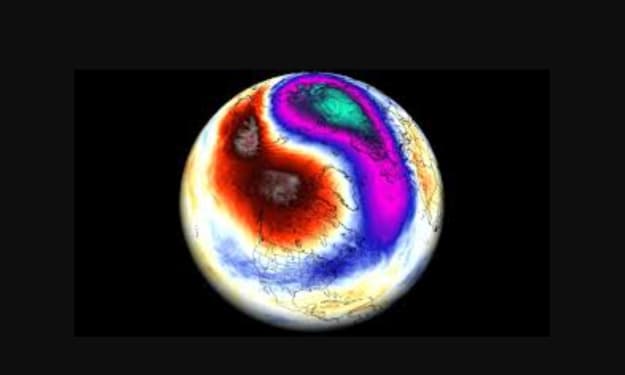
As winter progresses in the Northern Hemisphere, scientists are closely monitoring forecasts suggesting a potential polar vortex collapse. The term “polar vortex” has entered mainstream conversations in recent years, often associated with extreme cold snaps in North America, Europe, and parts of Asia. But what exactly is a polar vortex collapse, why does it happen, and why should people care? Understanding this phenomenon is crucial, not just for weather enthusiasts, but for anyone concerned about climate change, energy infrastructure, and global weather patterns. What Is the Polar Vortex? The polar vortex is a large area of low pressure and extremely cold air surrounding both of Earth’s poles, contained by a fast-moving band of winds known as the polar jet stream. In the Northern Hemisphere, it sits over the Arctic, spinning in a counterclockwise direction. Under normal conditions, the vortex keeps the Arctic air largely contained. However, fluctuations in atmospheric pressure and temperature can cause the vortex to weaken, shift, or even split, allowing frigid air to escape southward into populated regions. This is often what leads to extreme winter weather events in the United States, Canada, Europe, and Asia. What Does a Polar Vortex Collapse Mean? A “polar vortex collapse” refers to a significant weakening or breakdown of the vortex, often caused by sudden stratospheric warming events high in the atmosphere. When the polar vortex collapses: Arctic air can spill into mid-latitudes, leading to extreme cold in regions unaccustomed to such temperatures. Weather patterns become more erratic, causing longer-lasting cold spells or shifts in precipitation. Jet streams weaken or meander, which can contribute to storms, heavy snowfall, or unusual weather events across continents. The term “collapse” doesn’t mean the vortex disappears entirely — it is still present — but its structural integrity is compromised, allowing Arctic air to move into areas that typically enjoy milder winter conditions. Why Scientists Are Concerned Meteorologists and climate scientists pay close attention to the polar vortex because its behavior has far-reaching implications: Energy Demand: Sudden cold snaps increase heating demand, which can strain power grids and fuel supply chains. Agriculture: Extreme cold can damage crops, delay planting, and reduce yields for sensitive crops like winter wheat. Transportation: Snowstorms and icy conditions disrupt travel, affecting both local commuting and international logistics. Global Weather Links: A collapsed polar vortex can influence weather far beyond North America, including unusual rainfall patterns, storms, and temperature anomalies in Europe and Asia. Recent studies suggest that climate change may be making the polar vortex more unpredictable, with warmer Arctic temperatures affecting the jet stream’s stability. This could lead to more frequent or intense cold waves in regions far from the pole. Historical Examples of Polar Vortex Events The polar vortex has been linked to some of the most memorable winter events in recent decades: January 2014 (United States): Millions faced record-breaking cold as Arctic air plunged southward, with temperatures in the Midwest dropping to -30°F (-34°C) in some areas. February 2021 (North America): A weakened polar vortex contributed to extreme cold across Texas and the central U.S., causing widespread power outages and water supply disruptions. Europe 2018–2019: Fluctuations in the Arctic vortex led to extended cold spells across parts of northern and eastern Europe. Each of these events illustrates how disruptions in the Arctic atmosphere can quickly translate into severe conditions thousands of miles away. Why a Polar Vortex Collapse Matters Globally Although the polar vortex is centered over the Arctic, its collapse affects global weather in multiple ways: Economic Impacts: Cold snaps can halt industrial activity, increase heating costs, and strain insurance systems due to property damage. Climate Feedback Loops: Extreme Arctic events can accelerate ice melt, altering sea levels and global weather patterns. Human Health: Extended periods of extreme cold increase risks of hypothermia, frostbite, and other health emergencies, particularly for vulnerable populations. Ecosystem Effects: Wildlife adapted to stable seasonal patterns may struggle to survive sudden temperature fluctuations, affecting biodiversity in affected regions. The interconnectedness of global systems means that an Arctic event can ripple across continents, affecting agriculture, energy, and even food security. What Can People Do to Prepare? While individuals cannot control atmospheric phenomena, there are practical steps to prepare for polar vortex-related extreme cold: Home Safety: Insulate homes, check heating systems, and prepare emergency kits with blankets, food, and water. Travel Caution: Monitor forecasts before traveling and have contingency plans for snow or ice-related disruptions. Community Awareness: Check on neighbors, especially the elderly or vulnerable, during prolonged cold events. Government Preparedness: Authorities often increase readiness of power grids, emergency services, and transportation systems ahead of forecasted events. Being informed and proactive can reduce the human and economic impact of a polar vortex collapse. Looking Ahead: Climate Change and the Polar Vortex Scientists warn that the Arctic is warming faster than the rest of the planet, which may make the polar vortex more unstable. As the vortex weakens, the frequency of extreme cold events in mid-latitudes may rise, even while the planet as a whole becomes warmer. This paradox — colder extremes amid global warming — can be confusing but is consistent with climate models. It emphasizes the need for global cooperation in climate mitigation, adaptation, and disaster preparedness. Final Thoughts The forecast of a potential polar vortex collapse is a reminder that Earth’s climate system is complex and interconnected. What happens in the Arctic does not stay in the Arctic; it has tangible consequences for energy, health, ecosystems, and economies across the Northern Hemisphere. Understanding these dynamics, staying informed, and taking proactive steps can help societies mitigate risks and adapt to a changing climate. Whether you’re a casual weather watcher or a climate enthusiast, the polar vortex collapse is a phenomenon worth following — because its reach extends far beyond the Arctic Circle.
By Muhammad Hassan28 days ago in Earth
Trump, 79, Revives Greenland Fantasy With Absurd AI Post. AI-Generated.
In early 2026, a seemingly strange social media post reignited a discussion that many had hoped was behind us: Donald Trump, now 79, posted an AI-generated image referencing Greenland. The image went viral, sparking laughter, criticism, and a flurry of international commentary. While the post appeared absurd on the surface, it also highlighted deeper issues about political messaging, digital media, and the ongoing fascination some U.S. leaders have with Greenland. The AI-generated post showed Trump marching toward Greenland, holding an American flag, accompanied by a penguin — an animal that, scientifically speaking, has no connection to Greenland. The bizarre imagery immediately caught the public’s attention. Many observers viewed the penguin as a humorous metaphor for the mismatch between the symbolic post and geopolitical reality. Critics questioned whether the post was a serious attempt at commentary, an intentional meme, or a sign of how AI is being used in modern political communication. The Social Media Storm The post, captioned “Embrace the penguin”, appeared on the official White House X account. Within hours, it became the subject of viral memes, news reports, and expert analyses. Internet users were quick to point out the geographic error — penguins live in the Southern Hemisphere, nowhere near Greenland. While the comedic aspect dominated social media, analysts noted that the post reflected a long-standing pattern of Trump using bold or unconventional messaging to capture public attention. The use of AI-generated imagery represents a new layer in this strategy, blending political content with internet culture. Many critics argued that this approach, while attention-grabbing, risks confusing the public and undermining the credibility of official communication. Trump and Greenland: A Longstanding Obsession Trump’s fascination with Greenland is not new. In 2019, he proposed that the United States could purchase Greenland from Denmark, an idea that was widely ridiculed and rejected by Danish leaders. Despite the public backlash, the notion persisted in Trump’s rhetoric and continued to appear in informal discussions about U.S. strategic priorities. Greenland holds significant geopolitical value: it is rich in minerals, occupies a strategic Arctic location, and is home to vast natural resources. For Trump, the island has long symbolized a geopolitical prize — a potential point of influence for the U.S. in the Arctic region. The AI post, absurd as it was, reignited global attention to these strategic questions, reminding the world that some leaders still see Greenland as a focal point of American ambition. AI and Politics: A Strange Combination The viral AI image is part of a broader trend of using artificial intelligence to create content for political messaging. AI allows leaders and communicators to produce highly visual, shareable content at scale. However, it also introduces challenges: Accuracy: AI can generate visually striking content that may be factually incorrect, as with the penguin in Greenland. Interpretation: Viewers may misinterpret AI-generated imagery, assuming it represents reality or policy intent. Credibility: Official use of memes and AI art can blur the line between serious communication and entertainment, potentially undermining authority. In Trump’s case, the AI post highlighted both the power and pitfalls of digital media in politics. It reached millions of people worldwide, but the absurdity of the imagery also drew ridicule and raised questions about the seriousness of the message. The International Response European leaders and diplomats responded cautiously, recognizing the post as part humorous, part symbolic. Danish officials, who oversee Greenland’s defense and foreign policy, reiterated that the island is not for sale. Some analysts suggested that while Trump’s AI post is unlikely to affect formal negotiations, it does shape public perception and keeps Greenland in the spotlight as a topic of U.S. interest. The global reaction underscores the influence of social media on diplomacy. In an era where viral content spreads instantly, even symbolic or absurd posts can have real-world implications, influencing discussions, media coverage, and public opinion. Why the Penguins Matter While the image of Trump marching alongside a penguin seems nonsensical, many commentators see it as a metaphor for the disconnect between digital imagery and practical geopolitics. Penguins, being out of place in Greenland, symbolize the absurdity of claiming influence over a sovereign region through symbolic gestures. The penguin also illustrates how modern politics blends serious issues with entertainment and internet culture. Leaders are increasingly aware of the viral potential of online content, and AI-generated visuals provide a new way to capture attention — for better or worse. The Role of AI in Political Communication Trump’s AI post demonstrates both the potential and limits of artificial intelligence in politics: Engagement: AI-generated visuals can capture attention and create shareable moments. Creativity: AI allows for imaginative ways to communicate ideas, blending humor and symbolism. Risk: Misrepresentation or absurdity can undermine credibility and invite international criticism. As AI tools become more common in politics, officials will need to carefully weigh creativity against clarity, ensuring that symbolic content does not overshadow substantive policy discussions. What This Means for the Future The Greenland AI post is more than a viral meme; it reflects trends in modern political messaging: Leaders increasingly use AI and digital media to communicate directly with the public. Absurd or humorous content can attract attention, but may blur the line between entertainment and diplomacy. Symbolic posts can reignite interest in longstanding geopolitical debates, even when they seem playful. For observers, the post offers a lens into how social media, AI, and politics intersect — a mix of strategy, humor, and unintended consequences that will likely shape political communication for years to come. Final Thoughts Donald Trump’s AI-generated Greenland post is absurd, humorous, and viral — but it also underscores the enduring fascination some political figures have with strategic regions like Greenland. Beyond the comedy, it illustrates the power of AI in shaping political narratives, the challenges of modern digital diplomacy, and the importance of understanding how viral content influences public perception. Whether one laughs at the penguin or ponders the implications, the post reminds the world that politics today is as much about perception and digital storytelling as it is about policy. In Trump’s case, a single AI-generated image can revive decades-old geopolitical fantasies, spark global discussion, and turn a playful meme into a moment of serious reflection.
By Muhammad Hassan28 days ago in Earth
Our European Allies Just Exposed Trump’s Core Weakness—and Also America’s. AI-Generated.
Recent developments in Europe have cast a spotlight on both Donald Trump’s leadership weaknesses and broader American vulnerabilities in international relations. Allies across the continent have been taking steps that indirectly highlight limitations in U.S. policy, leaving Trump supporters, critics, and global observers questioning whether the United States is adequately positioned to lead on the world stage.
By Muhammad Hassan28 days ago in Earth
SC Upholds Tribunal Order Restoring Sessions Judge. AI-Generated.
The Supreme Court’s recent decision to uphold a tribunal order restoring a sessions judge has drawn significant attention across legal and public circles. The ruling is being seen as an important reaffirmation of judicial independence, procedural fairness, and the rule of law, especially at a time when judicial accountability and executive authority are often subjects of public debate.
By Muhammad Hassan28 days ago in Earth
Emergency declared in USA.
A historic winter storm known as Winter Storm Fern has unleashed devastating cold, heavy snow, and dangerous ice across a vast portion of the United States, stretching from Texas in the South to New England in the Northeast. Millions of people are affected as emergency warnings flash on phones and TV screens, roads become treacherous, and travel across the country grinds to a near halt.
By USA daily update 28 days ago in Earth
Channing Tatum Cried ‘Five, Six, Seven Times’ at Josephine Premiere as Film Becomes First Sundance 2026 Sensation. AI-Generated.
The Sundance Film Festival has always been a place where raw emotion meets bold storytelling, but Sundance 2026 may have found its first true breakout already. At the world premiere of Josephine, actor Channing Tatum reportedly became so overwhelmed that he cried “five, six, seven times,” according to those in attendance. The moment quickly turned into one of the most talked-about scenes of the festival — not on screen, but in the theater itself.
By Muhammad Hassan28 days ago in Earth
World Spends $30 Destroying Nature for Every $1 Spent Protecting It. AI-Generated.
The world is at a crossroads when it comes to environmental protection. A shocking new analysis reveals that for every $1 spent protecting nature, humanity spends roughly $30 destroying it. This staggering imbalance underscores a harsh reality: economic development, industrial growth, and resource exploitation continue to take precedence over the planet’s ecological health.
By Muhammad Hassan28 days ago in Earth
The Collapse of a Brazilian Bank Ensnares Politicians and Judges. AI-Generated.
Brazil is grappling with one of the most shocking financial scandals in recent history: the collapse of a major bank that has sent tremors through the economy, the political system, and the judiciary. What began as a financial crisis quickly transformed into a story of political entanglement, judicial scrutiny, and public outrage, raising questions about oversight, accountability, and the fragile trust that binds citizens, bankers, and politicians. The implications of this collapse are vast, affecting not just shareholders and depositors, but also shaking the foundations of governance in Brazil. The Collapse: A Perfect Storm of Mismanagement The bank in question, a significant player in Brazil’s retail and corporate banking sectors, reportedly faced years of mismanagement, risky lending practices, and opaque financial dealings. For years, internal audits hinted at irregularities, but these warnings were either ignored or covered up. When the collapse finally occurred, thousands of customers lost access to their accounts, and businesses relying on the bank for loans and credit lines faced immediate disruption. The ripple effect extended beyond the banking sector, affecting real estate, commerce, and public confidence in financial institutions. Politicians in the Crossfire As investigations unfolded, authorities discovered that several politicians had deep financial ties to the bank. Allegations include preferential loans, insider deals, and the use of political influence to shield executives from scrutiny. These revelations have sparked outrage among the public, who see the situation as yet another example of how money and power intersect in ways that harm ordinary citizens. Brazil’s history of corruption scandals — including Operation Car Wash — has made the public wary of politicians’ involvement in business, and this banking collapse appears to confirm those fears. Some politicians are now under formal investigation, facing charges ranging from corruption to conflict of interest. Legal experts predict that the case could lead to resignations, trials, and possibly convictions. Judges Under Scrutiny The crisis has also ensnared members of the judiciary. Reports indicate that some judges may have overlooked warning signs, delayed investigations, or facilitated questionable transactions involving the bank. While it is unclear whether these actions were deliberate or a result of systemic inefficiencies, the optics are troubling. Public confidence in the judiciary is essential for democracy, yet this scandal highlights the vulnerability of institutions when financial and political interests collide. Brazilian citizens are now demanding transparency, calling for independent oversight to ensure justice is applied equally — whether to bankers, politicians, or judges. Economic and Social Fallout Beyond politics and the courts, the bank’s collapse has real-world consequences for everyday Brazilians. Customers report frozen accounts, lost savings, and halted payments. Small business owners face canceled loans and delayed contracts. Even those not directly affected worry about contagion in the financial system, fearing a broader economic downturn. Experts warn that if regulatory systems fail to prevent similar crises, Brazil’s economic growth could slow, foreign investment could decline, and public trust in institutions may erode further. The social cost — protests, strikes, and political unrest — is already visible in major cities. Why Oversight Failed The collapse raises important questions about regulation in Brazil. Financial watchdogs and central bank authorities are under pressure to explain how such a significant failure went unnoticed. Analysts suggest several systemic issues: Weak regulatory enforcement — audits and compliance checks were reportedly insufficient. Political interference — pressure from powerful politicians may have delayed corrective measures. Opaque financial practices — complex corporate structures and hidden liabilities masked the bank’s instability. This combination created a perfect storm, allowing risky practices to continue unchecked until the bank could no longer operate. Lessons for Brazil and Beyond The scandal is more than a national story — it is a cautionary tale for emerging economies worldwide. Financial institutions, no matter how large or influential, cannot be above scrutiny, and political entanglements must be carefully managed. Transparency, independent oversight, and robust regulatory frameworks are essential to prevent similar disasters. In countries where finance and politics overlap too closely, the risk of systemic failure is amplified, with devastating consequences for ordinary citizens. What Happens Next? Brazilian authorities are now facing immense pressure to act swiftly. Investigations will likely continue for months, if not years. Some potential outcomes include: Trials and convictions of bank executives and politicians Reforms in banking regulations and financial oversight Strengthened judicial accountability mechanisms Measures to restore public confidence in the financial system Meanwhile, citizens and businesses are left to navigate uncertainty, hoping for clear answers and protections against further damage. Final Thoughts The collapse of this Brazilian bank is more than a financial event — it is a story about the fragility of systems where money, politics, and justice intersect. It serves as a stark reminder that trust is the foundation of both banking and governance. When that trust is broken, the consequences are profound and far-reaching. For Brazil, this is a moment of reckoning. For the world, it is a cautionary tale about the need for transparency, oversight, and accountability in every institution that touches the lives of millions.
By Muhammad Hassan28 days ago in Earth
What Went Right This Week: The Good News That Matters. AI-Generated.
In a world often dominated by breaking news alerts, crises, and uncertainty, it can be easy to overlook the positive developments quietly shaping our lives. Yet every week brings stories of progress, resilience, and human ingenuity that deserve attention. From breakthroughs in health and science to acts of kindness and environmental wins, good news still happens—and it matters.
By Aarif Lashari28 days ago in Earth