Character Development
So I watched Wednesday ...again. . Content Warning.
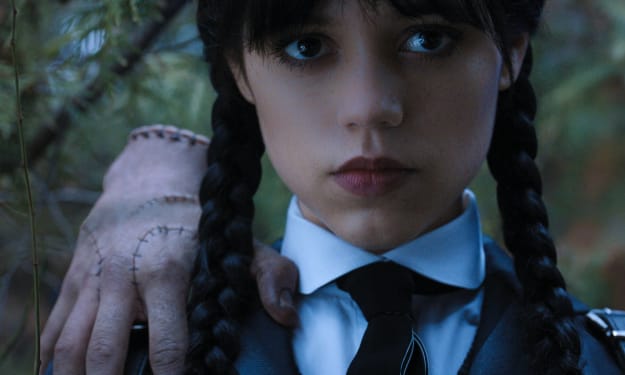
So I watched Wednesday again on Netflix. Following the release of the second half of season two on Wednesday, September 3, 2025; I was inspired to start again at Season One. A whole new world started to re-weave itself around me. In this little part two of So I watched..., I wanted to discuss what in my weed-enduced psychosis I found in the underlining story that writer Tim Burton shares with us.
By Parsley Rose 5 months ago in Critique
The "Anti-Hustle" Culture: Are We Glorifying Laziness or Finally Living?
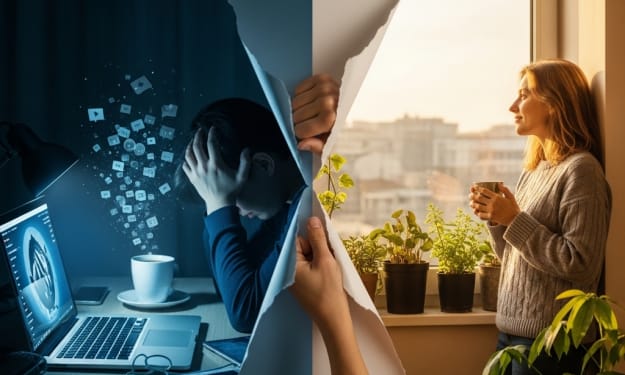
TITLE: THE "ANTI-HUSTLE" CULTURE: ARE WE GLORIFYING LAZINESS OR FINALLY LIVING? WRITTEN BY: LEGANCY WORDS My burnout didn’t arrive with a dramatic crash. It seeped in slowly, like cold through a window pane. For years, I wore my exhaustion like a badge of honor. “Rise and grind,” my phone lock screen cheered me on at 5 a.m. “Hustle harder,” I’d whisper, cancelling another dinner with friends to get ahead on a project.
By LegacyWords5 months ago in Critique
So I watched Wednesday...
So I watched Wednesday. I mean, why wouldn't I? It's an Addams' Family Universe television show on Netflix directed by Tim Burton. Why wouldn't I want to deep dive into this critically acclaimed adventure series starring Disney's Stuck in the Middle's Jenna Ortega? Of course, I saw Wednesday.
By Parsley Rose 5 months ago in Critique
If Great Dead Writers Were on Facebook - 3. Top Story - August 2025.
I have started these series with the Russian writers and then thought why should I have all the fun alone (thanks to Raymond G. Taylor for the idea to turn this into an unofficial challenge!). So I'm opening it up for others who would like to see if they can bring dead writers into the modernity through their imagined Facebook or other social media posts.
By Lana V Lynx5 months ago in Critique
I Can't Speak Out Loud
Everyone has a dark side, hidden stories that no one knows about. Maybe, until now, you haven’t been able to share yours. The dark side doesn’t mean something bad; it’s simply the part of us that remains unseen, still in the dark, unnoticed by anyone.
By Raghad Nassar6 months ago in Critique
If Great Dead Writers Were on Facebook - 2
In my first story of these series, I've tackled five Russian writers. Since there are a lot more, some of whom might be less known to the English-language readers, I wanted to do another installment. As a reminder, the Facebook art here is generated by MAIK (My AI Kompanion, as I call it) showing off its improved capacities as ChatGPT-5. So, here's some more Russian writers' imaginary posts on Facebook, with an explanatory setup:
By Lana V Lynx6 months ago in Critique
If Great Dead Writers Were on Facebook - 1. Top Story - August 2025.
I've had a great (in my humble opinion) idea today: What if the great writers from all over the world before the Internet's time had Facebook accounts? What would they write about? Would they probe or crowdsource ideas for their novels, short stories, and plays? Witness events that could give them food for thoughts and plots? Boast about their new books just published?
By Lana V Lynx6 months ago in Critique
The Gift of Insight
The Gift of Insight How Constructive Critique Builds Growth, Confidence, and Mastery Sasha adjusted the light above her easel, squinting at the canvas that had consumed her weekend. The colors felt right. The brushstrokes were bold. Still, something about the composition felt... off. Art school had taught her technique. What it hadn't prepared her for was the silence that followed when she finished a piece. Friends gave her polite praise. Her social media posts gathered likes, but no substance. What Sasha needed wasn’t approval—it was perspective. So when her mentor, Miguel, offered to give her feedback, she hesitated for only a second before accepting. Miguel had a reputation. He wasn’t cruel, but he was honest. Students often joked that a Miguel critique left you thinking harder than an exam. But those same students returned to him again and again, their skills sharper each time. They met in his small studio the following afternoon. Sasha leaned her canvas against a brick wall, trying not to fidget. Miguel looked at the painting for a long moment. Then he smiled. “You’ve got great energy here,” he began. “Your use of contrast draws me in, and that layering in the background—it’s working well.” Sasha exhaled. Praise felt good. But she waited, sensing more was coming. “Now,” he continued, “can I show you something?” She nodded. Miguel picked up a small mirror and held it in front of the painting. “When you look at your piece in reverse like this, do you notice how the left side feels heavier?” Sasha tilted her head. He was right. The composition, once vibrant in her eyes, now seemed lopsided. She had been so close to it, so invested, that she hadn’t seen the imbalance. “That’s one of the hardest things about creating,” Miguel said gently. “We get attached. But critique helps us step outside ourselves. It’s not about tearing down—it’s about seeing clearer.” As they talked through other parts of the piece—color temperature, line direction, emotional tone—Sasha began to scribble notes. Miguel never told her what to fix. He asked questions, offered observations, and left space for her to make her own decisions. By the end of the session, Sasha didn’t feel defeated. She felt empowered. --- The next few weeks, she made a point to invite more critique—from peers, professors, even her younger brother, who, to her surprise, had a sharp eye for visual storytelling. What changed wasn’t just her art—it was her attitude. She began to separate herself from her work. A critique wasn’t a personal attack; it was a generous offering. Each comment, even the ones that stung at first, carried insight. When given respectfully and received openly, critique became a conversation—one that made her better. One afternoon, she watched a fellow student, Cara, struggle through a harsh group review. The feedback, though valid, had been blunt. Cara looked deflated, her voice tight as she defended each choice. Sasha waited until the session ended, then approached her. “I’ve been there,” she said gently. “Want to grab coffee and talk through your piece again? Just you and me?” Cara agreed, and over warm mugs and quiet conversation, Sasha offered the same approach Miguel had used with her—encouragement first, then thoughtful questions, observations, and space to reflect. When they returned to the studio later that week, Cara’s piece had transformed. “You helped me actually hear the critique,” she told Sasha. “I didn’t feel like I had to defend myself. I felt like I could explore.” --- By the end of the semester, Sasha’s work had reached a new level of depth and clarity. She still had doubts—what artist didn’t?—but now she welcomed feedback. She even started a small critique circle, built on trust, kindness, and curiosity. What she had feared—judgment, rejection—had turned out to be the very thing that pushed her forward. Critique, she realized, was not a test of worth. It was a tool for growth. Like pruning a plant, it might seem harsh in the moment, but it made room for stronger, fuller bloom. And in that spirit, every time she picked up a brush, she did so not with fear, but with confidence—knowing that insight, when given with care and received with openness, was one of the greatest gifts any creator could receive.
By Muhammad Saad 6 months ago in Critique