
The Confession Clock
Why the 11th Hour Breaks Them

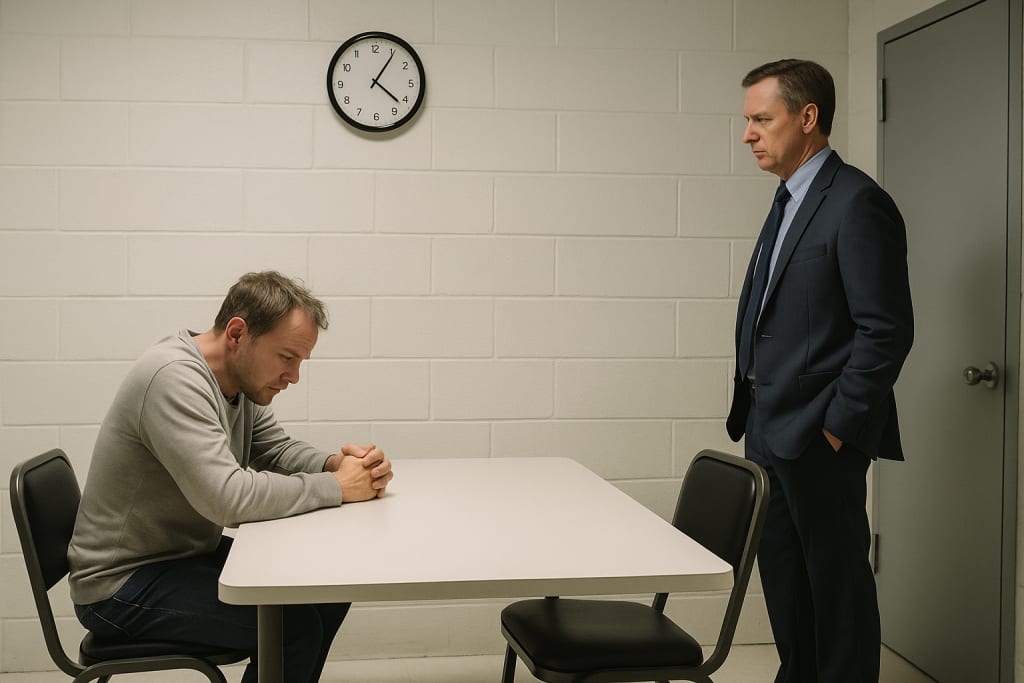
The public imagines interrogations as shouting matches, lightbulbs, and theatrics. Anyone who has ever actually sat inside one knows how uneventful most hours can be. The real changes happen quietly, almost invisibly, and nearly always when the clock should be winding down. I’ve watched people lie with the stamina of an Olympian for 6 hours straight, only to fall apart in the last 7 minutes. That’s the 11th hour. And it’s the closest thing to a universal law you will ever find in a custodial room.
The 11th hour is not a technique. It’s a human threshold. A person can grip a lie for only so long before the weight of maintaining it becomes heavier than the truth they’re trying to outrun. They tell themselves they can hold it together if they just wait out the clock. Meanwhile, the clock is the very thing dismantling them. When they sense the interview is nearly over, something shifts. They realize the last moment to steer their own narrative is slipping past them. And that loss of control is more frightening than any consequence tied to the admission itself.
Interrogation rooms are engineered spaces. You learn quickly that temperature, silence, pacing, and the absence of distraction wear on a person’s mental scaffolding. Their body stays in one place while their mind runs laps. And after enough laps, the brain starts losing track of what story it told the last time around.
- They begin correcting themselves.
- They get irritated with their own answers.
- They reexplain things that were never asked twice.
These aren’t mistakes. These are fractures. And fractures always widen by the 11th hour.
People assume confessions spill out because the interviewer “breaks” the suspect. The truth is less theatrical and far more predictable: the suspect breaks themselves. Maintaining a lie is laborious. Sustaining it under custodial conditions is construction work without rest breaks. There’s cognitive fatigue, emotional friction, self-preservation instinct, and the silent internal argument that always starts around hour four: this isn’t working. I can’t keep this straight. How am I going to explain this later? By the time the 11th hour rolls in, that argument has turned into a shouting match—on the inside.
There’s always a moment when a subject realizes the interviewer is preparing to close the session. You can see it.
- The body stops performing.
- The eyes lose their defiance and start calculating instead.
- They don’t want the official record to end with the story they’ve been pushing.
- They want to revise it. Clean it up. Make it less chaotic.
That instinct alone pulls confessions out of people who swore they’d die with the secret in their chest. And all the interviewer has to do is respect the silence, keep the door to truth open, and avoid getting in the way of the subject’s own exhaustion.
My favorite line—because it works without being manipulative—is the simple, steady invitation near the end: “Before we wrap up, is there anything you want to fix?” Not push. Not threaten. Not corner. Just offer a last chance at accuracy. It hits exactly where the brain is already cracking.
Humans can’t stand being misrepresented, even when the misrepresentation is their own doing. At the 11th hour they stop fearing the consequences and start fearing the story being locked in forever. They choose truth to avoid being frozen in a version of themselves they know is not real.
There’s another layer that people outside the room never understand: denial drains energy. Truth gives it back. When a suspect finally admits what happened, the entire room shifts.
- Their breathing changes first.
- Shoulders drop.
- The nervous movements stop.
- Their voice steadies.
I’ve seen people confess to serious offenses with relief so immediate it almost looks rehearsed. But it’s not relief about “getting caught.” It’s relief from ending the internal war of holding two identities—who they are and who they are pretending to be—and trying to sustain both under fluorescent lights.
Not every confession at the 11th hour is truthful. False confessions happen, especially with vulnerable individuals or poor training. But the real phenomenon—the one I’ve seen unfold repeatedly with capable adults who were not coerced—comes from the collapse of performance. And it is unmistakable when it happens. The subject isn’t defeated. They’re tired of the version of the story they’ve been trying to sell. They want something solid to leave the room with, even if it’s ugly.
Truth gives them a grounding that lies never do.
If you sit in enough interrogation rooms, you start respecting the quiet endings more than the loud middles. The suspect’s guard doesn’t collapse when the interviewer pushes harder. It collapses when the interviewer backs off and signals that time is nearly up. Humans panic at beginnings. But they get honest at endings. The 11th hour is where those two psychological realities collide, and the truth slips out because the person has nowhere left to hide inside their own narrative.
The public likes to imagine interrogations are won by dominance or intimidation. But the truth is far more ordinary and far more human: the clock wins. It wins every time. And when it does, the confession arrives not as a dramatic climax but as a quiet surrender to the truth that was already exhausting the subject from the inside out.
Sources That Don’t Suck
FBI Law Enforcement Bulletin
National Criminal Justice Reference Service
Innocence Project (false confession research for contrast)
PEACE Interviewing Model training literature
John E. Reid & Associates (historical interviewing principles)
About the Creator
Dr. Mozelle Martin
Behavioral analyst and investigative writer examining how people, institutions, and narratives behave under pressure—and what remains when systems fail.
Keep reading
More stories from Dr. Mozelle Martin and writers in Criminal and other communities.
The Myth of the Death Barge
There is a story that has circulated in criminal justice classrooms for decades. The version I heard in 1998 sounded like this: Old English authorities chained criminals to the bottom of a ship, set the vessel adrift for weeks, and returned later to dump the bodies after the prisoners starved to death. It is the kind of story that sticks. Brutal. Efficient. Strange enough to feel like a secret that survived through oral retellings.
By Dr. Mozelle Martin3 months ago in Criminal
Unsolved case! Japanese female teacher mysteriously died in a cesspool
The case we are discussing today is one of the most bizarre and spine tingling unsolved cases in post-war Japan - the Fukushima female teacher's tragic death. It does not have the lonely souls and wild ghosts in supernatural legends, but it is more suffocating than any ghost story; It has a clear victim and a specific location of the crime. The police investigated for half a year, but in the end, it was hastily closed as an "accidental death". However, everyone who has seen the scene and heard the details believes that this is definitely not an accident. This incident has been circulating in Japan for decades, and there are still people investigating the truth. Whenever someone mentions that cold public restroom or that strange death posture, it still makes people's hearts tighten and a layer of cold sweat breaks out on their backs.
By Aiden Wanga day ago in Criminal
The Silence After the Sirens
M Mehran The sirens screamed through the narrow streets of Lahore at 2:17 a.m., but by the time they arrived, the house on Street No. 14 was already silent. Too silent. Inspector Farhan Malik stood at the entrance, staring at the open wooden door. Years in criminal investigations had taught him one thing—when a crime scene feels calm, it’s usually hiding chaos underneath. Inside, the air smelled of iron and dust. On the living room floor lay the body of Ahsan Qureshi, a well-known property dealer with a spotless public reputation and a long list of enemies no one talked about. He had been stabbed once—clean, precise, straight to the heart. No signs of forced entry. No signs of struggle. No weapon. “This wasn’t rage,” Farhan muttered. “This was intention.” A Perfect Man With Imperfect Secrets Ahsan Qureshi was the kind of man newspapers loved. Successful businessman. Charity donor. Family man. But criminal investigations rarely care about headlines. As Farhan flipped through the victim’s file, a different picture emerged. Land grabbing cases buried under settlements. Witnesses who had suddenly gone silent. One junior clerk who disappeared three years ago after accusing Ahsan of fraud. In criminal stories, the dead are rarely innocent. The only person in the house at the time of the murder was Ahsan’s wife, Zara Qureshi. She was found sitting on the bedroom floor, eyes blank, hands shaking—not crying. People who cry easily often hide things. People who don’t… usually know the truth. The Woman Who Knew Too Much Zara told the police she heard a sound, came out, and found her husband bleeding. Her statement was clean, almost rehearsed. But something about her silence bothered Farhan. Later that night, while reviewing CCTV footage from nearby houses, Farhan noticed something strange. The cameras showed no one entering or leaving the house between 11 p.m. and 3 a.m. If no outsider came in, only one conclusion remained. The killer was already inside. But criminal investigations aren’t built on assumptions—they’re built on cracks. And Farhan found one when he reviewed Zara’s phone records. Multiple calls. One number. Deleted messages. The number belonged to Sameer Ali—a former employee of Ahsan Qureshi. The same man who had filed a fraud complaint years ago and then vanished from the legal system. A Ghost From the Past Sameer Ali was found two days later in a rented room near the railway station. He didn’t resist arrest. He didn’t even look surprised. “I didn’t kill him,” Sameer said calmly during interrogation. “But I wanted him dead.” That sentence alone was enough to make him a suspect. Sameer revealed the truth Ahsan had buried for years. Fake documents. Illegal land seizures. Families thrown out of their homes overnight. When Sameer tried to expose him, Ahsan destroyed his career—and threatened his life. “But I left the city,” Sameer insisted. “I came back last week. To confront him. Not to kill him.” Farhan believed him. Criminals lie—but their lies have rhythm. Sameer’s story didn’t. Then who delivered the final blow? The Confession No One Expected The answer came quietly. Zara requested to speak to Inspector Farhan alone. “I didn’t plan to kill him,” she said, her voice barely audible. “I planned to leave.” She revealed a side of Ahsan the world never saw—emotional abuse, threats, control masked as love. The charity dinners, the smiles, the respect—all lies. “He ruined lives,” Zara whispered. “Including mine.” The night of the murder, Sameer had come to the house. Zara let him in. She wanted Ahsan to face someone he had destroyed. But the conversation turned violent. Ahsan laughed. Mocked him. Threatened him again. Then Ahsan turned to Zara. “He said I was lucky to be alive because of him.” That was the moment. Zara picked up the knife from the kitchen—not in anger, but in clarity. “One second,” she said. “That’s all it took.” Sameer ran. Zara stayed. Justice Beyond the Law The court case shocked the nation. Media headlines screamed “Wife Kills Philanthropist Husband”, but the truth was heavier than the words. Zara was convicted of manslaughter, not murder. The judge acknowledged years of psychological abuse. She was sentenced to seven years. Seven years for ending a lifetime of fear. As Farhan watched her being taken away, he felt something rare in criminal investigations—not satisfaction, not victory, but understanding. Criminal justice isn’t always black and white. Sometimes, it’s just silence after the sirens. And the knowledge that the real crime happened long before the knife ever touched the skin.
By Muhammad Mehran6 days ago in Criminal




Comments