interview
Interviews with defense attorneys, law enforcement officials, forensic psychologists and anyone with insight into bad behavior.
The Last Confession
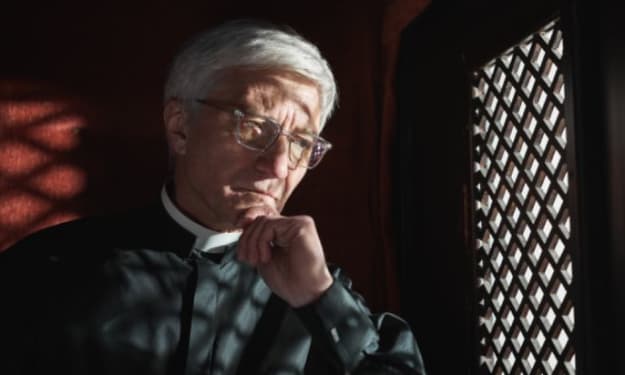
M Mehran The police file labeled Case 417-B had gathered dust for seven years. No arrests. No suspects. Just one body and a city full of silence. Until tonight. Detective Aaron Cole stared at the man sitting across the interrogation table. Thin. Pale. Calm in a way that made the room feel colder. His name was Elliot Moore, a night-shift janitor at St. Vincent Hospital. Elliot had walked into the police station at 2:13 a.m. and said only one sentence: “I killed Daniel Harper.” Daniel Harper’s murder was the most disturbing unsolved crime the city had ever known. Aaron pressed the recorder button. “Start from the beginning,” he said. Elliot smiled faintly. “That’s where it gets complicated.” A Crime That Shook the City Seven years ago, Daniel Harper—a respected journalist known for exposing corruption—was found dead in his apartment. No forced entry. No weapon. No fingerprints except his own. The autopsy revealed poisoning, but the toxin was rare, expensive, and untraceable. The media called it The Perfect Crime. Aaron had been a rookie detective back then. The case haunted him. It had ruined careers. It had ended marriages. And now, suddenly, a confession appeared out of nowhere. Too perfect. The Janitor No One Noticed Elliot described his life in careful detail. Invisible. Ignored. He cleaned hospital floors while saving lives walked past him every day. “No one looks at janitors,” he said. “That’s why I was perfect.” Aaron frowned. “Perfect for what?” “For watching.” Elliot explained that Daniel Harper had been visiting the hospital frequently before his death—always late at night, always nervous. Elliot overheard phone calls. Arguments. Names that didn’t belong in public conversations. Politicians. Judges. CEOs. Daniel wasn’t just exposing corruption. He was about to publish something that would destroy powerful people. “And they noticed,” Elliot whispered. The Twist No One Expected Aaron leaned forward. “So you killed him?” Elliot shook his head slowly. “No. They did.” The room went silent. “I just made sure they couldn’t get away with it.” Elliot explained that he had followed Daniel one night, out of curiosity. He saw him meet someone in a parking garage—someone Elliot recognized from the news. A senator. Elliot watched as Daniel was handed a drink. Watched as his hands began to shake. Watched as the senator walked away calmly, leaving Daniel to die on the cold concrete floor. “I didn’t stop it,” Elliot said, his voice cracking for the first time. “I was scared.” A Crime Within a Crime Instead of calling the police, Elliot made a decision that would change everything. He dragged Daniel’s body back to his apartment. Cleaned the scene. Removed evidence. Made the murder look like a mystery. “Why?” Aaron demanded. “Because I knew the truth would never survive,” Elliot replied. “Power protects itself.” Elliot spent years collecting proof—audio recordings, documents, hidden files Daniel had given him in his final moments. “They thought they committed the perfect crime,” Elliot said. “I gave them one.” Seven Years of Silence Elliot waited. He watched elections come and go. Promotions. Awards. Smiles on television. Meanwhile, Daniel Harper’s name faded into a footnote. Until tonight. “I’m dying,” Elliot said quietly. “Cancer. Stage four.” Aaron’s chest tightened. “So I came here,” Elliot continued. “Because I don’t need justice for myself. I need truth for him.” He slid a flash drive across the table. “Everything is there.” The Real Criminals Forensic analysis confirmed the files were authentic. Recordings of bribes. Emails ordering Daniel’s murder. Bank transfers tied to offshore accounts. Within forty-eight hours, arrests shook the nation. A senator. A judge. A corporate tycoon. The headlines exploded. THE PERFECT CRIME WAS NEVER PERFECT JANITOR EXPOSES MURDER COVER-UP Elliot Moore pleaded guilty—not to murder, but to obstruction of justice. He accepted his sentence without protest. “I did what I had to,” he told Aaron during their last meeting. “History needed time to be ready.” The Final Confession Elliot died six months later in prison medical care. On his grave, someone left a simple note: Truth doesn’t need power. It needs patience. Aaron visited that grave every year. Because some criminals wear suits. Some wear uniforms. And some carry mops, waiting quietly for the world to notice. Why This Story Matters The city still talks about Daniel Harper. But Aaron knows the real story belongs to the man no one ever saw. The janitor who turned a perfect crime into a perfect confession. Keywords (SEO-friendly): criminal story, true crime style fiction, crime short story, murder mystery, psychological crime, unsolved murder, criminal justice, suspense story, Vocal Media crime
By Muhammad Mehran5 days ago in Criminal
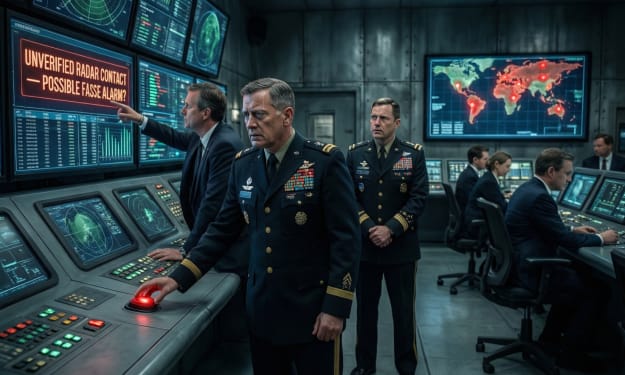
Global Implications If Nuclear Command Systems Weaken
Global Implications If Nuclear Command Systems Weaken Nuclear weapons are often described as the ultimate tools of deterrence. They are meant to prevent war, not start it. But this balance depends on one critical factor: strong and stable command systems. If these systems weaken, the danger is not limited to one country. The impact spreads across the entire world.
By Wings of Time 7 days ago in Criminal
Nuclear Command Risks in a Time of Internal Tension
Nuclear Command Risks in a Time of Internal Tension When people think about nuclear power, they often focus on missiles, warheads, and military strength. But the most important part of any nuclear system is not the weapon itself—it is the command structure behind it. Clear leadership, trusted decision-making, and reliable communication are what prevent disasters. When these systems face internal tension, the risks grow quietly but dangerously.
By Wings of Time 7 days ago in Criminal
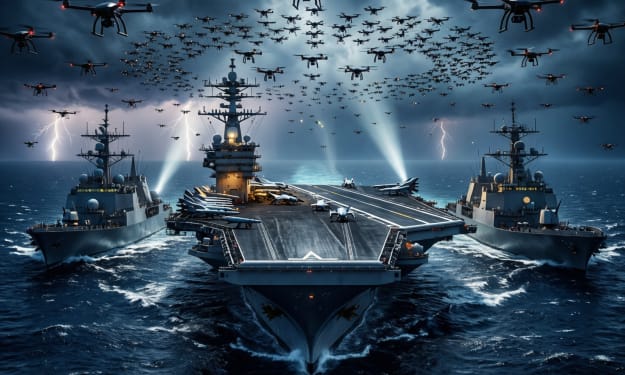
Can Aircraft Carriers Survive the Drone Age?
Can Aircraft Carriers Survive the Drone Age? For more than seventy years, aircraft carriers have stood at the center of global military power. They are mobile airbases, capable of projecting force anywhere on the planet without relying on foreign soil. Their presence alone can alter diplomacy, deter rivals, and reassure allies. But a new challenge is rising—quietly, cheaply, and rapidly. The age of drones is forcing militaries to confront an uncomfortable question: are aircraft carriers becoming vulnerable giants in a world of unmanned warfare?
By Wings of Time 9 days ago in Criminal
Drones vs Aircraft Carriers
Drones vs Aircraft Carriers For decades, aircraft carriers have symbolized ultimate military power. They are floating cities, armed with fighter jets, guided missiles, radar systems, and layered defenses. A single carrier strike group represents not just military strength, but political will. Wherever it sails, it sends a message: power has arrived.
By Wings of Time 9 days ago in Criminal
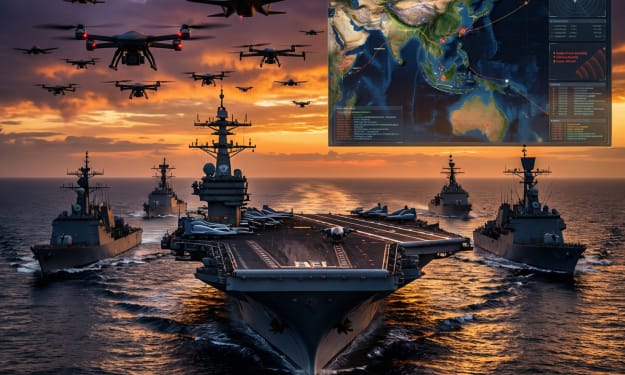
Floating Power and Fragile Diplomacy
Floating Power and Fragile Diplomacy In recent weeks, renewed attention on U.S. naval movements, particularly carrier strike groups operating across strategic waterways, has highlighted a deeper shift in how global power is projected. From the South China Sea to the Indian Ocean, the presence of American naval assets is no longer just a show of strength—it is a message shaped by technology, deterrence, and fragile diplomacy.
By Wings of Time 9 days ago in Criminal
Speed, Greed, and the Dangerous Game of Revenge
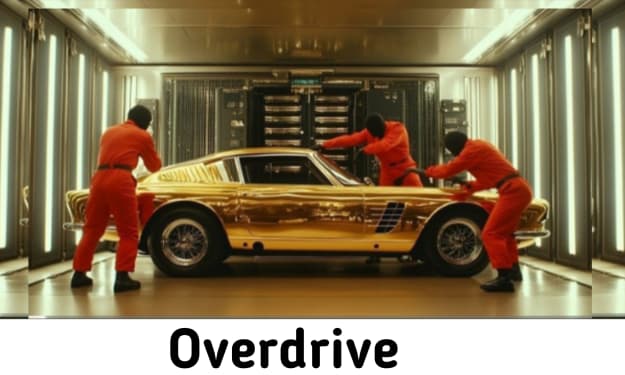
There are some things in the world that are not just symbols of wealth, but become identities of power, arrogance, and obsession. The rare 1937 Bugatti is one of those things. The film begins with a grand and luxurious auction, where this legendary car stands on stage as the center of everyone’s attention. The auctioneer announces that it is one of the rarest cars in the world, with only two models existing globally. This announcement ignites greed in the hearts of every wealthy person present in the crowd. The bidding starts at thirty million dollars and keeps increasing moment by moment. Someone bids thirty-two, someone thirty-four, and finally the bid reaches forty-one million dollars. This final bid is placed by a man named Jack, who is in contact with his boss. On the surface, he appears to be a rich buyer, but in reality, he is working for a powerful and dangerous criminal. The Bugatti is not going to belong to him, but to his boss. At the same time, the film introduces us to two brothers—Andrew and Garrett. Both are world-famous and highly skilled car thieves. Luxury and supercars are their obsession, and they have stolen some of the best cars in the world. The reason both brothers are connected to the Bugatti’s path is because they want to steal this rare car. The Bugatti theft on the highway is one of the most thrilling scenes of the film. High-speed vehicles, jumping onto a truck using ropes, a shower of bullets, and the shadow of death—Andrew and Garrett risk their lives to steal the Bugatti. This is not just a theft, but a practical demonstration of skill, nerves, and madness. After the theft, both brothers celebrate, but this happiness does not last long. When they go to a man named Jimmy to sell the Bugatti, he refuses to buy it. Jimmy knows that this car does not belong to an ordinary person, but to a very powerful and dangerous businessman named Morrier. Morrier is not only a wealthy man, but also runs an entire criminal empire. Soon, Andrew and Garrett are captured and presented before Morrier. Morrier tells them his story—a journey that started from poverty, an empire built through crime, and an obsession with rare cars. For him, these cars are not just a hobby, but symbols of his power and ego. The theft of the Bugatti becomes a personal insult to him. Morrier gives both of them one chance to stay alive, but his condition is extremely dangerous. They must steal a 1962 Ferrari belonging to a man named Max—a car that is one of a kind in the world and worth more than millions of dollars. Max is a young but exceptionally intelligent business tycoon, and also Morrier’s old enemy. From here, the story moves beyond a simple theft and turns into a battle of minds. Andrew and Garrett form an entire team, including Stephanie, Devon, bomb expert Lane, and skilled race drivers. Every person has a specific role, and every mistake can lead to death. The character of Max adds more depth to the story. He appears to be a polite and successful businessman, but behind him is an extremely sharp mind. He is both impressed by Andrew and Garrett’s abilities and cautious of them. His Ferrari is not just a car, but his identity. The story takes a new turn when it is revealed that the real plan was never to steal the Ferrari. The Bugatti was merely a move, a trap—used to ensnare Morrier along with his arrogance. Andrew, Garrett, and Max were actually playing the same game from the very beginning, where the real target was Morrier’s treasure of rare and valuable cars. In the climax, speed, explosions, and intelligence collide together. A collapsing bridge, long car chases, betrayal, sacrifices, and finally Morrier’s fate—all symbolize that the game of power and greed ultimately ends in destruction. In the end, Andrew proposes marriage to Stephanie, Garrett finds love, and the team completes an impossible mission. But the biggest lesson remains that in this world, the most dangerous weapon is not a gun or speed, but the mind, patience, and the final move played at the right time. Final Question Is power really found only in money and weapons, or is true power hidden in the mind that silently turns the entire game around?
By Filmon Ke Raaz | Movie Mysteries Explained10 days ago in Criminal
The Global Power Struggle in 2026: Why Are Tensions Rising Between the United States, Russia, China, and Venezuela?
f tensions between the United States and each of Russia, China, and Venezuela. These tensions cannot be understood as isolated events or temporary crises; rather, they are a direct reflection of a deeper struggle over global influence, strategic resources, and the future shape of the international order. At the center of this complex scene, Venezuela has emerged as a major flashpoint, while Russia and China play the role of supporters and counterweights to U.S. actions.
By America today 22 days ago in Criminal